15 Small Apartment Kitchen Storage Ideas That Add Useful Space
Affiliate Disclosure: Compact Living Digest contains affiliate links. As an Amazon Associate, I earn from qualifying purchases at no additional cost to you.
Small kitchens usually run out of accessible storage before they run out of square footage. A cabinet may be full, but half its height is empty. A counter may be crowded, but the wall above it is unused. The answer is not to fill every surface with organizers. It is to make the storage you already have easier to access and better suited to the way you cook.
Start with the items used every week: dishes, food, pans, coffee supplies, and cleaning products. Give those categories the best locations. Less-used appliances, seasonal serving pieces, and bulk backups can take up the harder-to-reach spaces so the kitchen works better day-to-day.
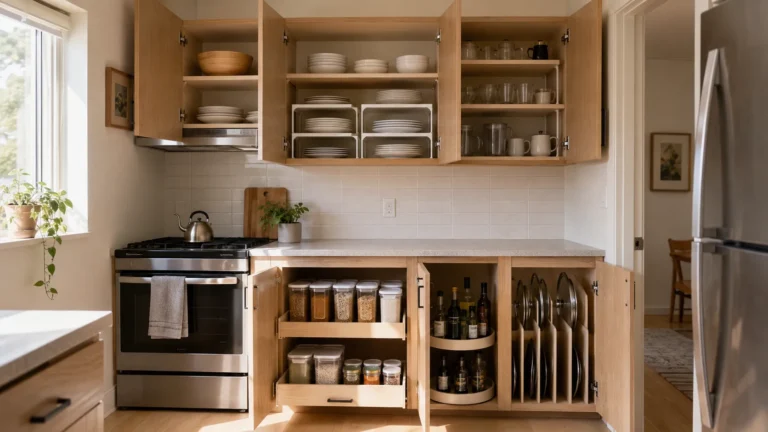
1. Use shelf risers to split the empty height inside cabinets
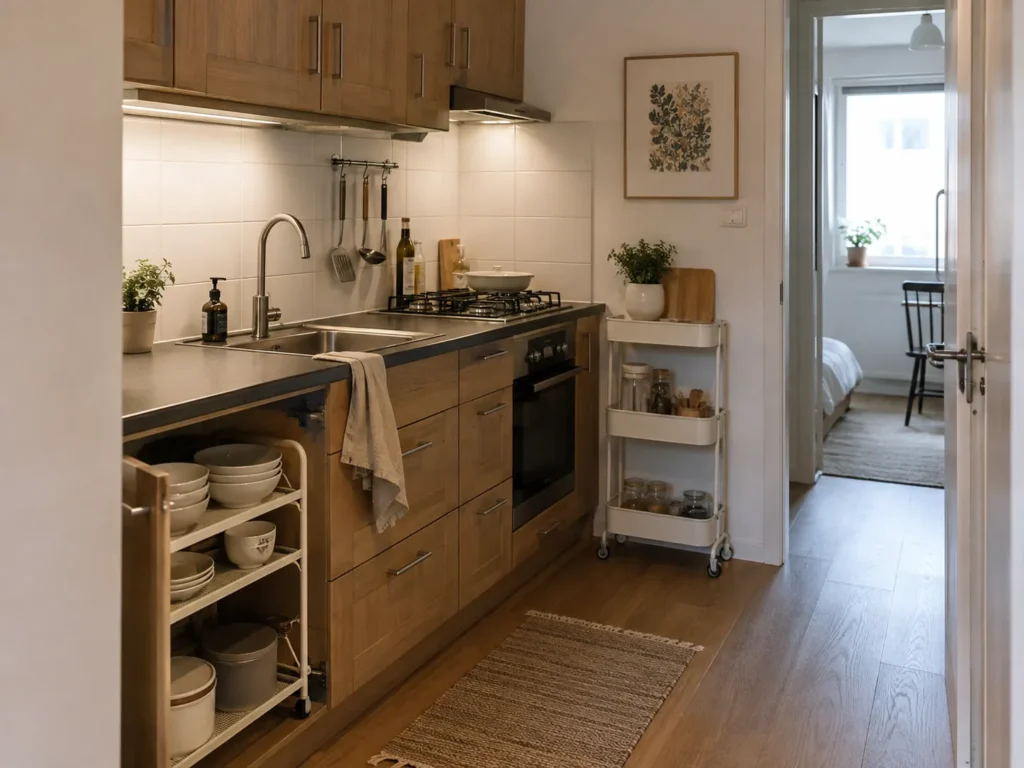
Shelf risers make one cabinet shelf work as two levels, which helps with plates, mugs, bowls, or canned goods. They are most useful when the items underneath can still be removed without unstacking everything above. Measure the cabinet’s interior height and depth first; a riser that leaves too little space for your dishes only creates a new frustration.
2. Put daily dishes close to the dishwasher or drying area
The most practical cabinet is not always the largest one. Storing plates, glasses, and everyday bowls near where they are washed shortens the reset after meals and keeps the counter clearer. Reserve the farther cabinets for serving pieces or duplicates that do not need to be handled every day.
3. Add an under-shelf basket where the shelf has unused air space
An under-shelf basket can create a shallow second layer for wraps, dish towels, napkins, snack packets, or tea. It is a good solution when a shelf is tall but not deep. Do not overload one with heavy jars or cookware; it works best for light, low-profile categories that would otherwise get lost at the back.
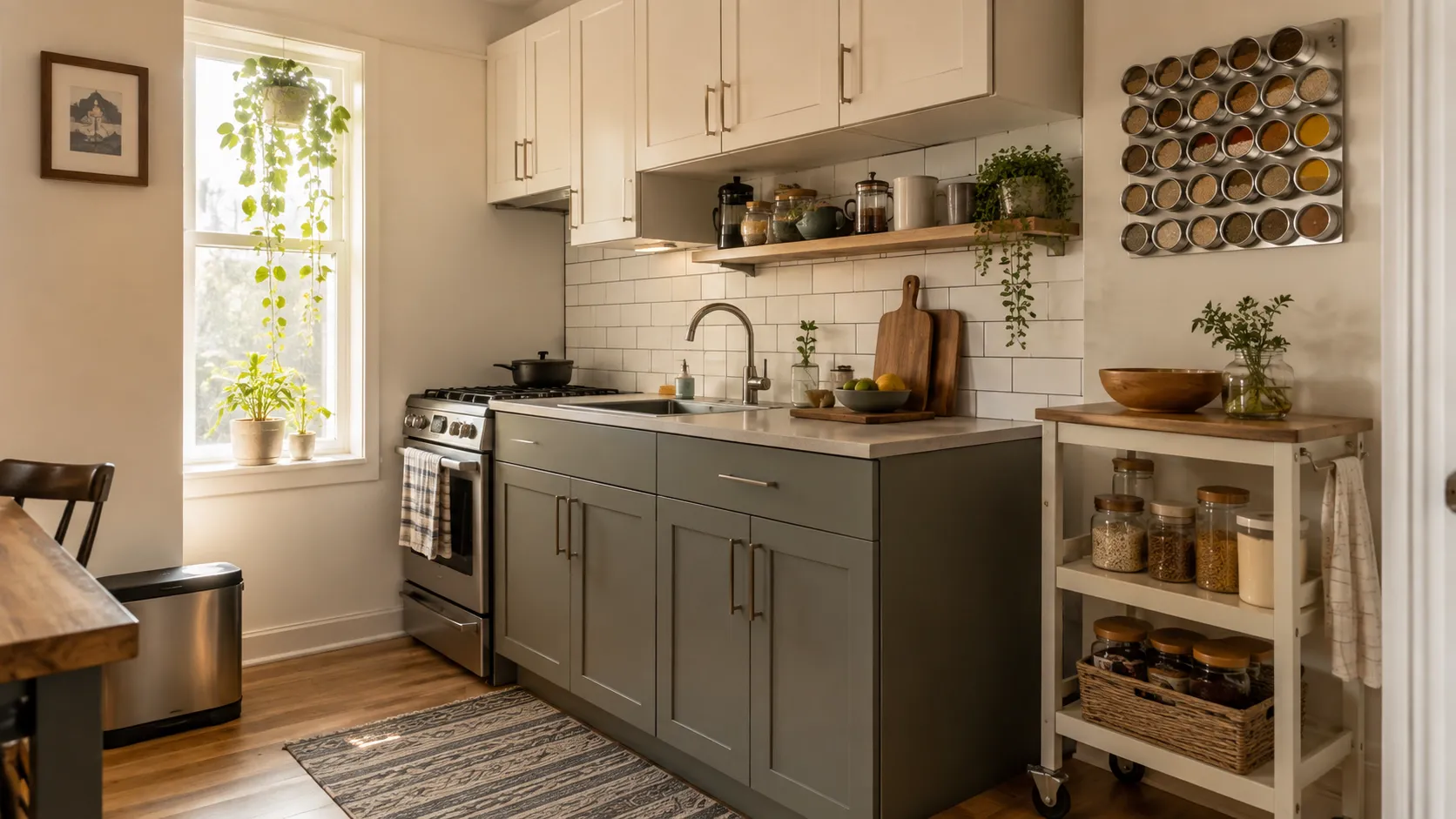
4. Use a magnetic rack for small items that do not need a drawer
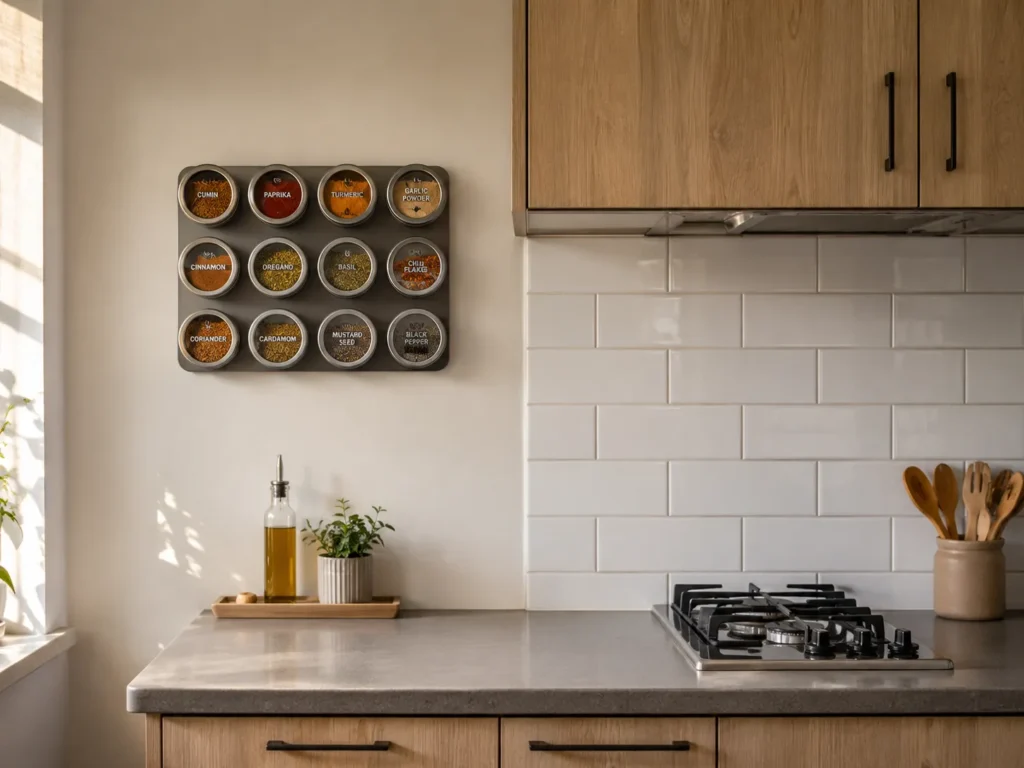
A magnetic rack can hold spice tins, foil-box ends, or metal cooking tools on a suitable metal surface. Keep it away from heat and make sure it does not interfere with appliance vents, doors, or the cooking zone. This type of storage is useful because it frees a drawer, but it should not create a busy wall full of rarely used items.
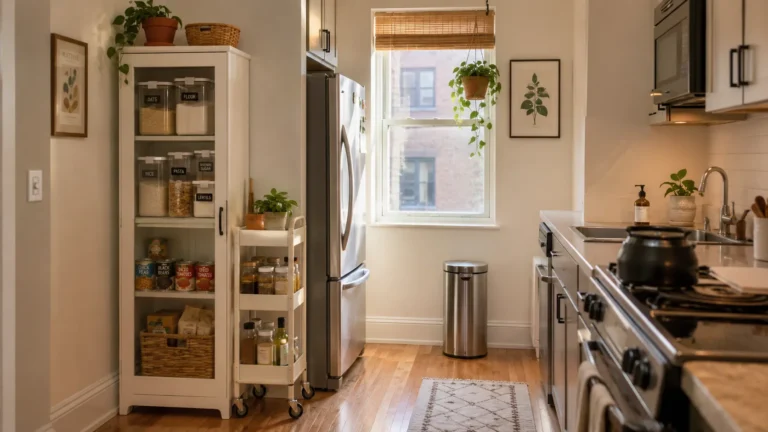
5. Turn a slim rolling cart into a small pantry zone
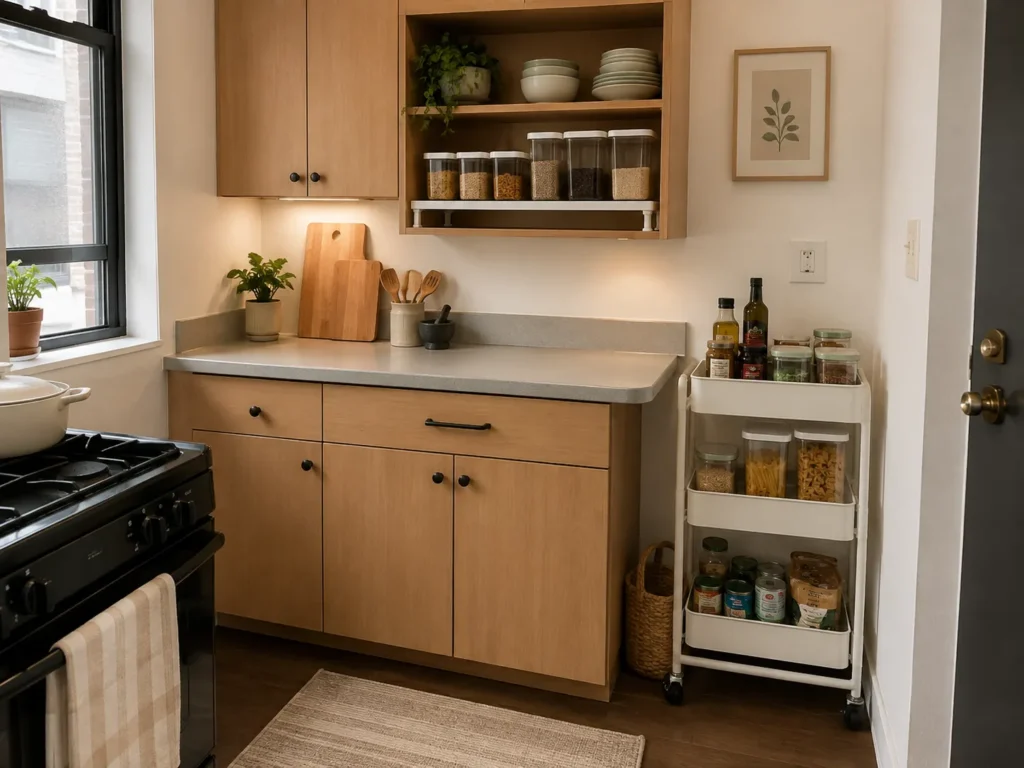
When there is no pantry, a narrow rolling cart can hold dry goods, cooking oils, or the supplies that do not fit in the cabinets. Give it a designated parking spot at the end of a cabinet run or in a true gap. If it has to live in the walkway, it will make cooking and passing through the kitchen harder.
For a fuller no-pantry plan, how to organize a kitchen without a pantry can help you separate everyday food from backup supplies.
6. Make cabinet doors work only for lightweight categories
The inside of a cabinet door can hold a slim organizer for wraps, measuring spoons, cleaning cloths, or small packets. Before installing anything, check the hinge clearance and whether shelves, drawers, or contents behind the door will still close. Door storage is only helpful when it fits without making the rest of the cabinet less usable.
7. Use a narrow pantry cabinet when the wall can spare the depth
A freestanding slim pantry cabinet can add a surprising amount of vertical storage in a kitchen with one unused wall section. It is best for dry goods, small appliances, or cleaning supplies that need closed storage. Measure its depth along with the door swing and keep the walking route clear; taller furniture is only useful when it does not crowd the room.
8. Give spices one system instead of several half-systems
Spices get expensive in space when some are in a drawer, some are on the counter, and some are hidden behind baking supplies. Choose one place that fits how you cook: a shallow drawer, a cabinet riser, or a small wall rack. Store only the spices you use often there, then keep specialty blends together in a separate labelled bin.
9. Use the top shelf for backup stock, not dinner tonight
The highest cabinet shelf is useful for paper goods, extra canned food, serving platters, and appliances you use a few times a year. It is a poor place for coffee, lunch containers, or cooking oil. Keeping daily items at an easy height reduces the amount of shifting and reaching that makes a small kitchen feel disorganized.
10. Store pots and pans by the way you reach for them
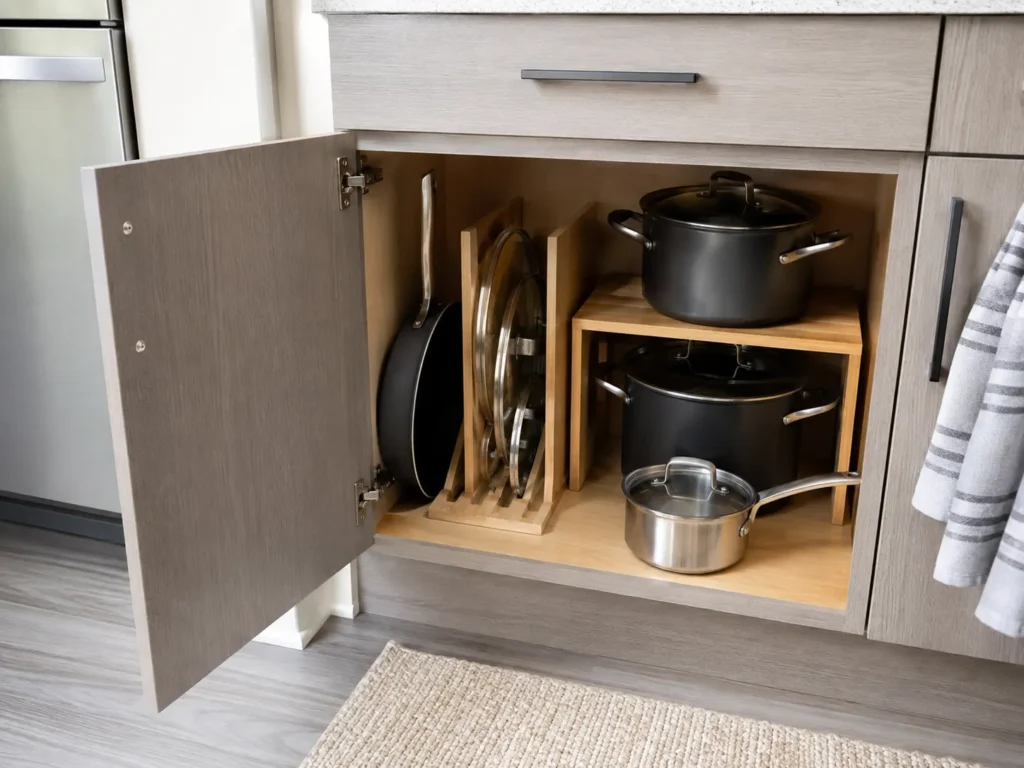
Large pots, lids, and skillets are awkward because their shapes do not stack neatly. Put your most-used pan where it can be lifted out directly, then use a lid organizer or vertical divider to stop lids from becoming a noisy pile. For more detailed layout options, consider how to store pots and pans in a small kitchen, matching the storage method to the cookware you own.
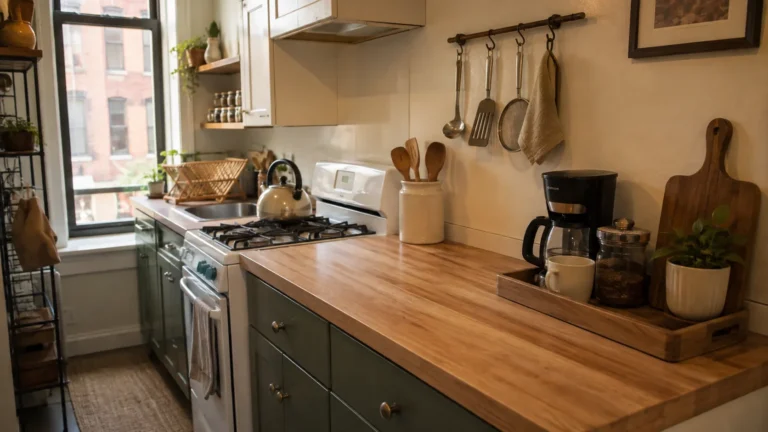
11. Keep only a working set on the counter
Counters need to support prep, not carry every appliance and package. Leave out the items used almost daily and move the rest to a cabinet, cart, or higher shelf. This does not mean an empty counter; it means each visible item should earn the cleaning space it creates around itself.
For a practical sorting method, small kitchen counter organization: what to keep out and what to put away walks through this decision in more detail.
12. Put food-storage containers together with their lids
Containers become difficult when bases and lids are stored in different places. Keep them in one drawer, bin, or low cabinet, nesting the bases and standing lids vertically where possible. Edit mismatched pieces that no longer have a partner. A smaller complete set is more useful than a crowded cabinet of almost-matching containers.
13. Use the refrigerator as part of the storage plan
In a tiny kitchen, the refrigerator can carry more of the weekly food plan when it is organized by category rather than packed at random. Keep ready-to-use items visible, use a small bin for snacks or lunch ingredients, and group condiments so the door shelves do not become a search zone. Small refrigerator organization ideas for a tiny kitchen can help make that space easier to use without overbuying bins.
14. Give cleaning supplies one contained home
The cabinet under the sink tends to collect unrelated extras because it is convenient. Keep only kitchen-cleaning supplies there, using a small bin or caddy to make them easy to pull out. Store refill bottles and bulk extras somewhere else if they crowd out the items needed for a quick daily wipe-down.
15. Reset one zone at a time instead of reorganizing the entire kitchen
When storage is frustrating, it is tempting to buy several organizers and overhaul everything at once. Start with the cabinet or counter that causes the most daily annoyance, then live with the change for a week. The better system is the one that works after a busy dinner, not only after an organizing session. If the rest of the apartment is also carrying kitchen overflow, small apartment storage ideas that actually save space can help you find a better home for items that do not need to stay in the cooking area.
The goal is not more storage for its own sake. It is a kitchen where daily dishes are easy to put away, food is easy to see, and the counter is still available when you need to cook. Start with the zone that slows you down most, then build from there.