Small Kitchen Counter Organization: What to Keep Out and What to Put Away
Affiliate Disclosure: Compact Living Digest contains affiliate links. As an Amazon Associate, I earn from qualifying purchases at no additional cost to you.
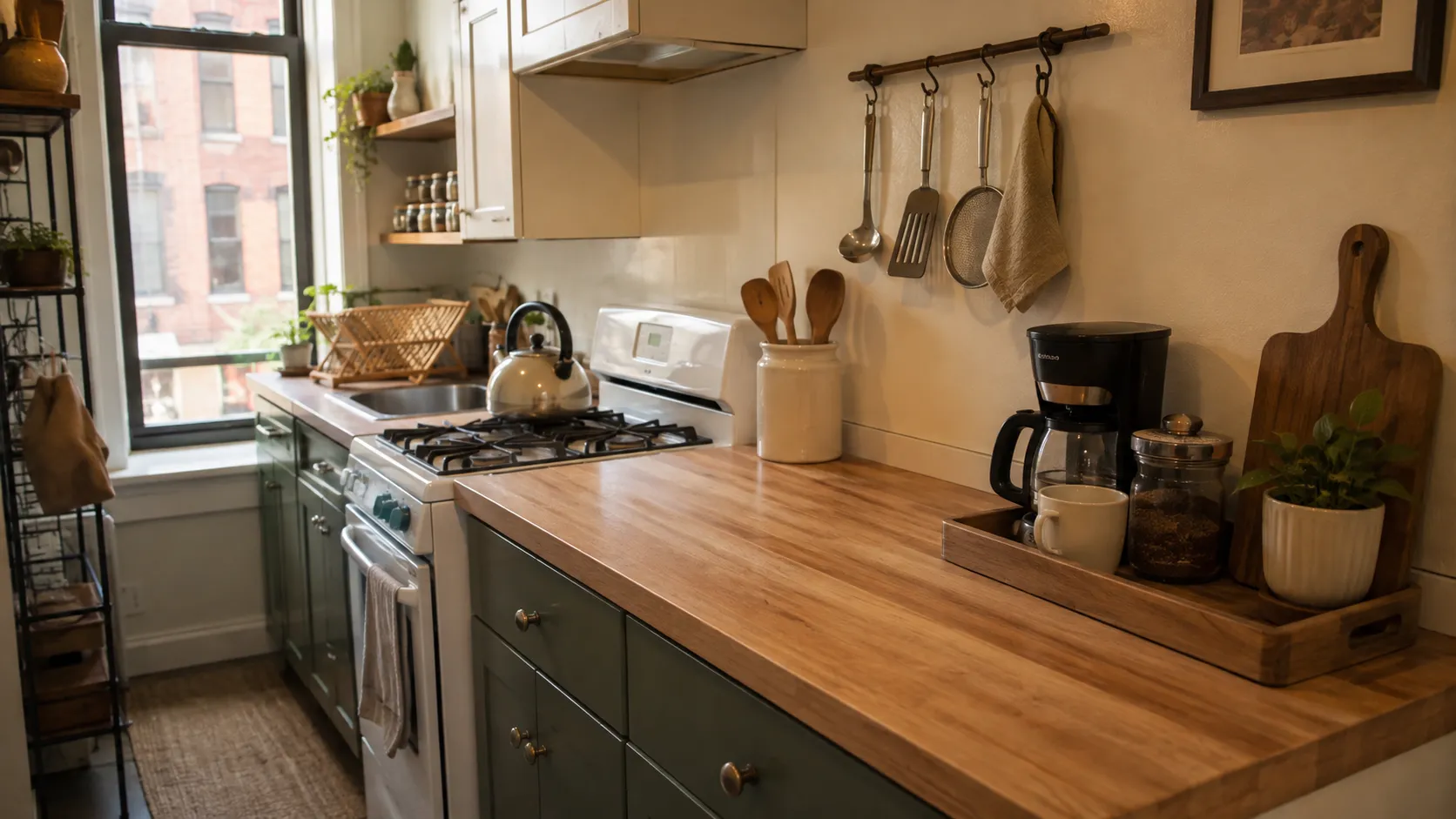
A small kitchen counter gets crowded for a simple reason: it is the easiest place to put something down. Appliances stay out because they are heavy. Mugs gather near the coffee maker. Mail, groceries, and half-used ingredients land wherever there is an open patch.
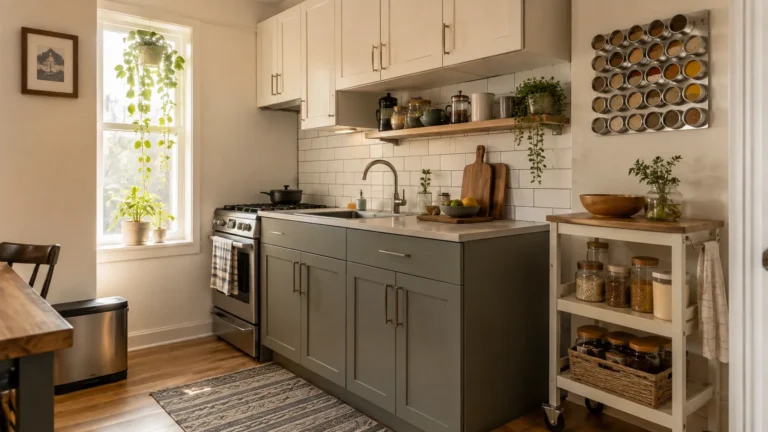
The answer is not an empty counter that makes cooking harder. It is a counter with a few assigned jobs. Keep the items that save time during daily use, then give everything else a cabinet, drawer, pantry, or refrigerator home. The more clearly each zone is defined, the less likely the counter is to become permanent overflow storage.
Start by protecting one clear prep area
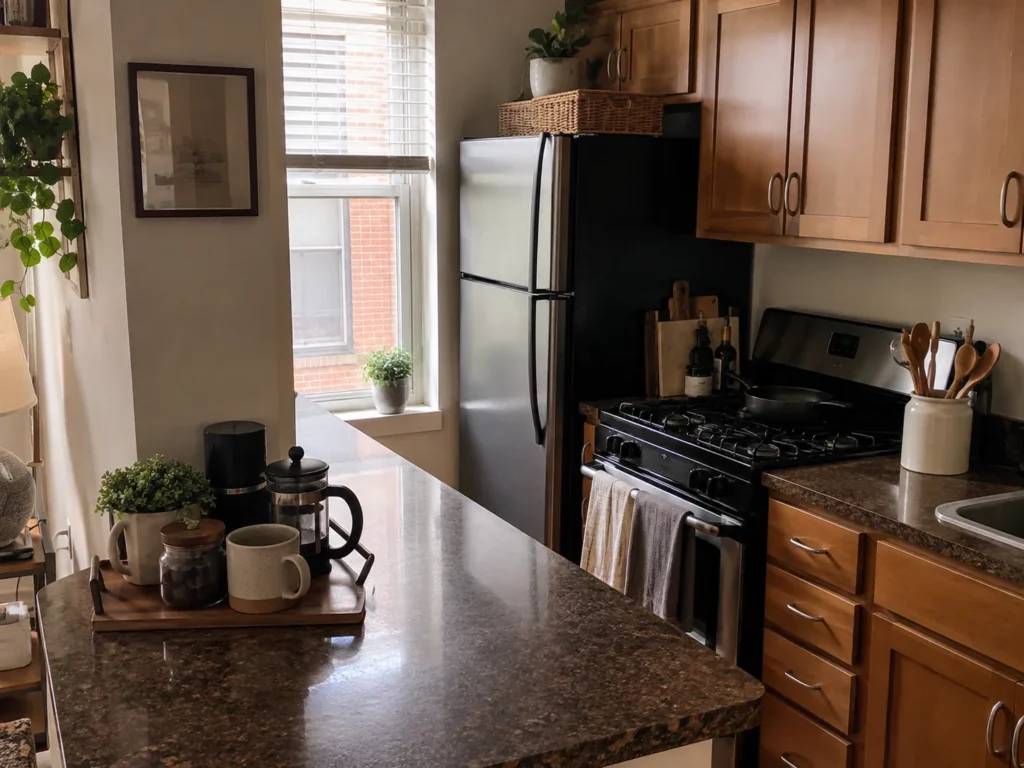
Before adding a tray, crock, or basket, choose the section of counter that needs to stay open for chopping, mixing, and setting down groceries. In a very small kitchen, this may be the only uninterrupted work surface you have. Treat it as workspace, not storage.
Look at what usually lands there. If it is an appliance you use twice a week, a stack of food containers, or mail that has no other landing spot, the problem is not the counter itself. The item has not yet been assigned a practical home.
Keep out only what earns the space every day
An item earns a permanent counter spot when you use it most days, it is awkward to lift or store repeatedly, and putting it away would make your routine noticeably less convenient. A coffee maker, toaster used every morning, or cooking oil used at every dinner may pass that test. A blender used for weekend smoothies probably does not.
This is not a rule that every household will use the same way. If an appliance is heavy enough that moving it in and out is a nuisance, leaving it out may be reasonable. Just give it a defined footprint instead of letting it spread across the counter.
Put rarely used appliances where they are still reachable
Moving an appliance off the counter only works when you can get it back out without digging through a crowded cabinet. Use a lower cabinet, a shelf near the prep area, or a rolling cart that can be parked out of the main walkway. Store the attachments with the appliance so the counter does not collect loose parts later.
An appliance slider can be useful for a heavier item that stays beneath an upper cabinet. It lets you bring the appliance forward for use, then return it to its assigned spot at the back. Check the clearance above and around it first. A slider does not solve anything if the appliance still blocks a cabinet door or has to sit at the front edge all day.
Give the coffee setup a boundary
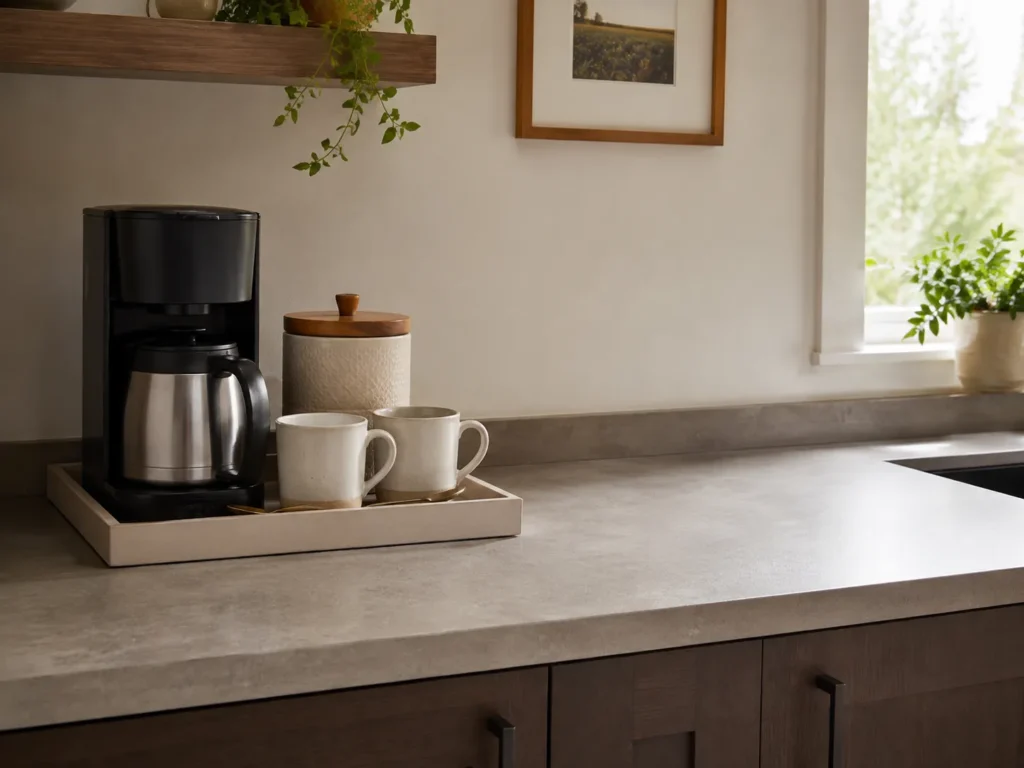
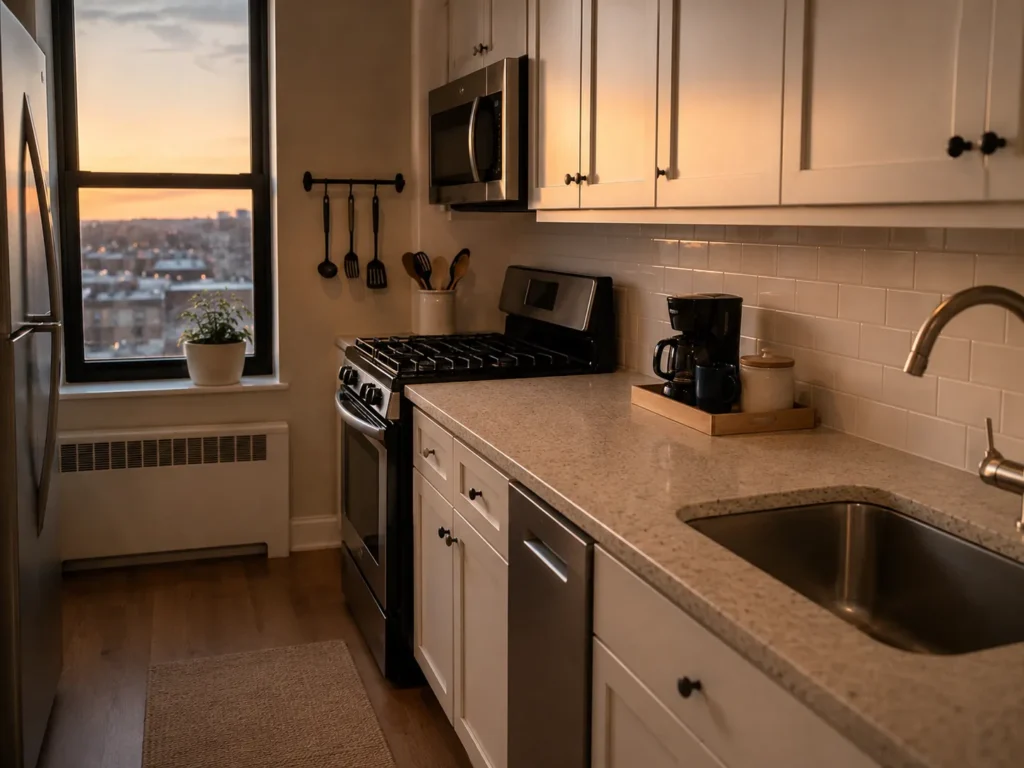
Coffee supplies tend to expand because they are used in several small steps. Mugs, beans, filters, spoons, and sweeteners can easily take over the counter around the machine. A shallow tray or coffee organizer gives that routine a boundary and makes it clear what belongs there.
Keep the tray only as large as the daily setup needs. A deep basket may hide supplies, but it also makes the station harder to wipe down and easier to overfill. Extra mugs and backup supplies usually belong in the nearest cabinet.
Keep cooking tools near the stove, but limit the category
A utensil crock can save drawer space and keep the tools you reach for during cooking within easy reach. It works best for a narrow category, such as spatulas, tongs, wooden spoons, and turners. Once it starts holding every whisk, peeler, thermometer, and duplicate spoon, it becomes visual clutter that is harder to clean.
A wall rail can be a better option when the counter is very tight, and there is a clear stretch of wall beside the cooking zone. Mount only the tools used constantly, and be realistic about grease and dust. Open storage is easy to access, but it requires more frequent cleaning than a drawer.
Use a tray to contain a routine, not to decorate around clutter
Countertop trays work well for a defined group of small items: a cooking-oil set, a soap dispenser and dish brush, or a coffee setup. They make cleaning easier because the group can move together. They do not create extra storage capacity.
If the tray keeps collecting unopened food, mail, cords, and random kitchen tools, it has become a holding area instead of an organizer. Remove those items and fix the missing storage zone rather than buying a larger tray.
Let cabinet organization carry more of the load
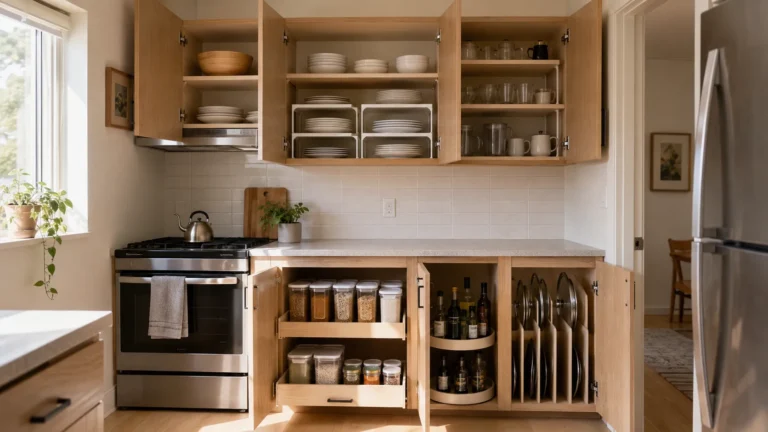
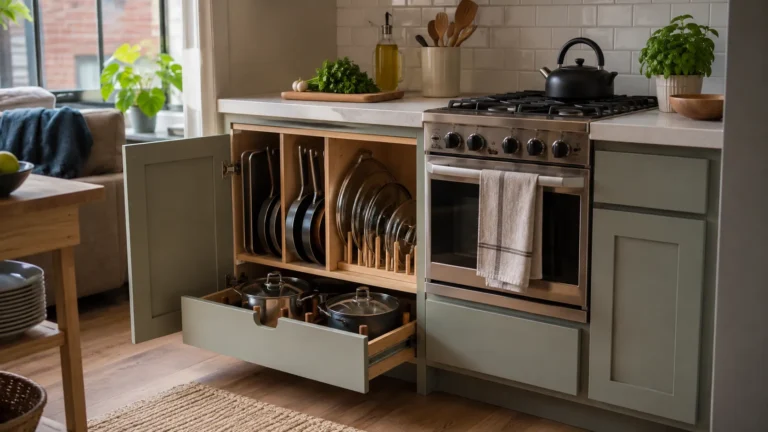
Counters become crowded when cabinets are difficult to use. A cabinet full of unstable stacks or mixed categories makes it quicker to leave the blender, lunch containers, or dry goods outside. Improving the cabinet that should hold those items usually clears more space than adding another countertop organizer.
The systems in small kitchen cabinet organization ideas that use the space better are useful here because shelf risers, pull-out bins, and vertical dividers can make an existing cabinet easier to reach into and reset. Start with the cabinet that is causing the most counter overflow.
Keep food storage close to where you unpack groceries
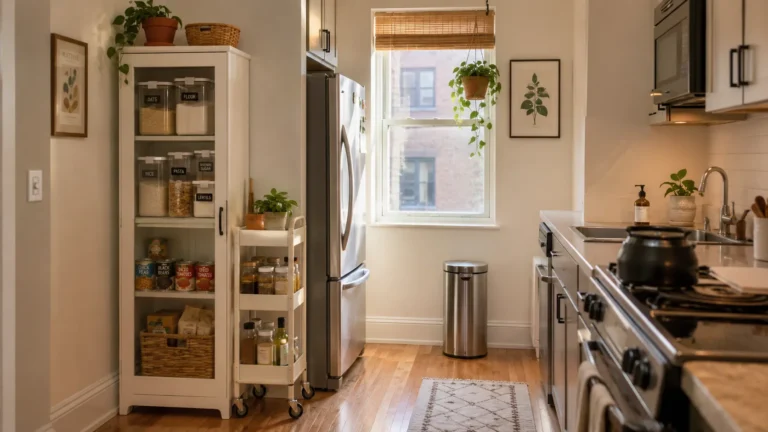
Food should not live on the counter simply because the pantry or food cabinet is too full to use. Group everyday dry goods in the cabinet or shelf closest to the prep zone, then reserve a separate place for backup stock. A compact bin or shelf riser may be enough to separate snacks, breakfast items, and cooking ingredients without adding furniture.
For a bigger plan that covers cabinets, carts, and unused vertical space, small apartment kitchen storage ideas that add useful space can help you choose the right storage zone before adding more containers.
Be deliberate about fruit, bread, and other food that stays visible
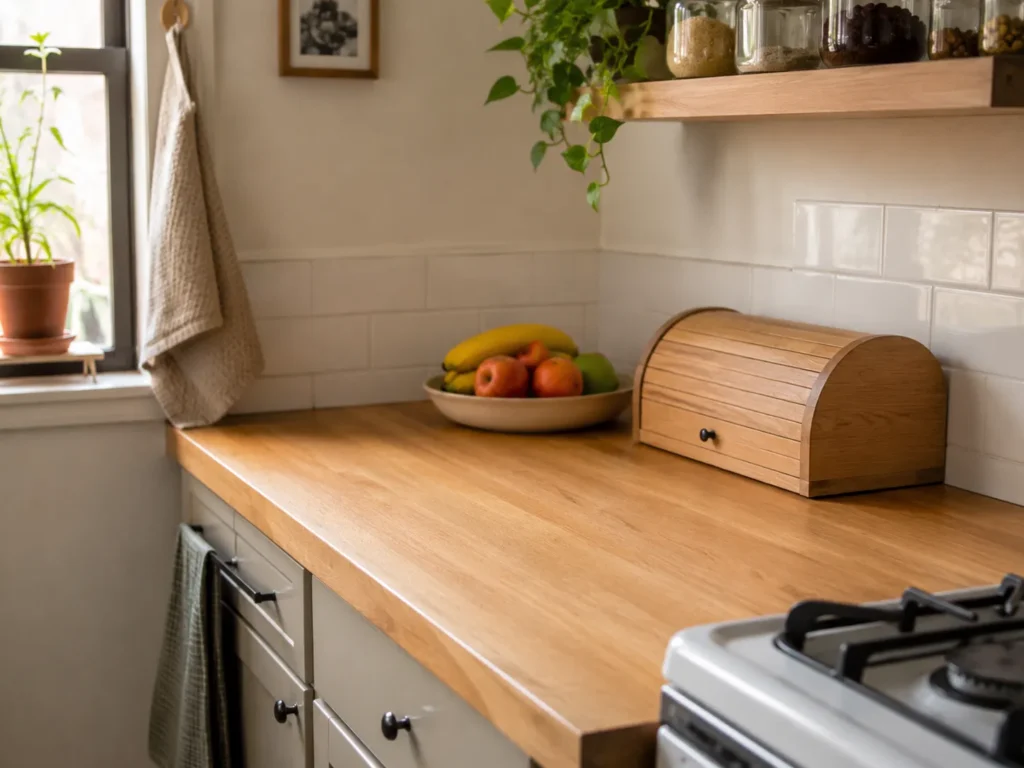
Some food does need to stay out. A fruit basket, bread box, or small produce bowl can be practical when it keeps perishable items visible and within reach. Keep the container shallow enough that food is easy to see and remove anything that does not belong with it.
The tradeoff is visual weight. One contained food zone can look intentional; several open bowls, jars, and baskets can make a compact counter feel busier than it is. Keep only the food you will use soon, and move backup packages to a cabinet.
Use the refrigerator to relieve the counter, not replace it
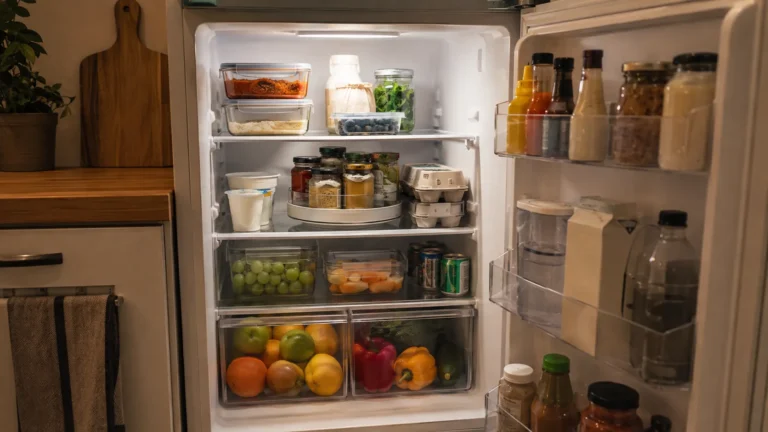
If unopened drinks, produce, or leftovers keep landing on the counter, check whether the refrigerator is organized around how you actually shop and cook. Grouping quick-grab items together and leaving a little room for incoming groceries can reduce the temporary pileup after a store run.
Small refrigerator organization ideas for a tiny kitchen can help you set up those zones without turning every shelf into a row of containers. The goal is access, not a picture-perfect refrigerator that is hard to maintain.
Reset the counter at the end of the day
The easiest counter system is one you can restore in two or three minutes. Put mugs in the dishwasher, return food to its zone, wipe the clear prep area, and move anything that belongs in another room. Do not wait for the counter to become unusable before resetting it.
If the same item repeatedly ends up there, make one practical change. Add a drawer divider, clear a cabinet shelf, or create a small food zone. For kitchens without a dedicated pantry, organizing a kitchen without one can help you build a storage plan around the space you already have.
The best counter organization is not a collection of matching accessories. It is a small number of useful zones that leave room for cooking.