17 Small Studio Apartment Storage Ideas That Use Space Better
Affiliate Disclosure: Compact Living Digest contains affiliate links. As an Amazon Associate, I earn from qualifying purchases at no additional cost to you.
A studio has to do the work of several rooms without the walls that normally hide each room’s clutter. That is why more bins alone rarely solve the problem. The useful storage choices make a zone easier to use: a bed holds infrequently used items, a desk disappears after work, and a cart moves to where it is needed.
Start by noticing where things currently land when you come home, cook, work, sleep, and get dressed. Those friction points tell you what needs a home. The ideas below prioritize usable floor space, accessible daily storage, and furniture that earns its footprint.
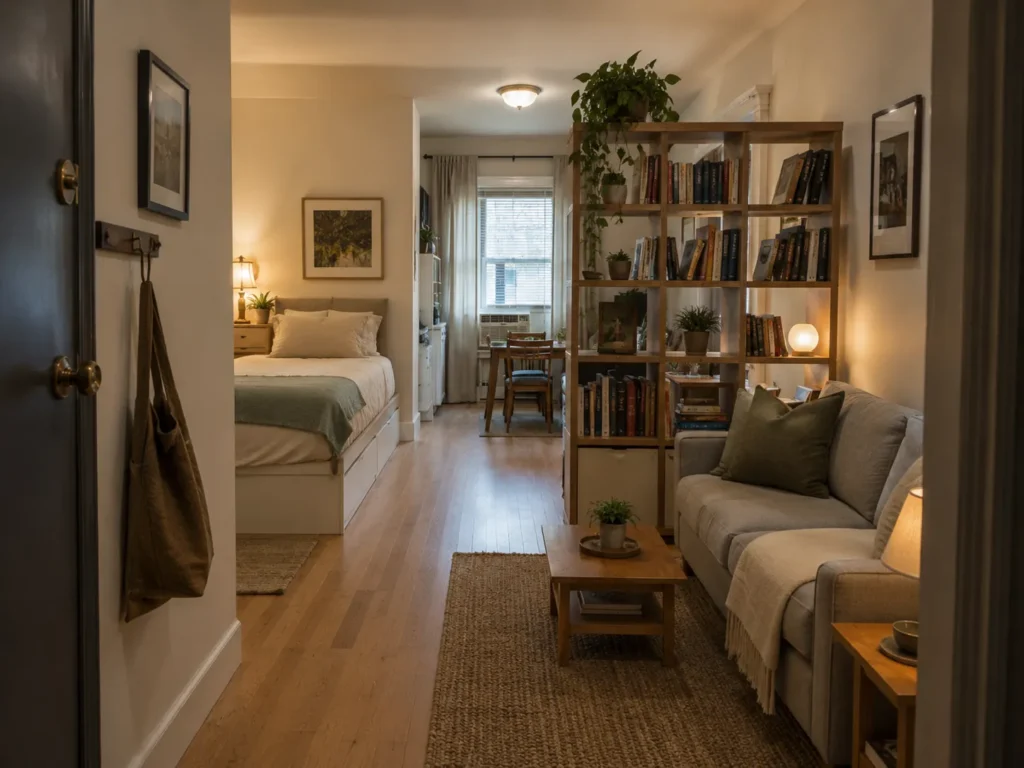
Start with zones, not matching storage bins
In a studio, storage works best when it supports a specific activity rather than filling every blank wall. Decide where you sleep, eat, work, and decompress first; then give each zone a small, realistic amount of storage. For a whole-home starting point, these small apartment storage ideas that actually save space can help you spot pressure points beyond the studio’s main room.
1. Give every large piece one clear storage job
Before adding a cabinet, name the problem it will solve: linens, paperwork, pantry overflow, or items used near the door. A piece that is merely “extra storage” tends to become a holding place for undecided things. Organizing items by category makes it easier to see when you are running out of space and to decide what needs to be moved or removed, rather than squeezing more in.
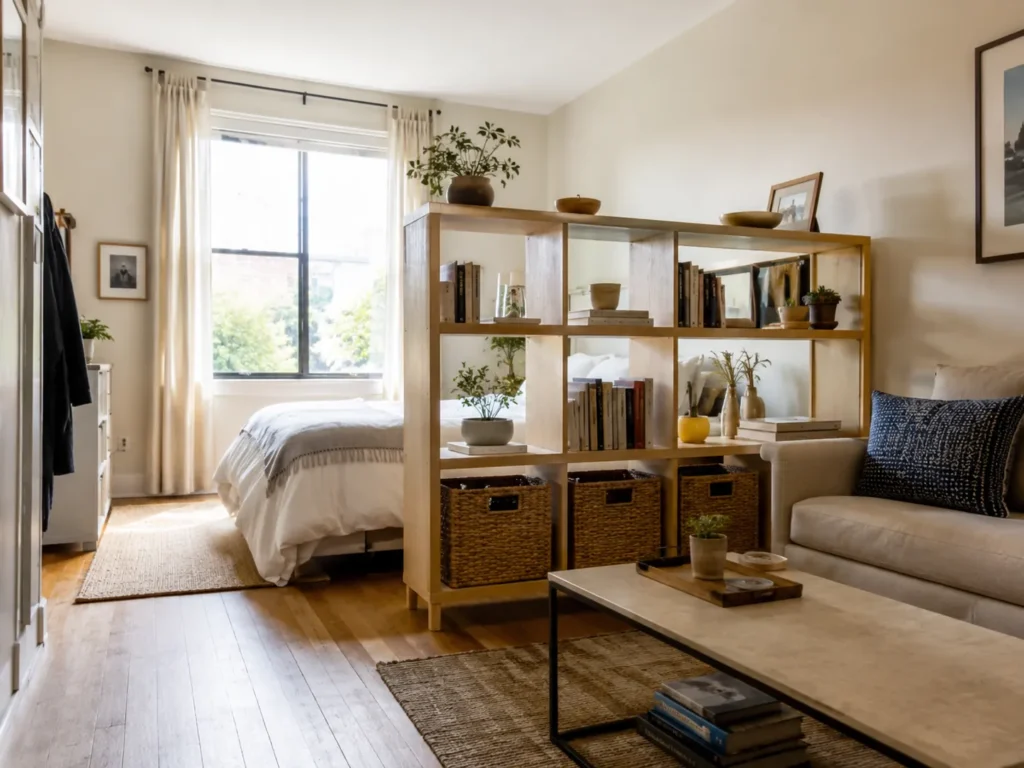
2. Use a bookcase as a divider only when both sides benefit
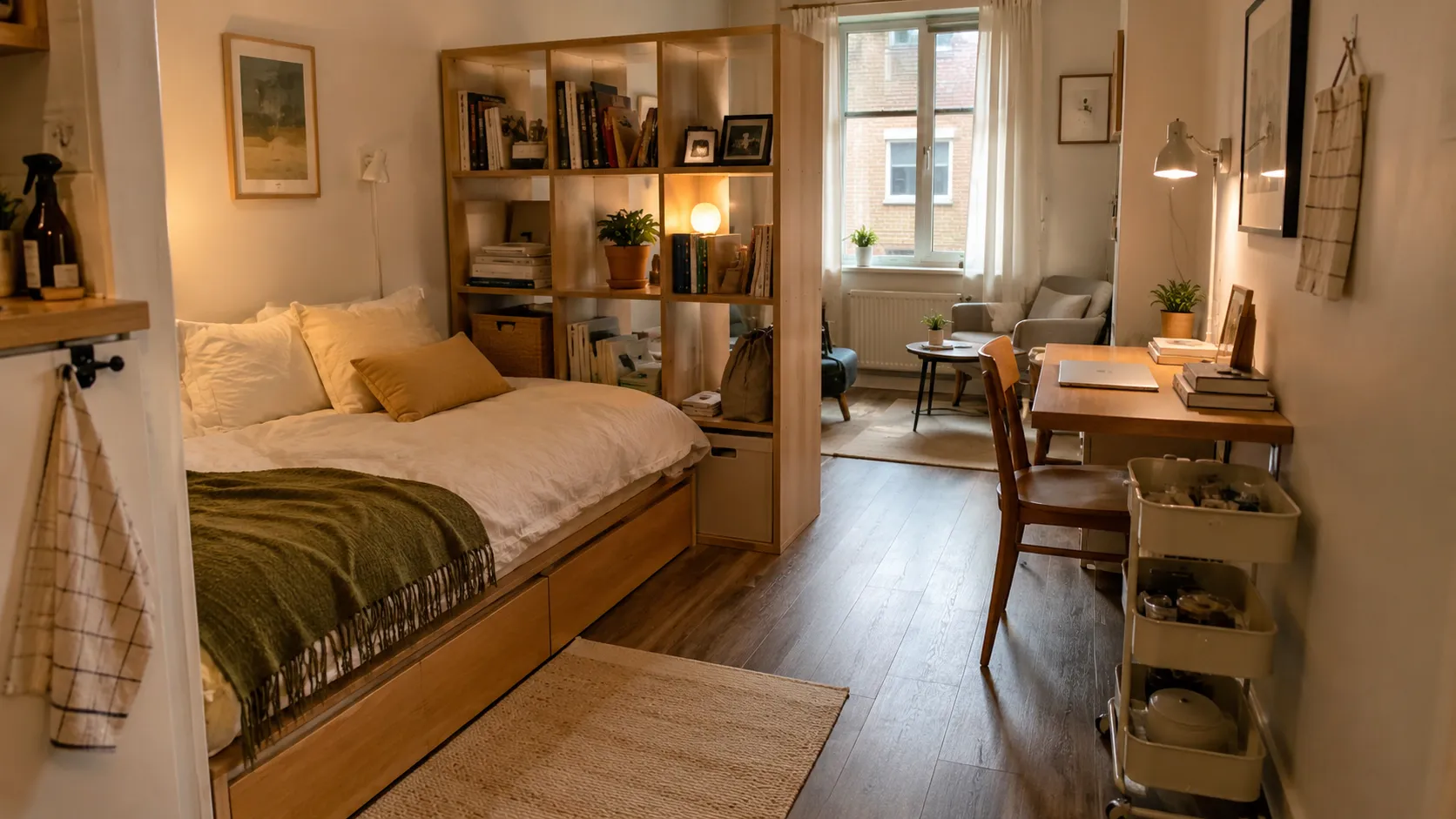
An open bookcase can create a sleeping zone without closing off light, while its shelves serve the living area from either side. Keep the lower shelves for heavier items and leave some open space so the divider does not read as a solid wall. Secure tall bookcases to the wall according to the manufacturer’s instructions, especially in a home with children or pets.
If the living room still feels short on storage, these small apartment living room storage ideas offer more practical ways to add it without making the space feel crowded.
3. Choose under-bed storage for items you do not need every day
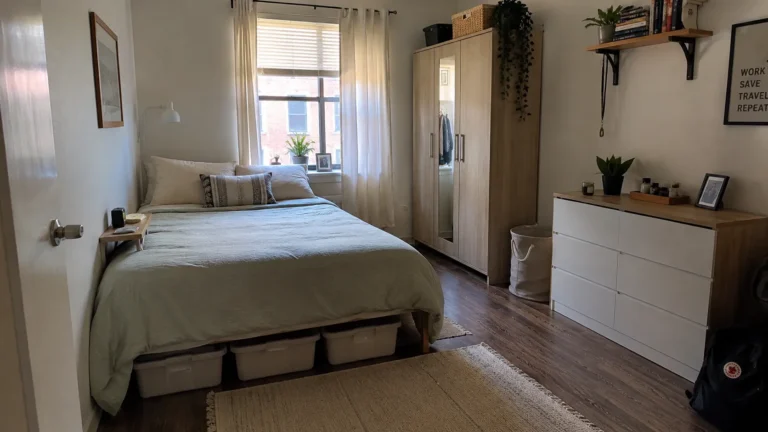
The space under a bed is valuable because it is already occupied floor area. Use a storage bed or low under-bed containers for spare bedding, off-season clothing, or luggage; not for the things you reach for each morning. Measure the actual clearance, including any center support, before choosing bins.
For comparison help, see best storage beds for small bedrooms.
4. Put a slim rolling cart in a space with a real purpose
A narrow cart can hold coffee supplies, cooking tools, toiletries, or work materials and then roll out of the way. It earns its place only when there is a defined parking spot for it. A cart left in a traffic path becomes a movable obstacle, not flexible storage.
5. Use nesting tables when you need extra surface space occasionally
Nesting tables can work well in a studio because the smaller ones can be pulled out when needed and tucked away afterward. Look for a set that works as a side table most of the time, rather than adding several pieces that take up floor space every day. Just keep in mind that nesting tables add surface space, not storage, so they will not replace a cabinet or other closed storage.
6. Keep the main desk against a wall, not in the center of the room
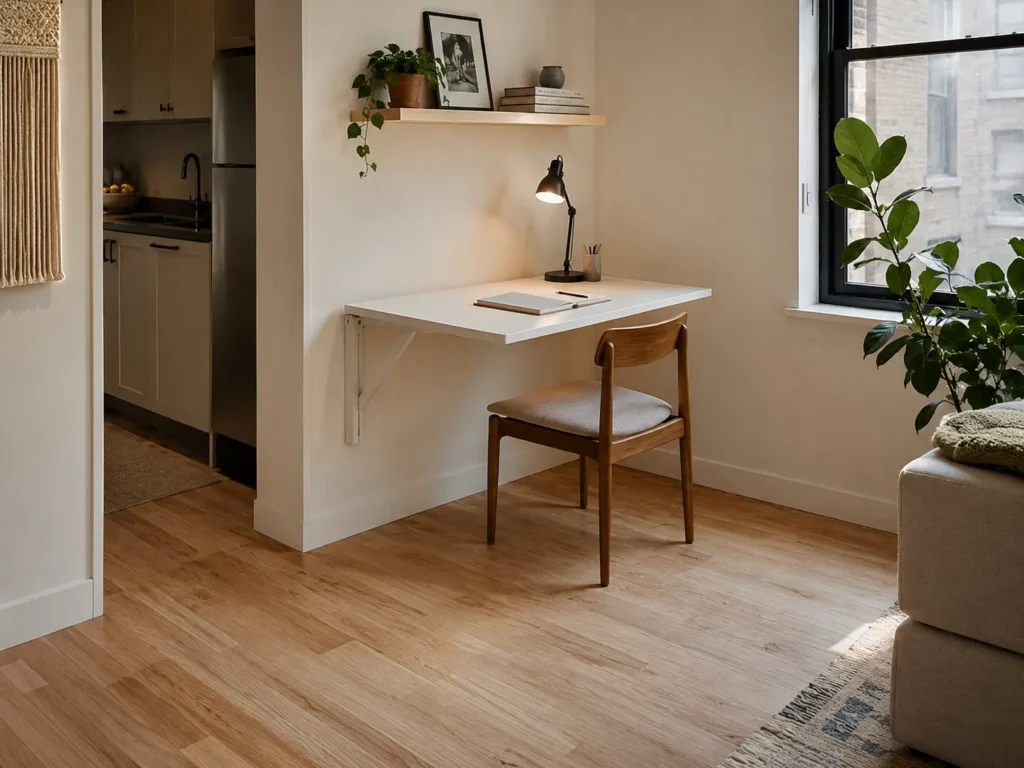
A wall-mounted or shallow desk keeps chair movement from cutting through the studio. Leave enough clearance to sit down comfortably, then check what happens when the chair is pushed in. A desk that makes the bed or kitchen hard to reach will be annoying no matter how attractive it is.
7. Pick a folding desk only if you’re willing to fold it when needed
A folding desk is helpful when your work area truly needs to disappear for meals, exercise, or guests. If you work there every day and never close it, a shallow permanent desk may be simpler. For options that suit that tradeoff, browse best folding desks for small spaces.
8. Use high wall storage for occasional items, not daily essentials
The upper part of a wall can be a good place for things you do not need often, such as seasonal decor, spare linens, or extra supplies. Keep frequently used items within easy reach. For anything stored higher up, use shallow storage, stay within the mounting system’s weight limits, and use a sturdy step stool instead of climbing on furniture.
9. Store the sofa’s overflow underneath it
If your sofa has enough clearance, low containers can hold throws, board games, or rarely used media. Choose lidded containers when dust is a concern, and measure the lowest point under the frame rather than the space you can see from the front. Avoid putting everyday remote controls or chargers there; retrieving them should be easy, not a small project.
10. Use the back of a door for light, contained items
An over-door organizer can be a useful spot for lightweight items such as cleaning cloths, hair tools, small accessories, or pantry packets. Before using one, make sure the door can still close and swing freely. Bathroom and closet doors often work better than an entry door, where clearance may be tighter.
11. Build a tiny landing zone beside the entrance
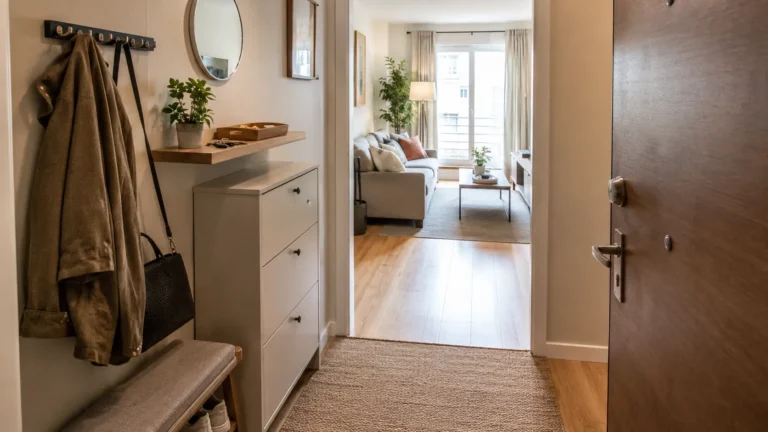
Even without a foyer, you need one place for keys, bags, mail, and the shoes currently in rotation. A narrow wall rail with hooks and a small tray can do more than a bulky console. The goal is not to store every coat or pair of shoes there; it is to stop those few daily items from travelling through the whole studio.
12. Let one closed cabinet carry the visual clutter
Open shelves are useful, but a studio benefits from a single place to store charging cables, paper, pet supplies, and other miscellaneous items. Choose a cabinet with an interior you can divide into a few categories. Closing the door can make the room feel tidier, but it does not replace the need to actually organize what is inside.
13. Put your tallest storage where it will not squeeze the walkway
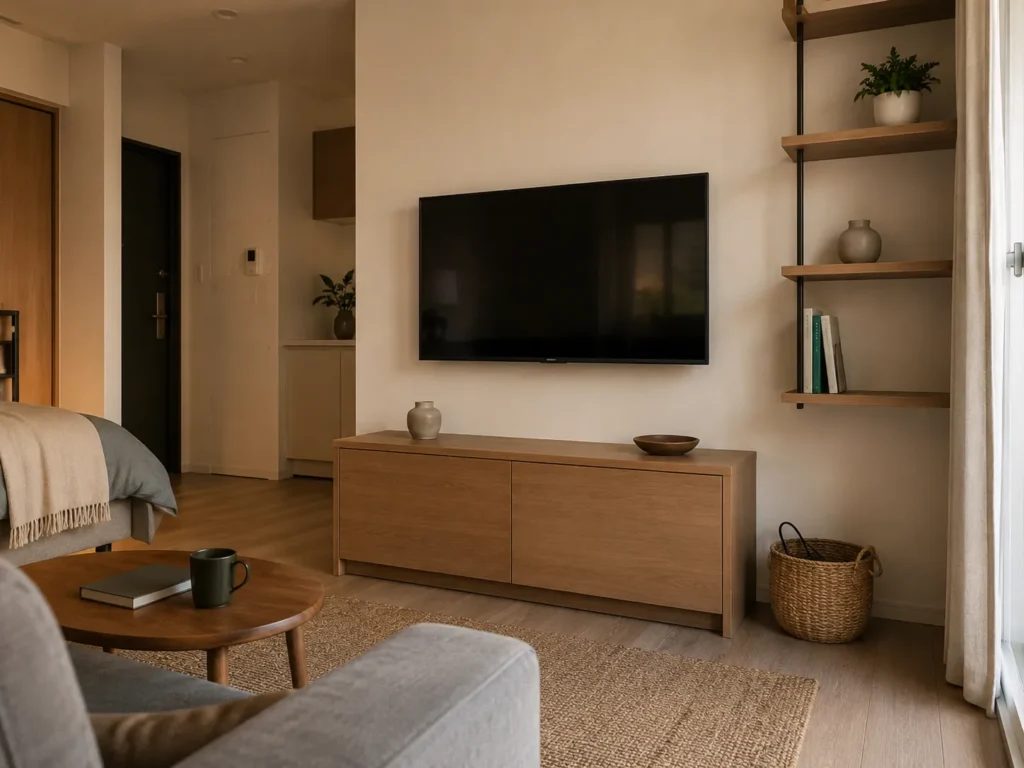
Tall storage uses vertical space well, but its depth and door clearance still affect the room. Before adding a wardrobe or cabinet, measure the tightest walkways through the room, especially between the bed and bathroom, the entry and kitchen, and the chair and desk. Place taller pieces against a wall so they do not block everyday paths.
14. Keep kitchen overflow close to the kitchen
In a studio, it is usually easier to keep pantry items, food containers, and cleaning supplies close to the kitchen rather than storing them across the room. A slim cart or shallow shelf can add useful storage without making the living area feel like an extension of the pantry. Keep everyday staples within easy reach, and use higher shelves for appliances or supplies you only need occasionally.
15. Choose a storage ottoman only when it earns its surface area
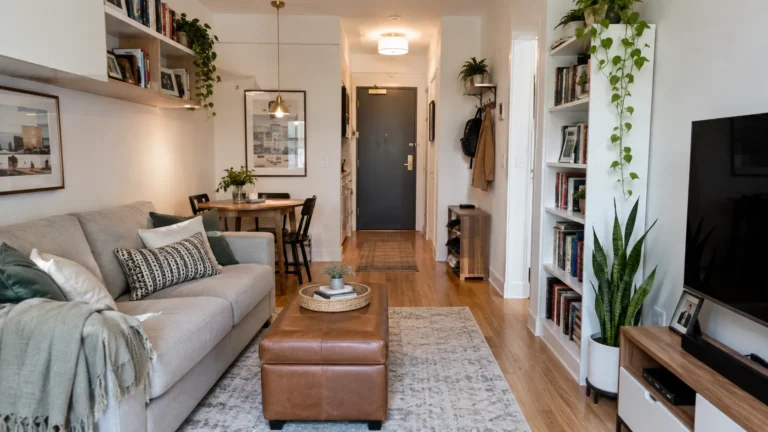
A storage ottoman can hold blankets while working as a coffee table, footrest, or spare seat. It is less effective when it is so bulky that walking around it feels cramped. Make sure the lid can open fully and that you will not have to move everything off the top every time you need something inside.
16. Make your work supplies easy to pack away
In a studio, office clutter stays visible after the workday unless the system has a finish line. Keep a small file box, drawer, or container near the desk for items that must be removed from the surface. If a dedicated office corner is impossible, these small home office ideas when you don’t have an office can help you set up a work zone that resets quickly.
17. Leave a little room for everyday clutter
Not every shelf, drawer, or basket needs to be filled completely. Leaving a little extra space gives you somewhere to put incoming mail, laundry, returns, or other items that need to be dealt with later. A studio works better when most things have a designated place, but a small amount of breathing room makes it easier to keep the space under control.
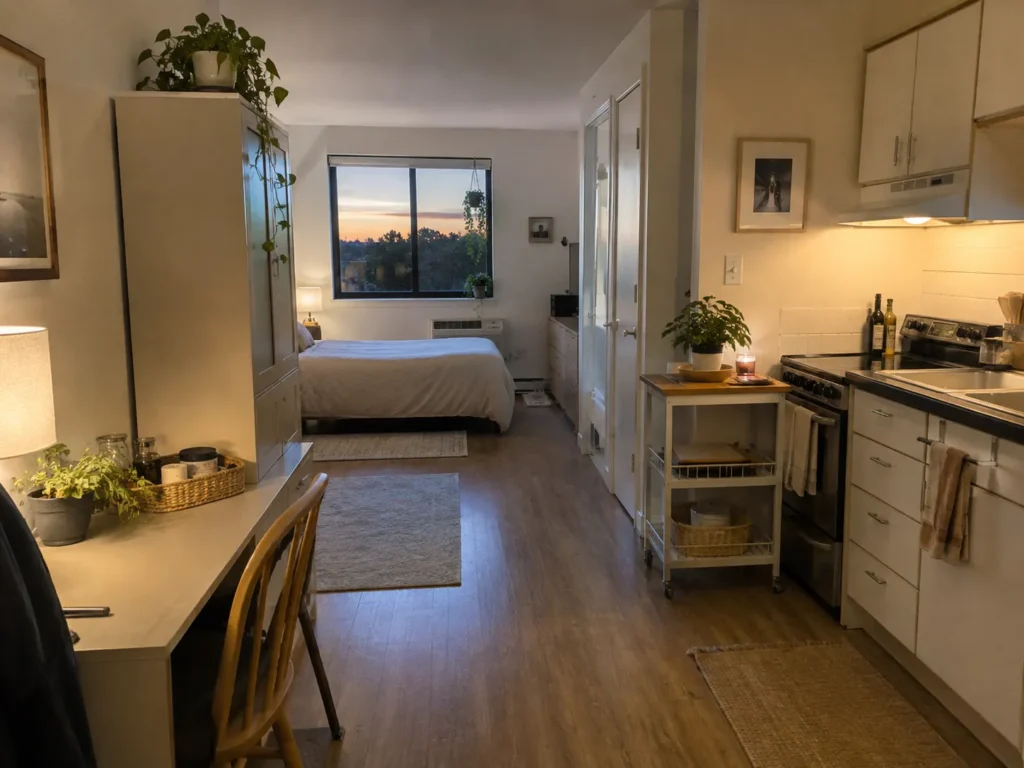
You do not need to use every available spot for storage. Focus on the pieces that solve the problems you deal with most often, keep walkways clear, and make everyday items easy to put away. A studio will feel much more comfortable when the storage supports the space instead of taking it over.