Small Apartment Shoe Storage: 12 Ideas for Tiny Entryways
Affiliate Disclosure: Compact Living Digest contains affiliate links. As an Amazon Associate, I earn from qualifying purchases at no additional cost to you.
Shoes create a traffic problem before they create a storage problem. In a narrow entry, a pair beside the door reduces the walkway, collects dirt, and turns leaving the house into a search. The answer usually isn’t a big rack. It’s a storage method that fits the entry depth, the shoes actually worn each week, and the way the door opens.
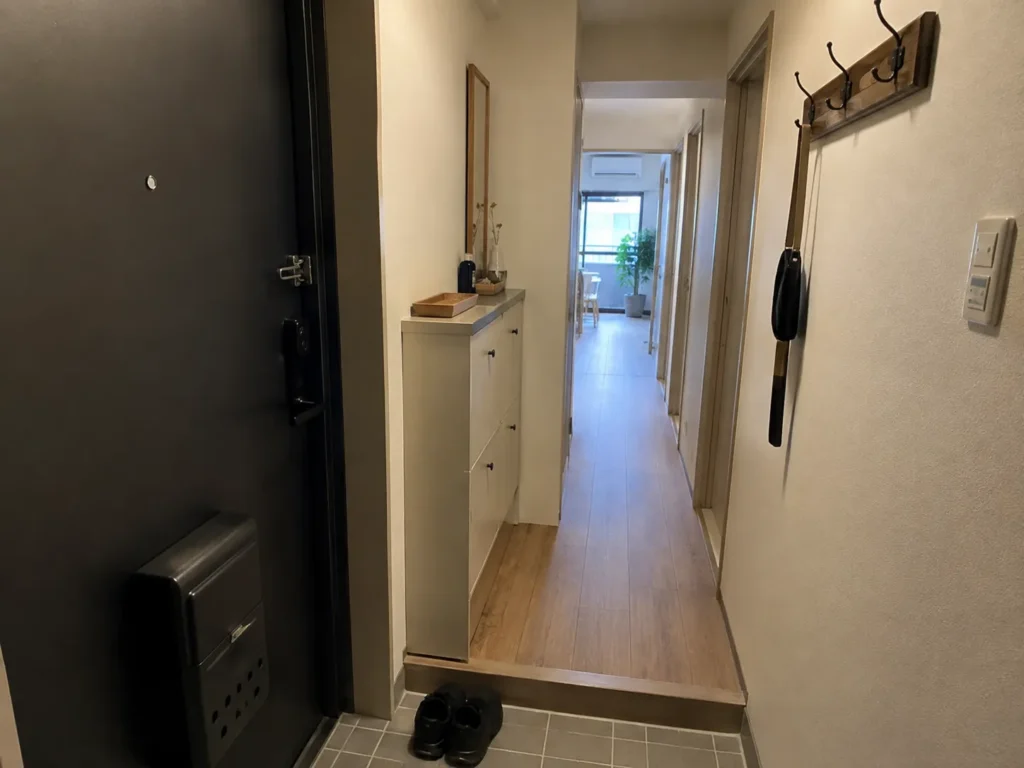
Start with the walkway, not the shoe collection
Before buying anything, measure the narrowest point of the entry and the space needed for the front door to open. Then decide how many pairs of shoes need to live there. The everyday number is usually much smaller than the total owned.
If the front door opens directly into the living area, these small entryway storage ideas for homes without a foyer can help you make the first few feet work harder.
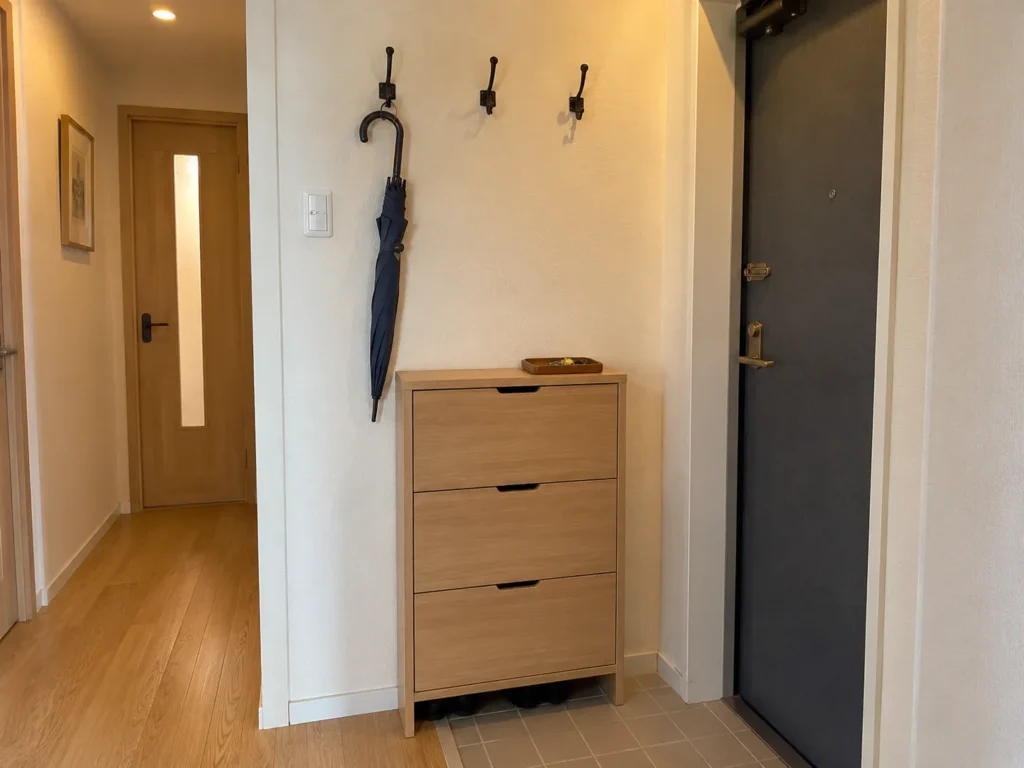
1. Use a shallow wall-mounted shoe cabinet when depth is the main problem
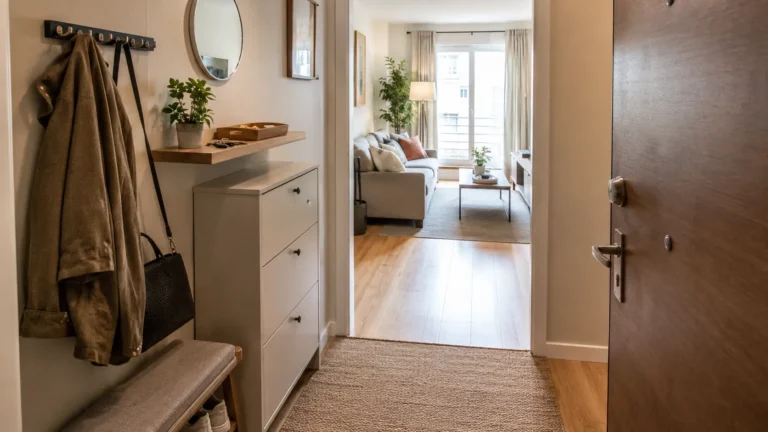
A shallow tilt-out cabinet keeps shoes out of sight without projecting as much as a standard bookcase or bench. It is not the best place for tall boots, bulky running shoes, or a large family collection. It works best for flats, sneakers, and the pairs you reach for most.
Look for a cabinet shallow enough to keep the walkway usable, then measure its full projection, baseboards, and the path beside it. A few extra inches can make a difference in a narrow hallway, especially when a door or drawer needs to open.
2. Choose a taller tilt-out cabinet only when you can anchor it
A taller shoe cabinet holds more than a low unit, but height affects safety and installation considerations. Check the manufacturer’s anchoring requirements before buying one, especially if it’s for a rental.
It can work well if you’re allowed to secure it properly to the wall. If you can’t anchor it safely, or the wall is interrupted by switches, a thermostat, or a swinging door, a freestanding option may be a better fit.
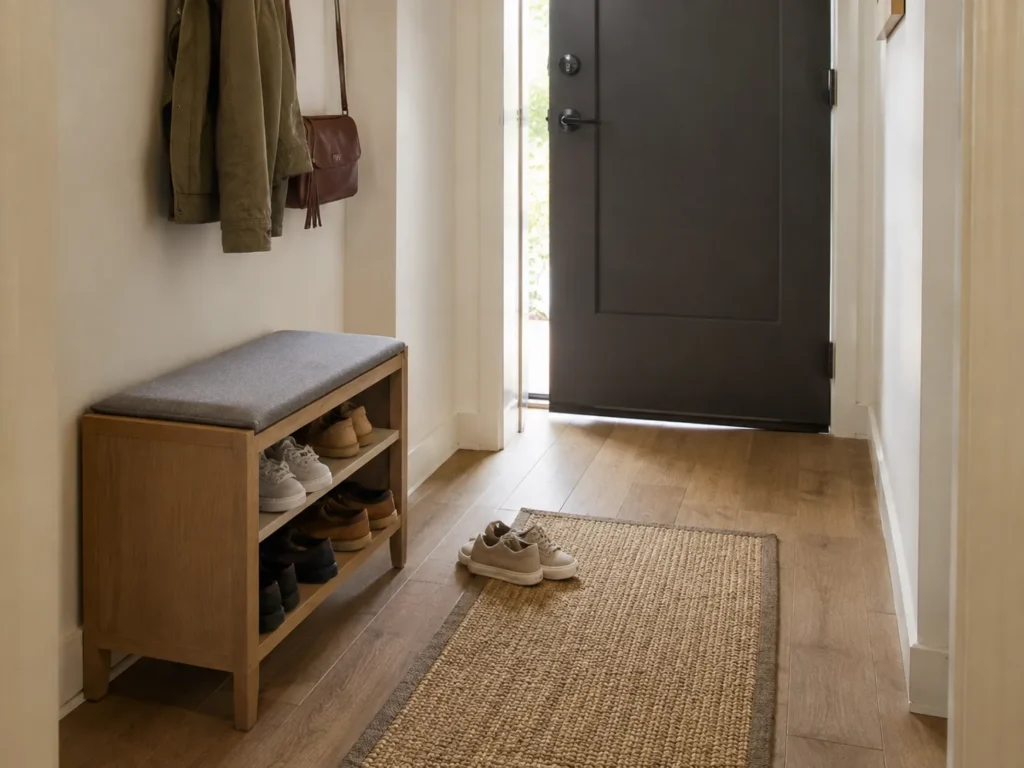
3. Put a low shoe bench where you actually sit to put shoes on
A bench earns its floor space by storing a small rotation of shoes and giving you a place to sit. It is less useful when it becomes a deep container for every pair you own. Look for open shelves or cubbies underneath.
Keep it shallow enough that someone can sit without blocking the path. A narrow stool and one shoe basket may be more realistic than a full bench.
4. Use stackable clear shoe boxes for pairs that need to stay visible
Stackable boxes are useful for dress shoes, heels, or seldom-worn pairs that are hard to identify in a cabinet. Visibility is the useful feature. If boxes are too deep for the shelf or must be unstacked every time, they create another frustrating system.
Use them in a bedroom closet or at the back of an entry closet for less-frequent pairs. They are a poor fit for wet shoes and muddy boots.
5. Use an over-door organizer on a door that can still close cleanly
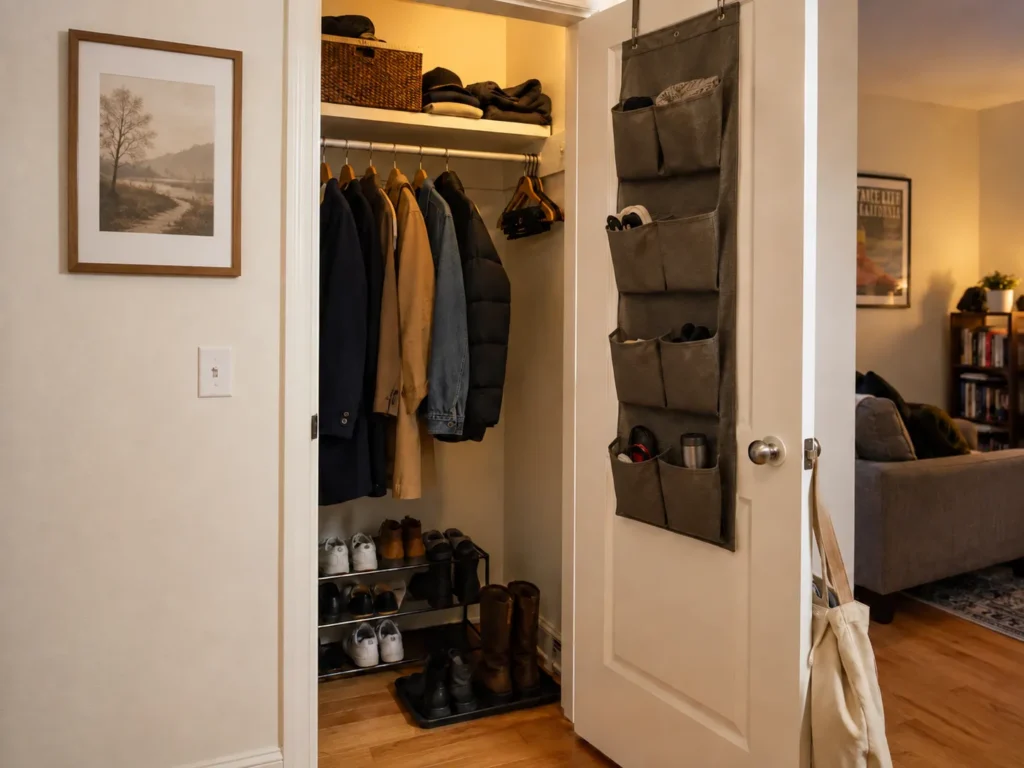
An over-door organizer adds storage without taking floor space, but it depends on the door. Check hook thickness, top clearance, and whether the door still latches when the organizer is full. A fabric pocket organizer works best on an interior closet door or a utility room door.
Reserve pockets for lightweight shoes, slippers, flip-flops, or kids’ pairs. Heavy shoes make every pocket harder to use.
6. Turn the bottom of a coat closet into a dedicated shoe zone
If the entry closet already exists, do not leave its floor as an unplanned dumping ground. A low rack, a boot tray, or two labelled bins can divide it into storage for shoes in rotation and shoes that belong elsewhere.
It is also a good place for an over-door organizer. For broader no-closet strategies, the article on small apartment storage solutions for homes with almost no closets takes the same practical approach beyond the entry.
7. Use a boot tray for the shoes that are supposed to stay out
Not every shoe should be hidden immediately. Snowy, wet, or muddy footwear needs a contained place to dry before it goes into a cabinet or closet. A boot tray protects the floor and keeps the mess contained.
Choose one that fits beside the door without making the threshold an obstacle. If it fills every day, the issue is usually too many pairs living at the entry.
8. Store seasonal shoes somewhere other than the entry
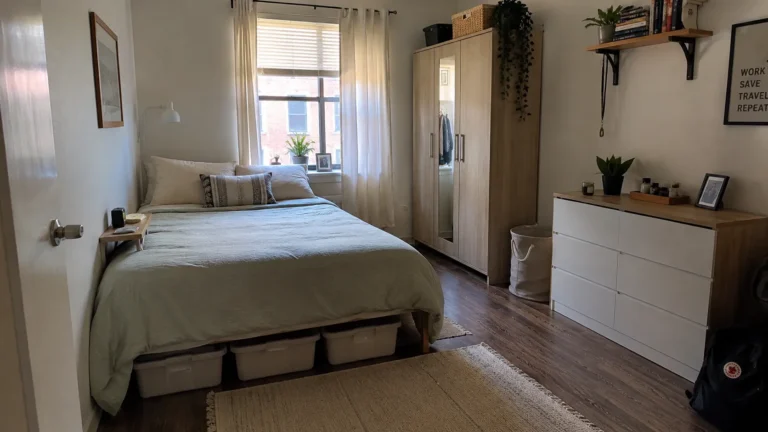
The entry should handle today, this week, and maybe the current season. Everything else can be moved to under-bed bins, a bedroom closet shelf, or a labelled tote.
Measure boot height and clearance under the bed before buying a low bin.
9. Use wall hooks for the pieces that travel with the shoes
Shoes tend to create a second pile of bags, umbrellas, dog-walking gear, and hats. A small hook rail keeps those items from spreading onto the bench or cabinet top.
Use only as many hooks as the wall can handle visually. A long row of bags and coats can make an entry feel more crowded than the shoes did.
10. Add a narrow open rack only when you need fast access
An open rack is right when shoes are used daily, and you can keep the shoe count down. It is easy to walk around, easy to see, and needs no doors or drawers. The downside is visual noise.
Use it for one or two people’s daily use.
11. Use vertical space above a cabinet for shoe-care supplies, not more shoes
A shallow shelf above a shoe cabinet can hold polish, a lint brush, spare laces, or a basket for keys. It uses wall space without asking you to reach overhead for shoes each morning.
Keep it shallow and mount it only where the wall and rental rules allow it. Sometimes the cabinet below is enough.
12. Make the system easy to reset after a busy week
A shoe storage setup should be simple enough to put back in order with minimal effort. Keep the pairs you wear most often near the entry, and move less-used shoes somewhere else so the area does not get overcrowded.
A small tray or basket can hold shoes that need cleaning, need to be returned to another room, or can be put away later. Empty it regularly so it does not become another permanent pile.
If the entryway still feels overloaded, these small apartment storage ideas can help you find other areas of the apartment that can take on some of the storage.
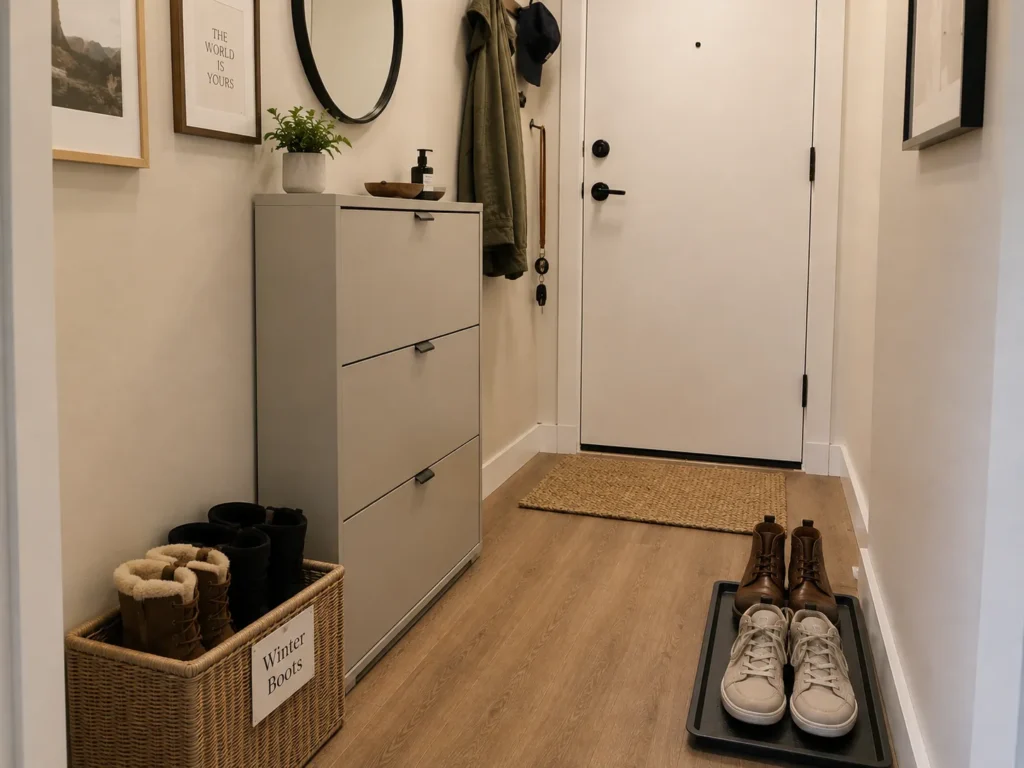
A better shoe storage setup should make it easy to keep the entry clear and put shoes away without thinking. Keep the pairs you wear most often near the door, choose storage that fits the available space, and move seasonal or rarely worn shoes elsewhere. That alone can make a small entryway much easier to use.