15 Small Apartment Storage Solutions for Homes With Almost No Closets
Affiliate Disclosure: Compact Living Digest contains affiliate links. As an Amazon Associate, I earn from qualifying purchases at no additional cost to you.
When an apartment has one small bedroom closet or none at all, every category starts competing for the same few cabinets. Coats end up on chairs, cleaning supplies move from room to room, and clothes take over the bedroom because there is nowhere else for them to go. The answer usually is not one giant storage unit. It is giving each category a practical home without filling the apartment with deep furniture.
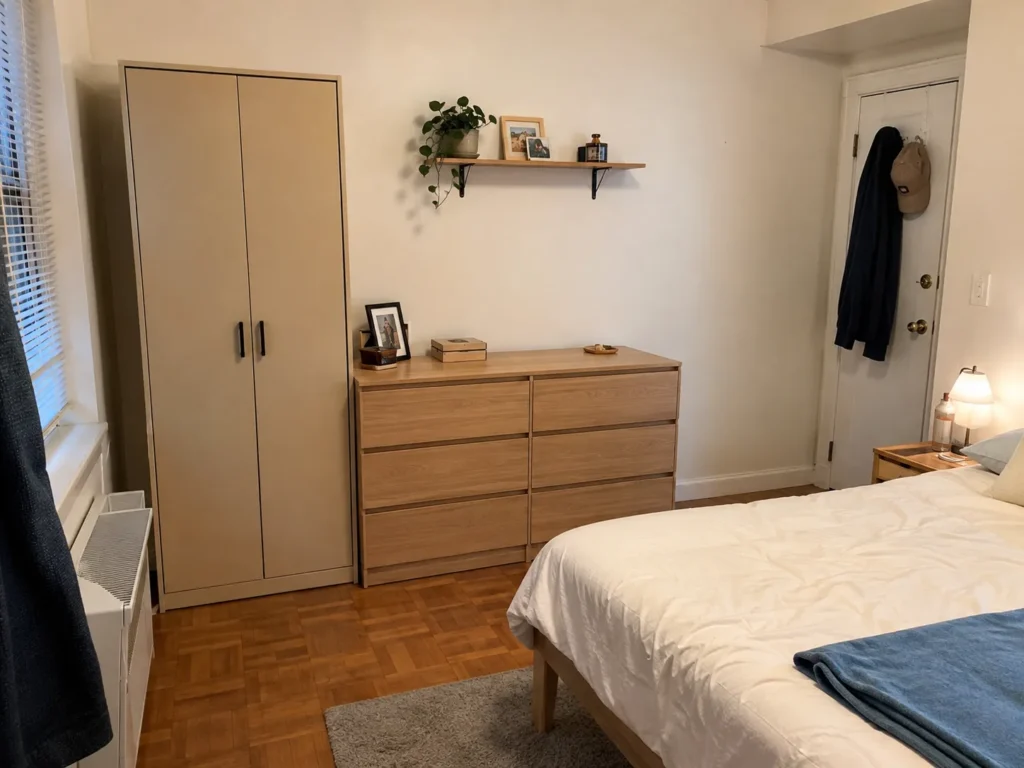
Start by deciding what the missing closet needs to hold
- Separate clothing storage from household storage. A bedroom closet is often expected to hold clothes, linens, towels, cleaning supplies, luggage, and off-season items. That arrangement fails because the things needed every day get buried behind things only used twice a year. Decide which items truly need hanging space, shelves, or a closed cabinet before shopping.
- Keep daily-use items closest to where they are used. Towels do not have to live beside clothing, and cleaning products do not need to be in a bedroom wardrobe. Moving these items to the bathroom, kitchen, or entry can free up the bedroom for what actually needs to be there.
- Start with the overall storage problem before buying more organizers. Bins and baskets can help contain smaller items, but they will not fix a bedroom with nowhere to store clothing or coats. Before buying organizers, look at the apartment as a whole and identify areas that could handle more storage. These small apartment storage ideas can help you spot underused walls, doors, corners, and other spaces that could do more.
Build a clothing-storage zone without a built-in closet
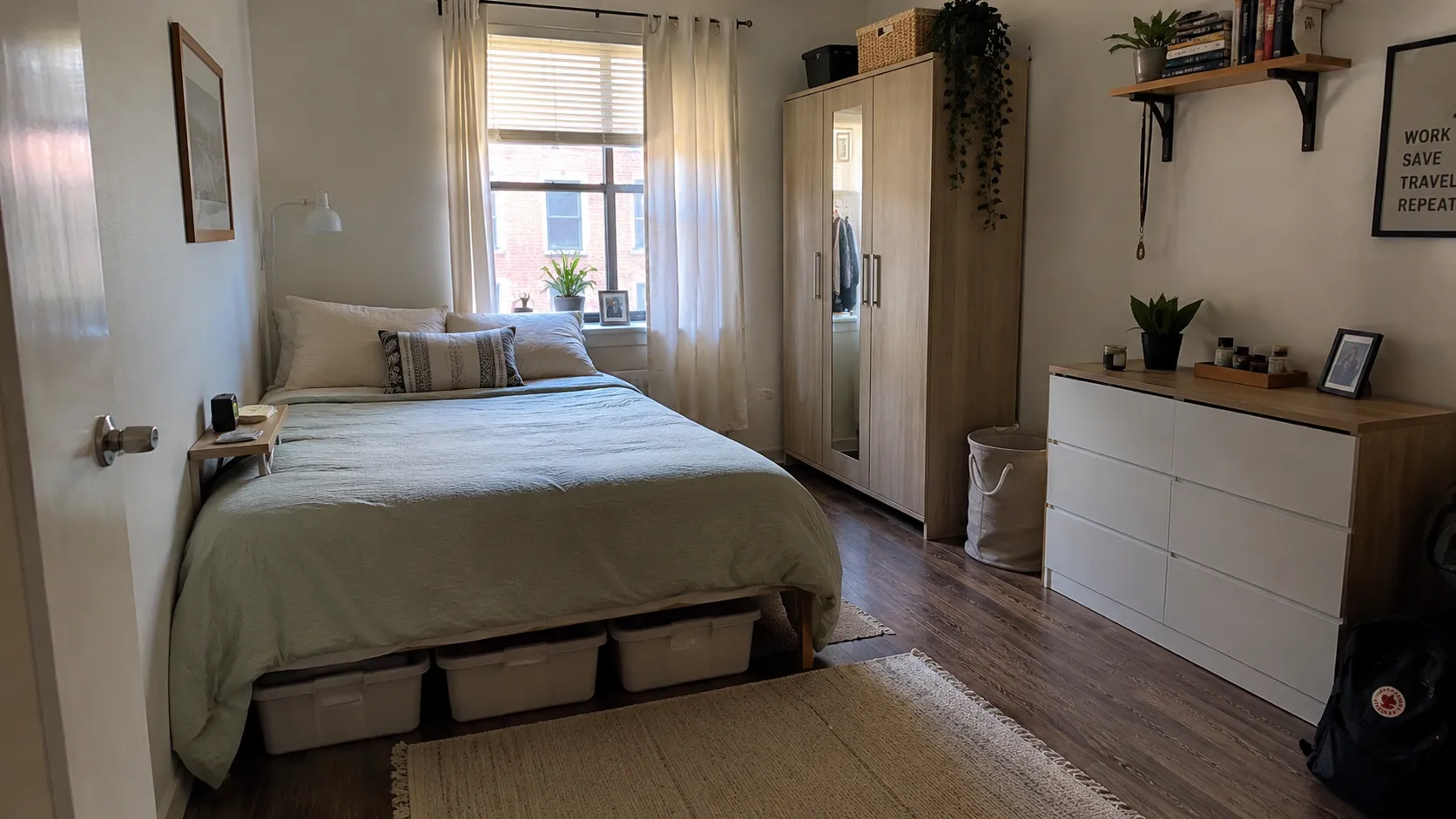
- Use a freestanding wardrobe when hanging clothes are the main problem. A wardrobe gives clothing a dedicated place and keeps it out of sight. The most important measurement is depth, especially if the wardrobe will sit beside the bed or near a narrow walkway. Before buying one, check the dimensions carefully and use painter’s tape to mark its footprint on the floor so you can see how much space it will actually take up.
- Use a garment rack only if you have a limited amount of clothing to hang. An open rack can be a flexible, renter-friendly option, but it also puts everything on display and can quickly make a small bedroom look cluttered. It works best for a smaller wardrobe, seasonal clothing, or an alcove where the rack feels contained. If it needs to hold most of your clothes, pair it with drawers, bins, or other closed storage so the room does not feel overloaded.
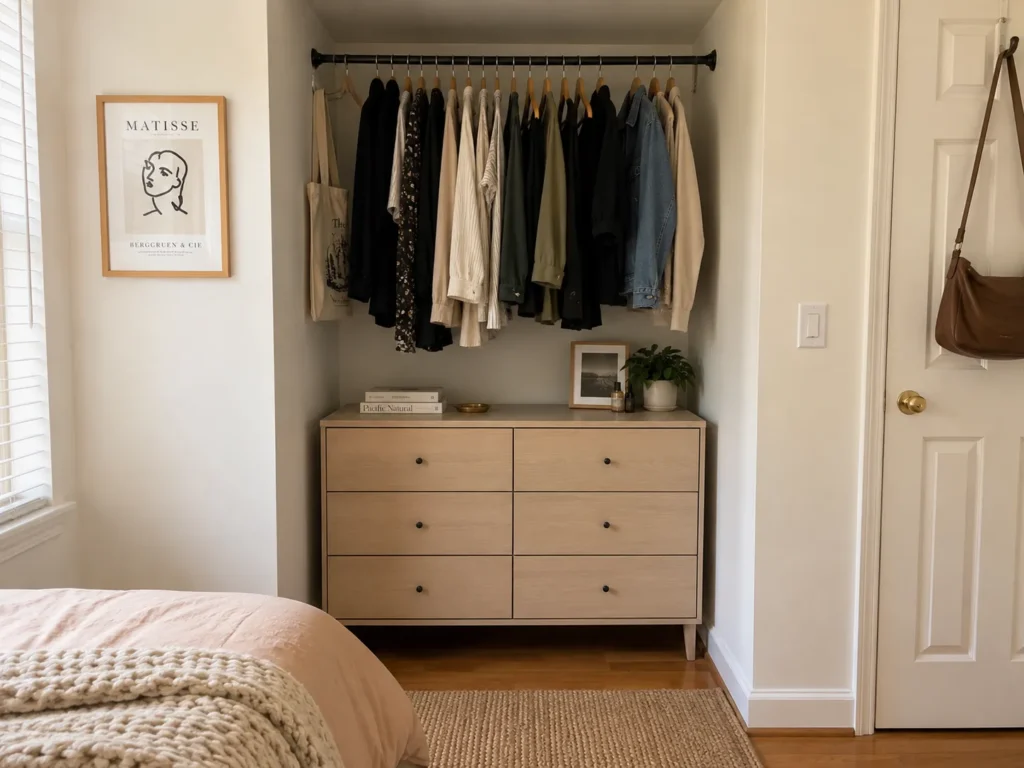
- Add a tension rod inside a real recess or between sturdy side walls. This can create hanging space in an alcove, laundry nook, or the dead space at the end of a hall. The tradeoff is load and stability. A tension rod is not the right choice for heavy coats or a crowded row of clothing, and it cannot compensate for uneven or weak surfaces.
- Let a low dresser do the work of shelves and drawers. Folded clothing, pajamas, socks, and accessories are usually easier to keep in drawers than in open baskets. Check the dresser’s depth and the clearance required to open its drawers. A piece that forces you to squeeze past the bed is too large, even if the wall is technically wide enough.
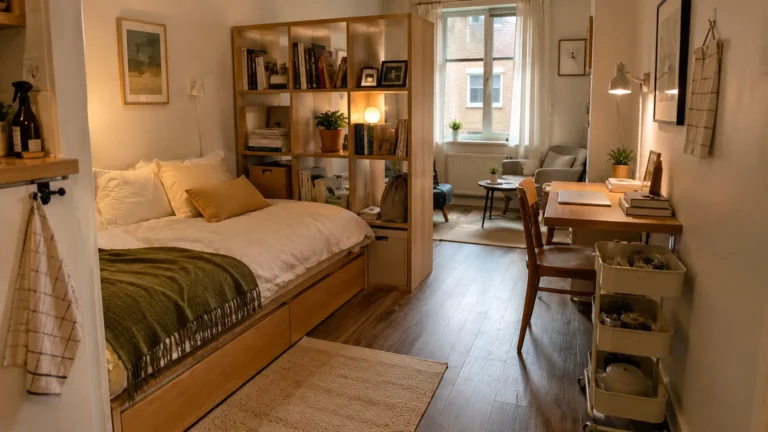
- Use the space under the bed for the items that do not need to be hung. Seasonal clothing, extra bedding, shoes, and travel bags are good candidates. Measure the clearance under the frame, including center supports, before buying containers. Daily-use clothing tends to become inconvenient when it is stored under the bed.
Replace the hall closet one function at a time
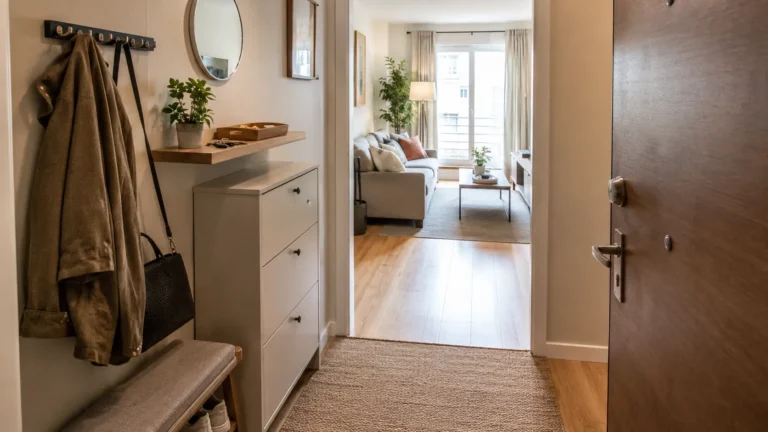
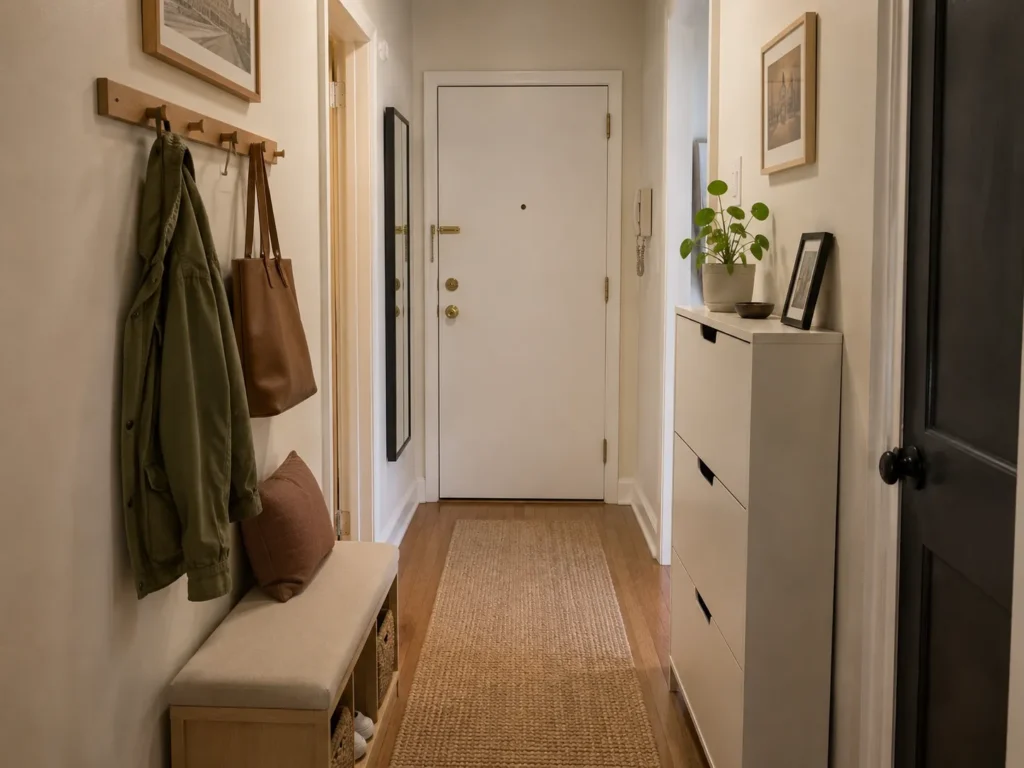
- Give the entry a small coat-and-bag zone. A hook rail, narrow shelf, or compact bench is enough for the items currently in use. Keep only the season’s coats and bags near the door; the rest belong in the bedroom wardrobe or a higher storage area. These small entryway storage Ideas for homes without a foyer can help you decide what deserves the limited floor space.
- Use a storage bench only if it replaces something else. A storage bench is useful when the entry also needs a seat for putting on shoes and a place for a few accessories. A bench that is just another container can make a narrow hallway harder to pass through. Check the open-lid clearance and whether the seat will end up buried under coats.
- Put shoes in a shallow cabinet or dedicated door organizer. Shoes are a poor fit for a deep bin because pairs become hard to find. A shallow cabinet keeps them close to the entry without projecting as far as a standard bench, while an over-door organizer is better for a closet or utility room door that can still close properly. These small apartment shoe storage ideas include practical options for tiny entryways.
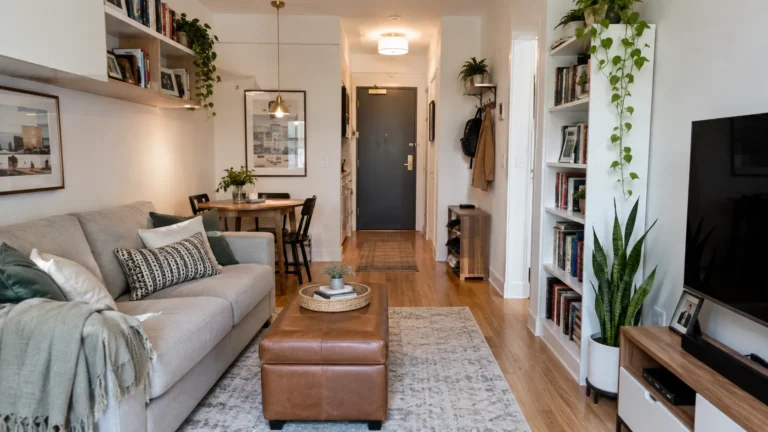
- Use a tall bookcase for linens, paper goods, or supplies that can be contained. A narrow bookcase can add a useful amount of vertical storage without taking up much floor space. Keep frequently used items on the lower shelves and reserve the upper shelves for things you only need occasionally. Secure tall furniture to the wall according to the manufacturer’s instructions, especially in homes with children or pets.
Use small storage pieces where they solve a specific problem
- Use a rolling cart for supplies that move between rooms. Cleaning products, laundry supplies, office materials, or hair tools may be easier to use on a cart than in a permanent cabinet. It can slide into a gap beside a washer, desk, or refrigerator, but measure the appliance-door clearance, outlets, and hoses before assuming the gap is usable.
- Put kitchen overflow in the kitchen before moving it to the bedroom. A narrow rolling cart, cabinet shelf riser, or over-door rack can make room for pantry goods and kitchen utensils without turning a bedroom into a pantry. For storage closer to where you prep and cook, these small apartment kitchen storage ideas focus on adding useful space without crowding the kitchen.
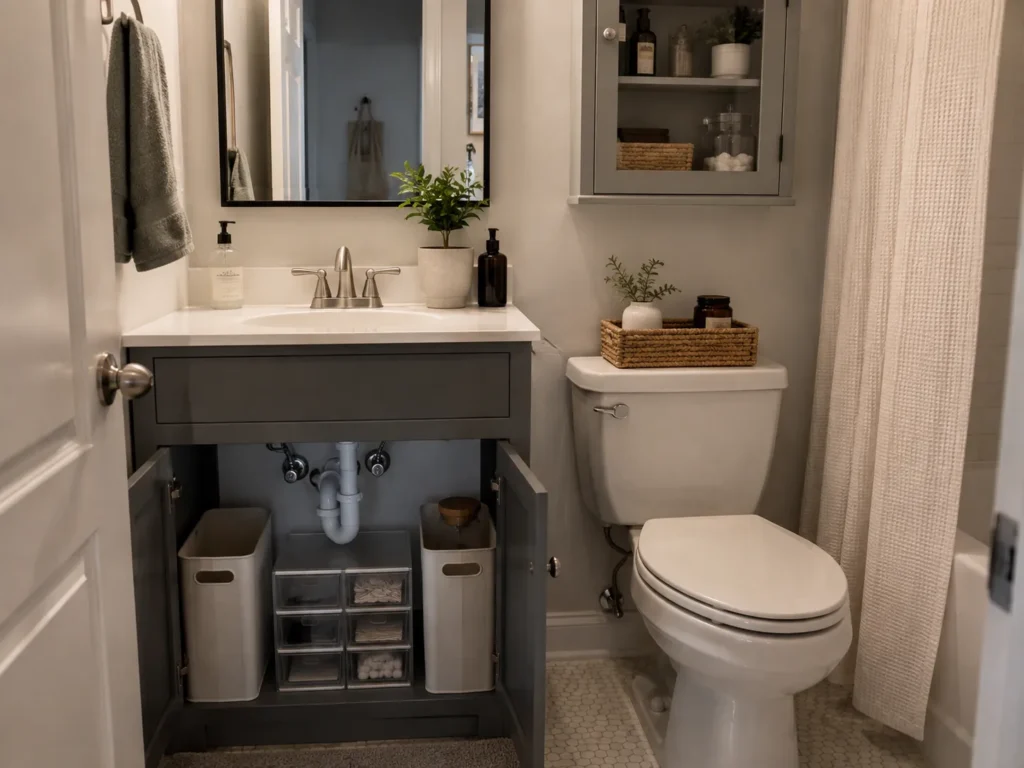
- Use the bathroom wall and under-sink space for bathroom categories. A small cabinet, shallow shelf, or a pair of narrow bins around the plumbing can hold towels, toiletries, and extra supplies close to where you use them. Keep the shutoff valve easy to reach, and avoid letting the counter become storage for items that could be tucked away. For more ideas, these small apartment bathroom storage ideas focus on adding useful storage without making the room feel more crowded.
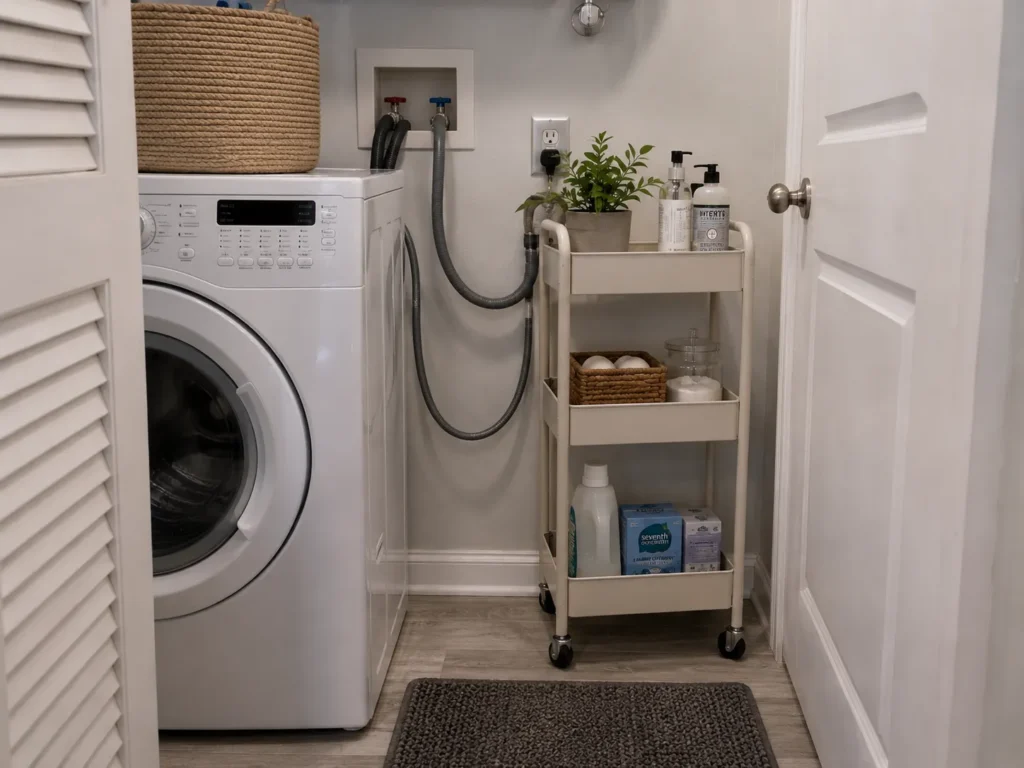
The best no-closet solution is usually a collection of smaller decisions: hanging clothes in one place, keeping entry items near the door, and giving household supplies a room-specific home. Before adding any storage piece, measure its depth, the door or drawer clearance around it, and the remaining walkway. That last measurement is the one people skip.