Small Entryway Storage Ideas for Homes Without a Foyer
Affiliate Disclosure: Compact Living Digest contains affiliate links. As an Amazon Associate, I earn from qualifying purchases at no additional cost to you.
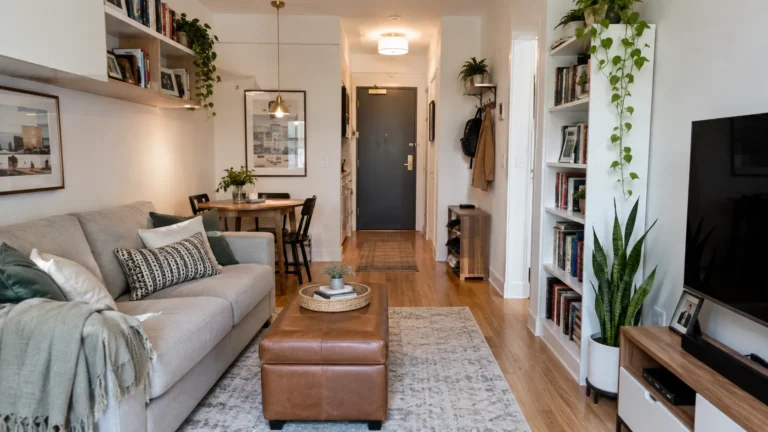
When the front door opens straight into the living room, the entry still has a job to do. Coats, keys, shoes, bags, mail, and umbrellas need a place to land before they spread across the sofa, dining table, or floor. The challenge is that a traditional entryway cabinet can make the first few feet of the home feel even tighter.
The best solution is usually a small landing zone, not a miniature mudroom. Pick the items that genuinely need to live by the door, protect the walking path, and choose storage with a shallow footprint. You can build a useful system from a few well-placed pieces instead of filling the wall with furniture.
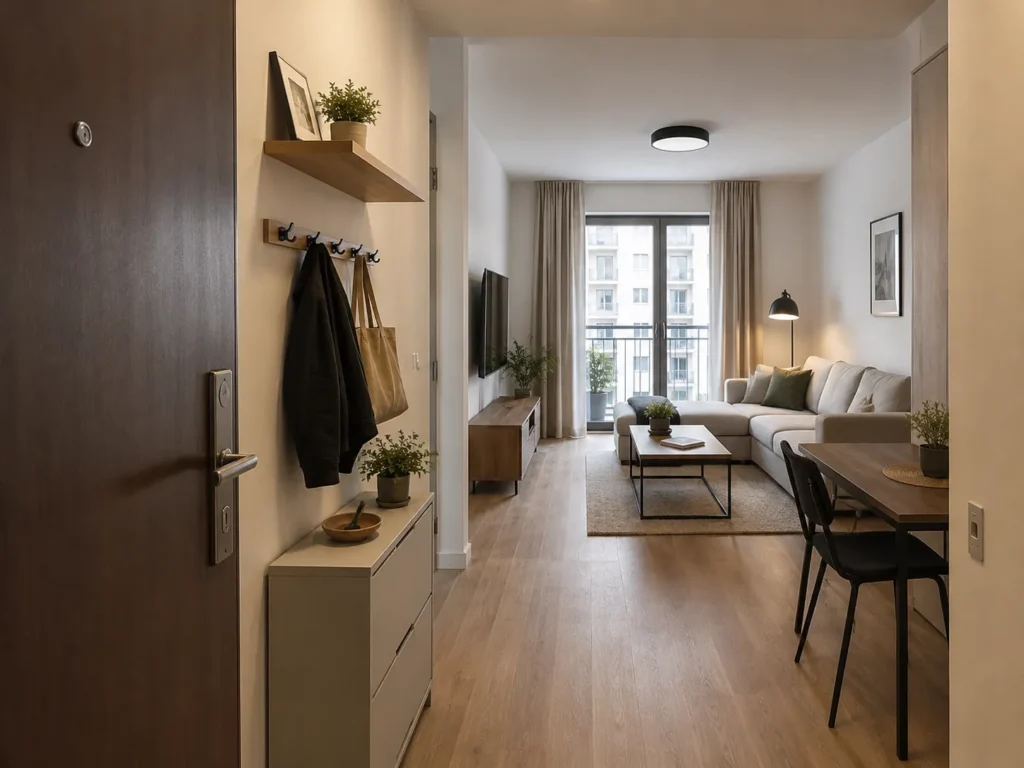
Begin with the door swing and the path into the home
Before choosing a bench or console, open the front door fully and measure the narrowest part of the route around it. Then walk through carrying a bag or groceries. That is the clearance the storage needs to respect, not the empty wall space shown in a product photo.
A no-foyer entry works when it feels like part of the room instead of a barricade at the door. Start small, then add capacity only when you know which category keeps overflowing.
Give daily arrivals a defined landing spot
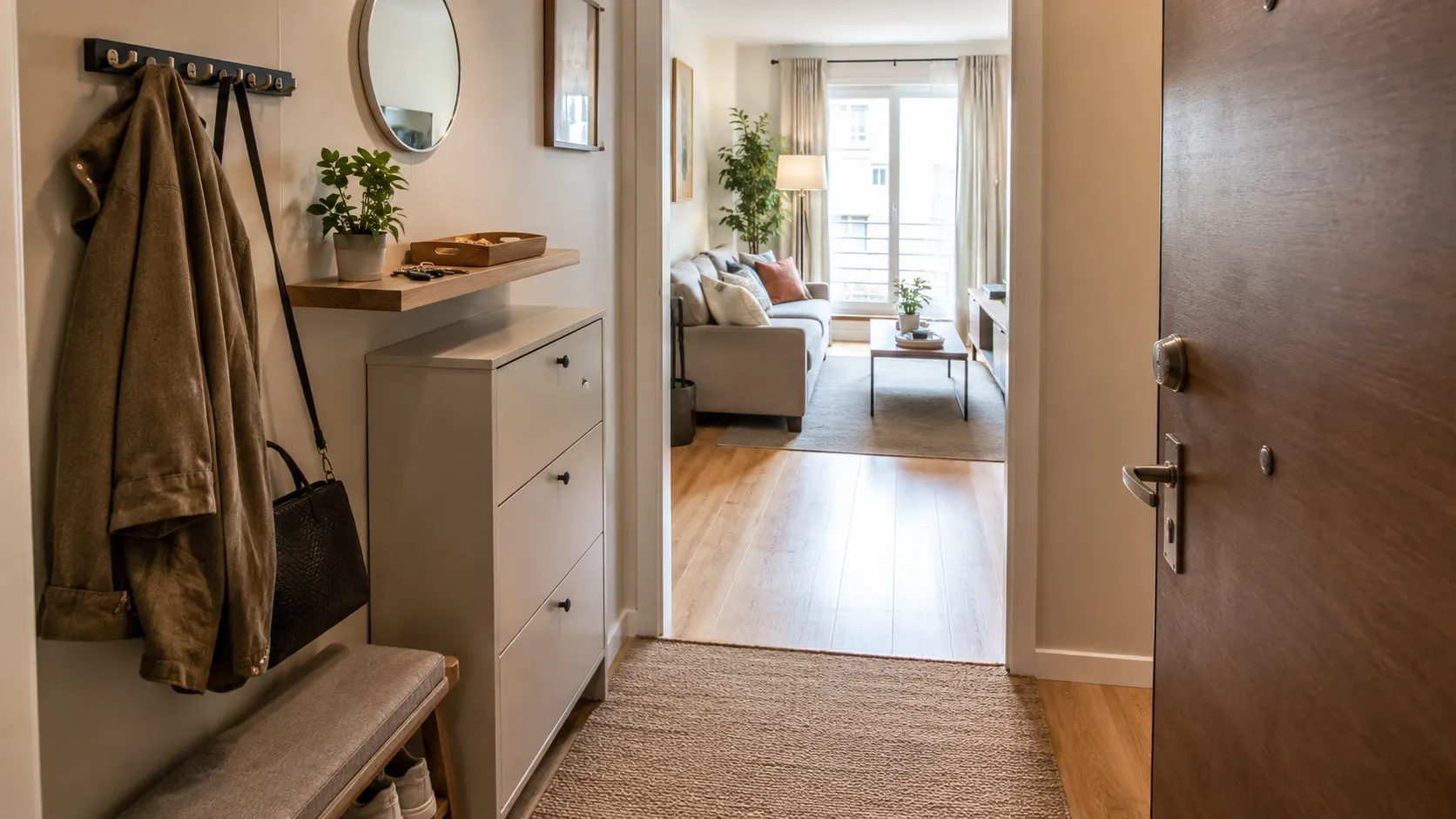
Keys, wallet, sunglasses, and mail need a visible, quick-to-use home. A shallow wall shelf with a tray, small dish, or lidded box is often enough. Place it close to the door but outside the swing path, so you can set things down without creating a surface that gets bumped every time someone enters.
The useful limit is one day’s worth of incoming paper. If mail is allowed to sit there indefinitely, the shelf becomes a clutter display rather than an entry solution.
Use hooks for the items that leave with you
A short row of sturdy wall hooks can handle the coat, bag, umbrella, or leash you need most often. It is more effective than a large coat rack in a small room because it keeps the floor clear. Mount hooks at a practical height for the people using them, and leave enough space between them that bags do not all overlap.
Keep the number of hooks intentionally low. When every hook is full of several layers, the entry can look busier than it did without storage.
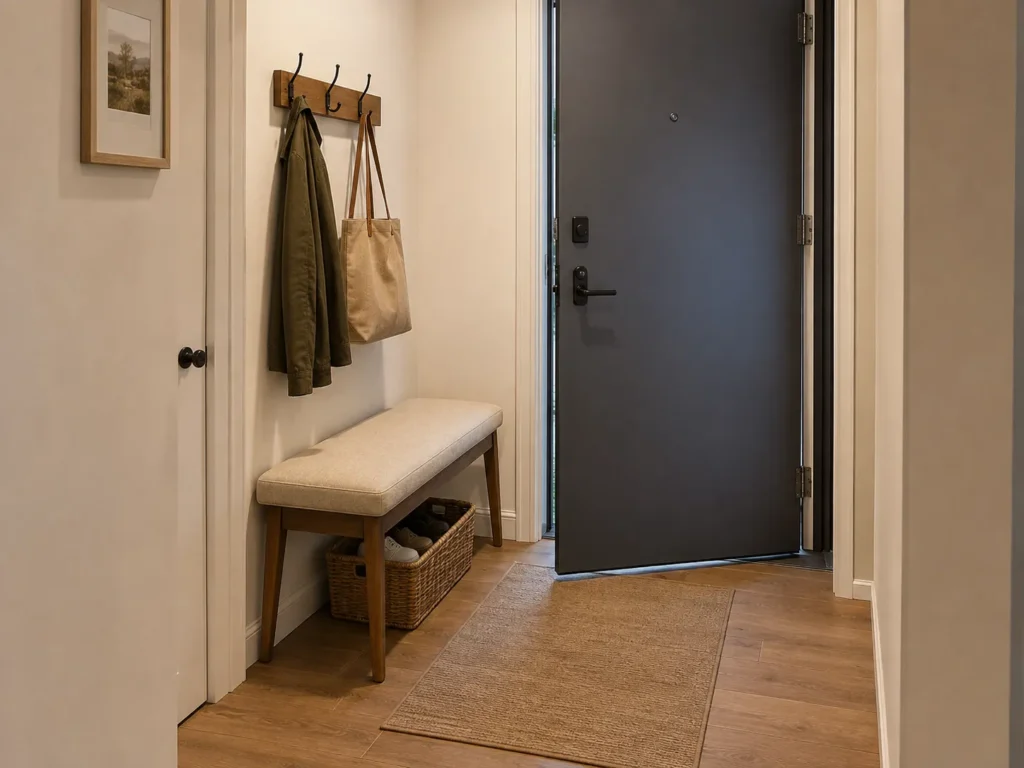
Choose a narrow bench only when you will use the seat
A storage bench can make sense if you sit down to put on shoes and it holds a small daily rotation underneath. If you will only use it as a pile-up surface, a wall shelf and one slim shoe solution may be more useful. The bench must be shallow enough for someone to pass by it while the door is open. Look at the full depth, including any cushion, handles, and shoe baskets placed beneath it. A few inches are noticeable in the first part of a small home.
Use a slim shoe cabinet when floor depth is the real problem
A shallow shoe cabinet keeps everyday pairs out of sight without projecting as far as a standard shelving unit. It works best for the shoes actually worn during the week, not every pair you own. Check the interior dimensions for larger sneakers, boots, and shoes that need to dry before putting them away.
For ideas on separating the everyday rotation from the rest of the collection, see small apartment shoe storage ideas for tiny entryways. If you choose a taller shoe cabinet, follow the manufacturer’s anchoring instructions and confirm that wall attachment is workable in your home.
Let a narrow console earn its place
A slim console table is useful when you need a landing surface and a small amount of closed or basket storage below it. It is not automatically better than a floating shelf. If the tabletop is deep enough to interrupt the route into the living area, it asks too much of the room.
Choose one only after measuring the door swing and the clear pass-through. A console with one drawer or one lower shelf gives the surface a purpose without inviting every loose item to stay in view.
Take advantage of the wall above the low furniture
The wall over a bench, shoe cabinet, or console can hold a mirror, slim shelf, or a few hooks. This vertical zone is helpful because it does not take additional floor space. Keep shelves shallow and reserve them for light items such as keys, hats, sunglasses, or a small catchall tray. Avoid stacking several deep shelves one above another. A wall full of storage can feel like it is leaning into the room, especially when the entry shares sightlines with the living area.
Turn an inside closet door into light storage
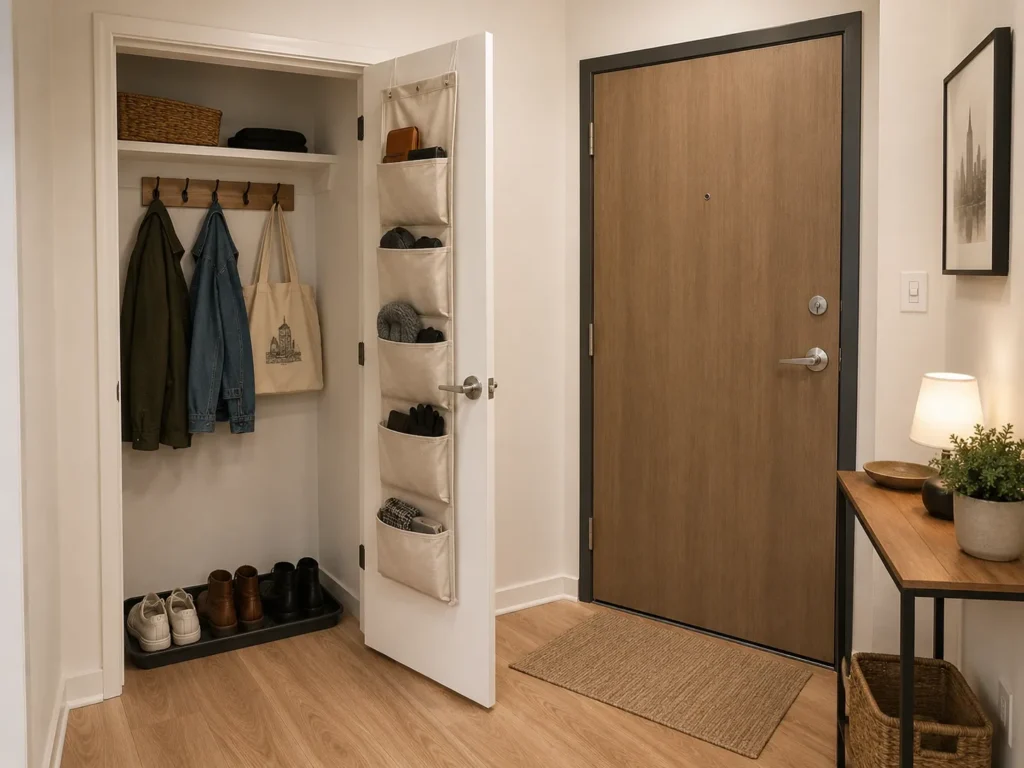
If the entry has a coat closet, the back of its door may be the most overlooked storage surface in the space. An over-door organizer can hold umbrellas, reusable bags, cleaning cloths, or lightweight accessories. Test that the door still closes smoothly before filling every pocket.
This is a good place for items that are useful near the door but do not need to be seen. For more whole-home options when storage is scarce, small apartment storage solutions for homes with almost no closets can help take pressure off the entry itself.
Give wet or dirty shoes a temporary boundary
Some shoes should not go straight into a cabinet. A small boot tray, washable mat, or shallow bin gives wet footwear a contained place to dry without spreading dirt onto the living-room floor. Size it for the number of pairs that come through the door on a rainy or snowy day, not for the entire household collection.
Once the shoes are dry, move them back to their usual home. The tray is a transition zone, not a permanent shoe pile.
Keep small essentials together with one key organizer
An entry organizer can be as simple as hooks and a narrow tray, or it can include labelled spots for keys, mail, and dog-walking supplies. The point is to make leaving the home less repetitive: you should not have to search the kitchen counter for the same things every morning.
Keep it close to the door and easy to reset. A complicated system with too many little compartments is more likely to be ignored when you are carrying groceries or rushing out.
Keep the entry visually connected to the living room
Without a foyer, everything at the door is part of the main room’s view. Choose a limited palette of baskets, hooks, and storage pieces, then keep open storage edited. One closed shoe cabinet or one lidded basket can do more for visual calm than several matching open bins.
If your seating area is also collecting blankets, remotes, and chargers, these small apartment living room storage ideas can keep the living room from becoming the entry’s overflow zone.
Store seasonal gear somewhere else
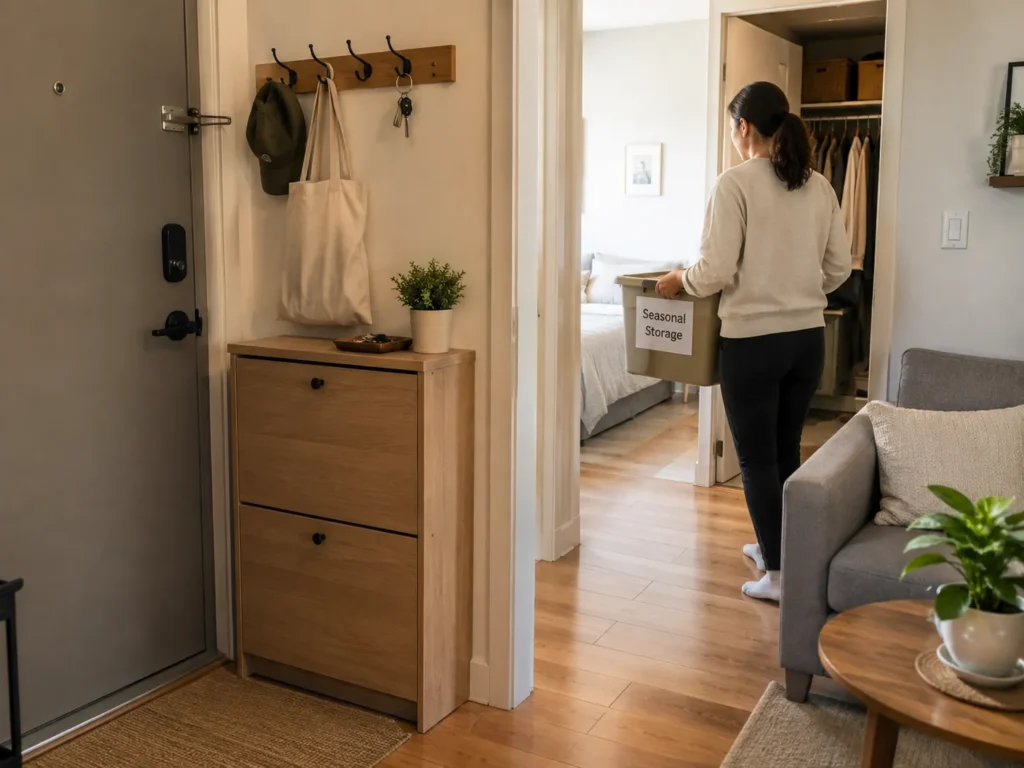
The front door zone should serve today and this week. Heavy boots in summer, beach gear in winter, and extra bags can be moved to a bedroom closet, an under-bed container, or a higher shelf elsewhere. That leaves the entry with enough capacity for the items that need quick access.
This same edit is often the fastest fix for a small home. The broader strategies in small apartment storage ideas that actually save space can help you find another place for belongings that do not need to live by the door.
Make the reset simple enough to happen every week
The right entry system has a short rule: daily shoes go in the cabinet or on the tray, daily items go on the hooks or shelf, and anything else moves out of the entry. A five-minute weekly reset prevents the landing zone from becoming a second living-room surface.
You do not need a dedicated foyer to make coming home easier. A clear route, a designated place for daily essentials, and a few shallow storage options can make the first part of the home feel intentional rather than crowded.