How to Organize a Kitchen Without a Pantry
Affiliate Disclosure: Compact Living Digest contains affiliate links. As an Amazon Associate, I earn from qualifying purchases at no additional cost to you.
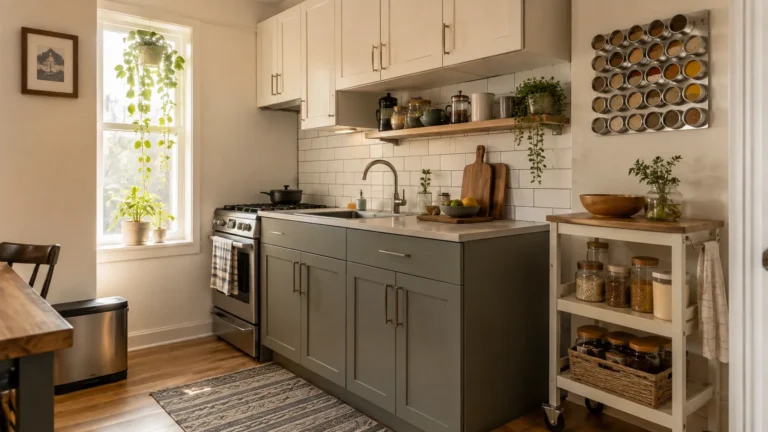
Not having a pantry does not mean every cabinet should become a random mix of food, dishes, and appliances. It means the kitchen needs a few smaller pantry zones, each with a clear job. One cabinet may hold breakfast food, a cart may hold dry goods, and the top shelf may take backup supplies.
The most useful no-pantry system keeps the food you use often within easy reach and moves duplicates out of the way. Start by grouping what you already own before buying organizers. You may find that the problem is less about a lack of storage and more about food stored in too many unrelated places.
Start by separating daily food from backup supplies
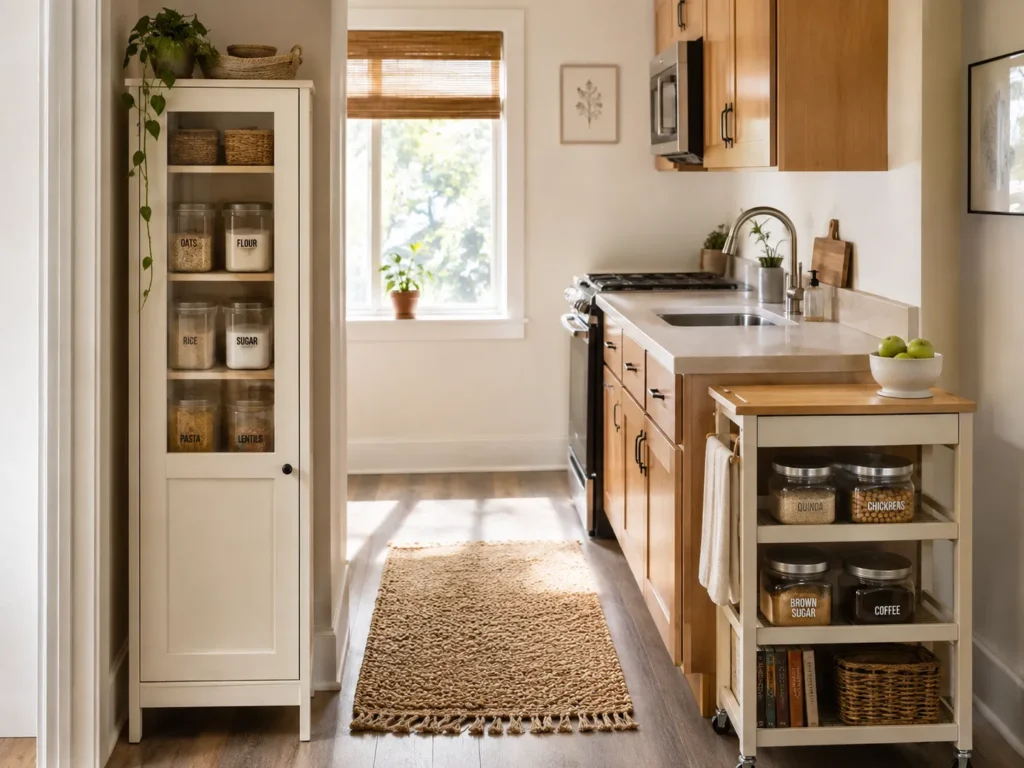
Pull dry goods from their current cabinets and group them by how often you use them. Daily breakfast, lunch, and dinner staples deserve the easiest shelves. Backup cans, extra pasta, specialty baking ingredients, and large refill packages can live higher, lower, or farther away.
This one distinction keeps a small kitchen from feeling full of food you are not currently using. It also helps prevent buying duplicates because you can see what belongs in each zone.
Choose one main pantry zone before adding extra storage
Pick the cabinet, wall section, or rolling cart that can carry the most dry food. That is your main pantry zone. A system works better when someone else can look at it and understand where snacks or rice belong without having to open five different cabinets.
If no single cabinet is large enough, use one primary zone plus one backup zone. More than that usually turns into scattered storage that is hard to keep current.
Use cabinet shelves in layers, not in one tall stack
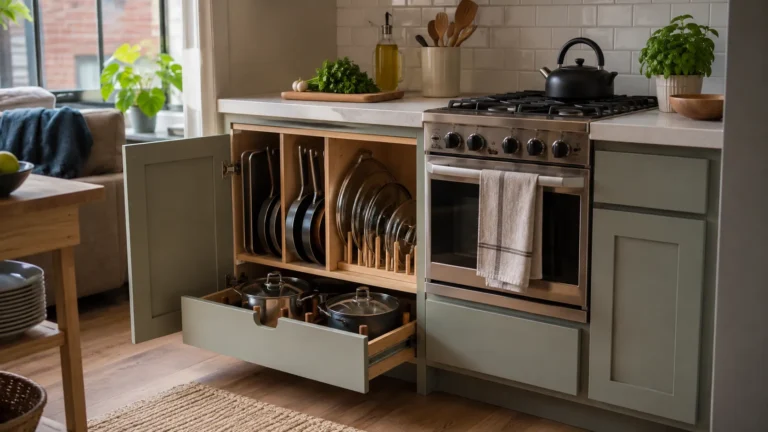
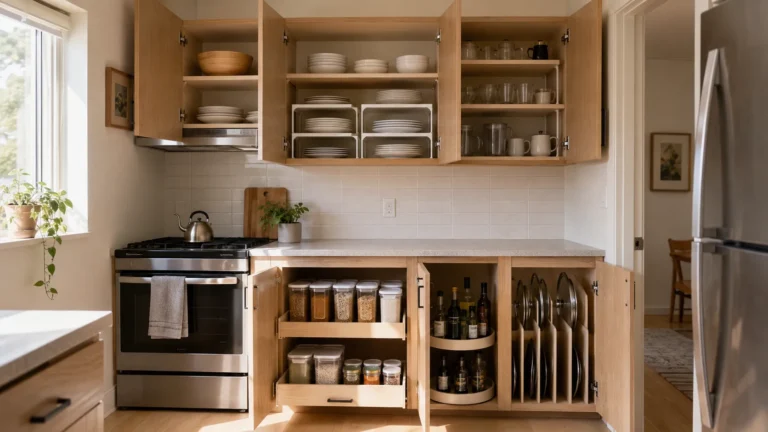
Most food cabinets lose usable space above shorter packages. Shelf risers can split that height so cans, bowls, or small boxes are easier to see. Under-shelf baskets can also create a light storage layer for packets, wraps, or napkins.
Measure the inside of the cabinet before choosing anything. A riser that blocks the shelf above or leaves no room to lift a can out is not adding useful capacity.
For a cabinet-by-cabinet approach, small kitchen cabinet organization ideas that use space more efficiently can help you decide what belongs where.
Put the food you reach for first at eye level
Place the ingredients you use several times a week between waist and eye level when possible. This is a better spot for cereal, cooking grains, lunch supplies, and snack ingredients than the highest shelf or the bottom back corner. The top shelf is better for extras, serving pieces, or food you buy less often.
This is not about making every cabinet look identical. It is about keeping the first things you need visible enough that dinner does not start with a search.
Use clear, airtight containers selectively
Containers can help with flour, rice, cereal, or snacks that come in awkward bags, especially when you buy the same items repeatedly. They are less useful when they create a transfer task for every small package. Choose them for a few high-use categories and label them with the item name and any cooking information you actually need.
Do not decant food simply to make the shelf look coordinated. The container should make it easier to see, pour, or store the item—not create extra dishes and labels to maintain.
Give cans and jars a clear boundary
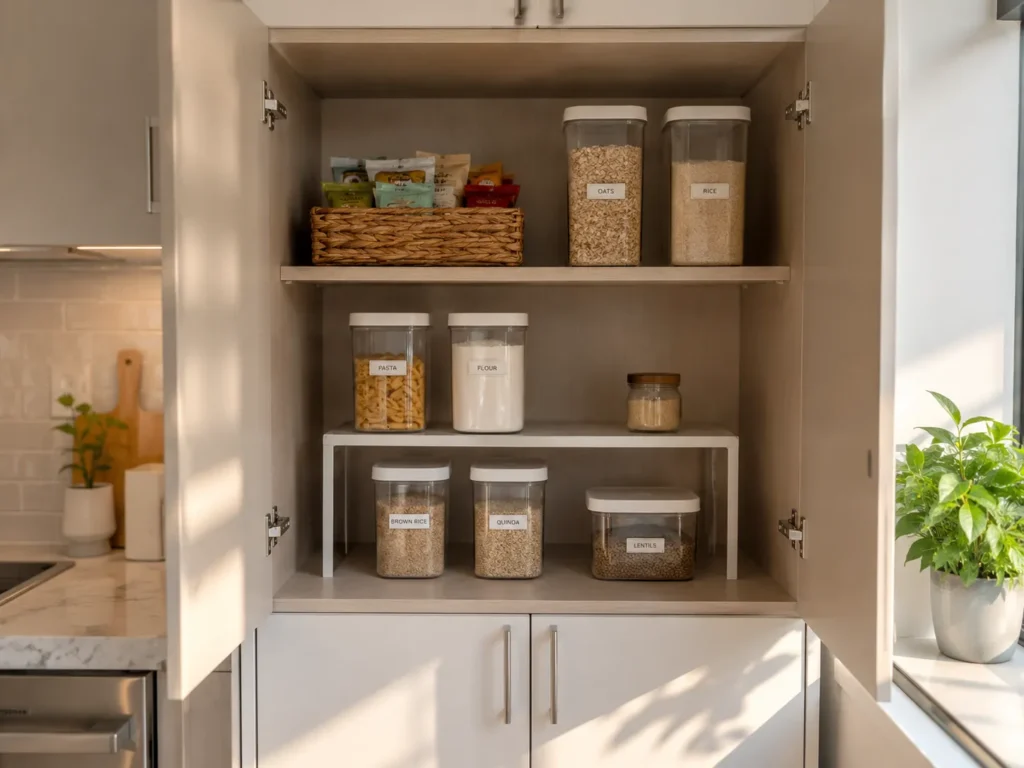
Cans and jars are easy to lose behind one another. A shallow can rack, low bin, or shelf riser keeps similar items together and stops the cabinet from becoming a pile. Store heavier cans on lower shelves and avoid loading a small pull-out organizer with more weight than it is designed to hold.
Keep a small category together, such as canned tomatoes, beans, soup, or condiments. A bigger catchall category is harder to restock because nothing has an obvious place.
Use a rolling cart only when it has a real parking place
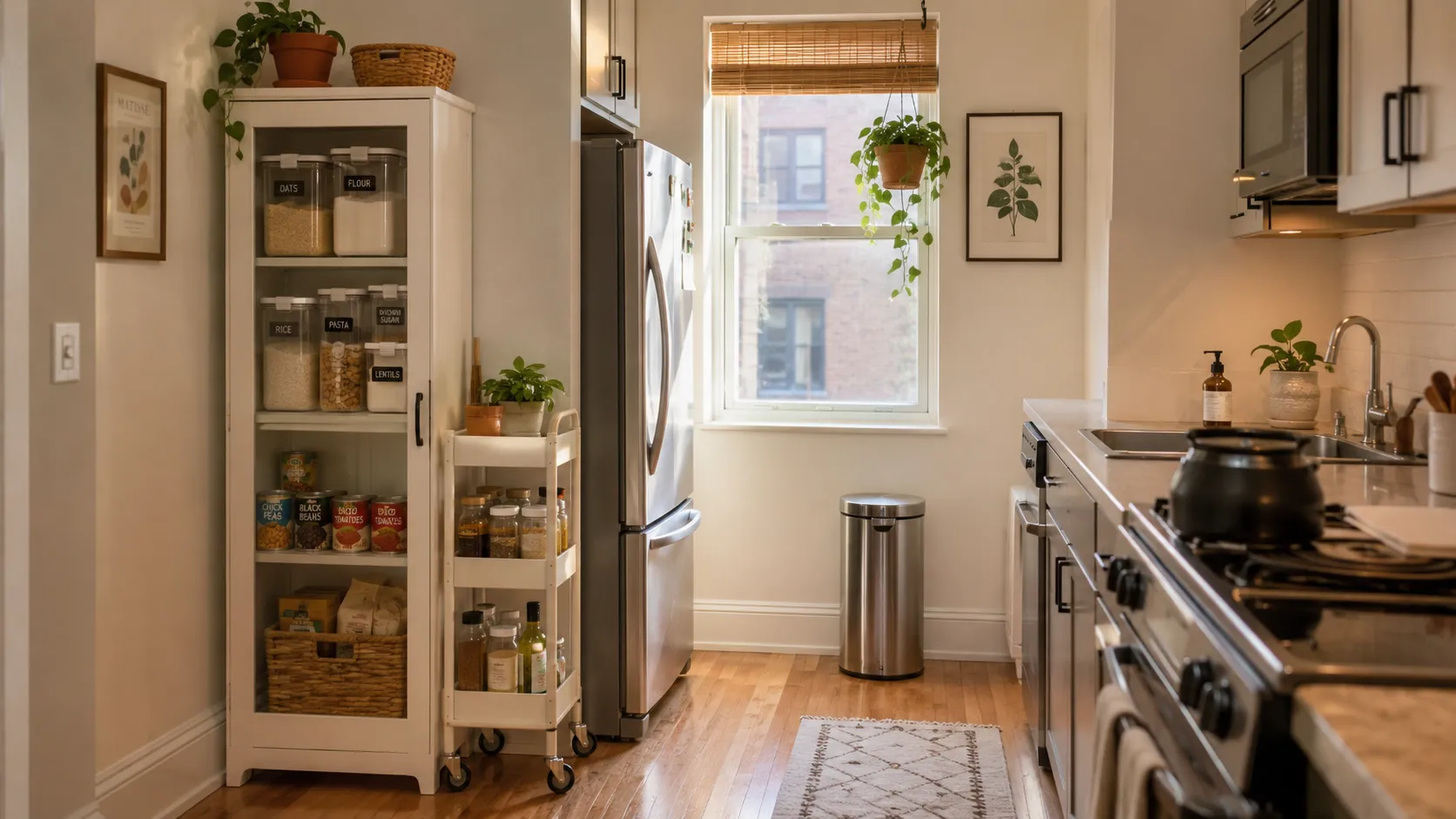
A narrow rolling cart can become the missing pantry cabinet in a small apartment. Use it for dry goods, baking supplies, breakfast foods, or a few frequently used kitchen tools. The key is to choose a gap where the cart can stay without blocking a cabinet, appliance door, or walking route.
If it needs to move whenever you open the refrigerator, it is not flexible storage; it is a daily obstacle. Park it first, then build the category around the space it truly has.
Add a slim freestanding pantry cabinet when the layout allows it
A tall, shallow pantry cabinet can add closed storage on an unused wall or at the edge of an open kitchen. It is a strong option when food is visible from the living area, and you want the room to feel calmer. Check the cabinet depth, door swing, and path around it before committing to the footprint.
Follow the manufacturer’s anchoring instructions for tall freestanding storage. Put heavier cans and appliances on lower shelves, and keep the top shelves for lighter, less-frequent items.
Keep countertop storage deliberate and small
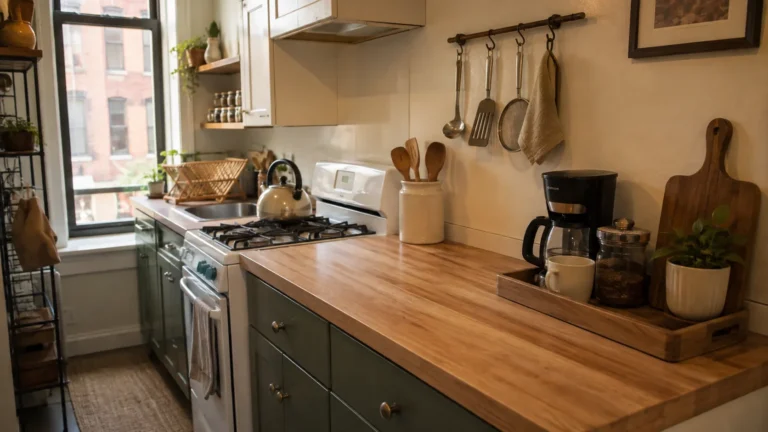
The counter is tempting because it is easy to reach, but it needs to stay available for prep. A compact tray for cooking oil and salt, or a small basket for fruit, can be useful when those items are used daily. A row of oversized containers, appliance boxes, and open snack bags turns the counter into a second pantry, leaving you no workspace.
For a simple way to decide what remains visible, small kitchen counter organization: what to keep out and what to put away can help you edit the counter before adding more storage.
Use the refrigerator to reduce pantry pressure
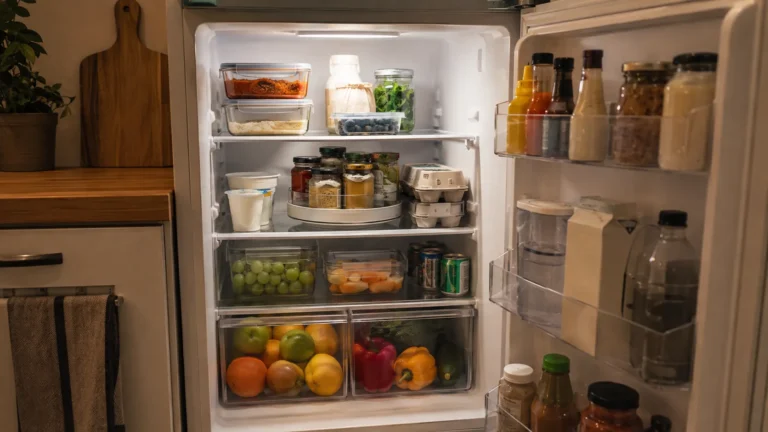
Some pantry overflow is better moved to the refrigerator, especially when it helps ingredients stay visible and usable. Keep ready-to-eat snacks, lunch supplies, and opened sauces grouped by category, so the door shelves and back corners do not become another lost-and-found space. The refrigerator is not a pantry replacement, but it can support a more realistic weekly food system.
For a tighter setup, small refrigerator organization ideas for a tiny kitchen give practical ways to make that limited space easier to see and reset.
Create a short “use first” zone
Designate one small basket or visible front section for food that is already open, close to its best-by date, or bought for a specific recipe. This avoids the common no-pantry problem of opening a new box because the first one disappeared behind something else. Check the zone once a week when you plan meals or put groceries away.
The point is not to build a complicated inventory. It is to make the foods that need attention easy to notice.
Reset the pantry zones after grocery day
Restocking is when a small pantry system either stays useful or slowly collapses. Put new food behind older items when that makes sense, return containers to their category, and move bulk extras to the backup zone instead of cramming them into the daily shelf. If a zone regularly overflows, reduce the category or give it a more realistic home.
For broader product and layout ideas, small apartment kitchen storage ideas that add useful space can help you improve the cabinets, cart, and counter around your pantry zones.
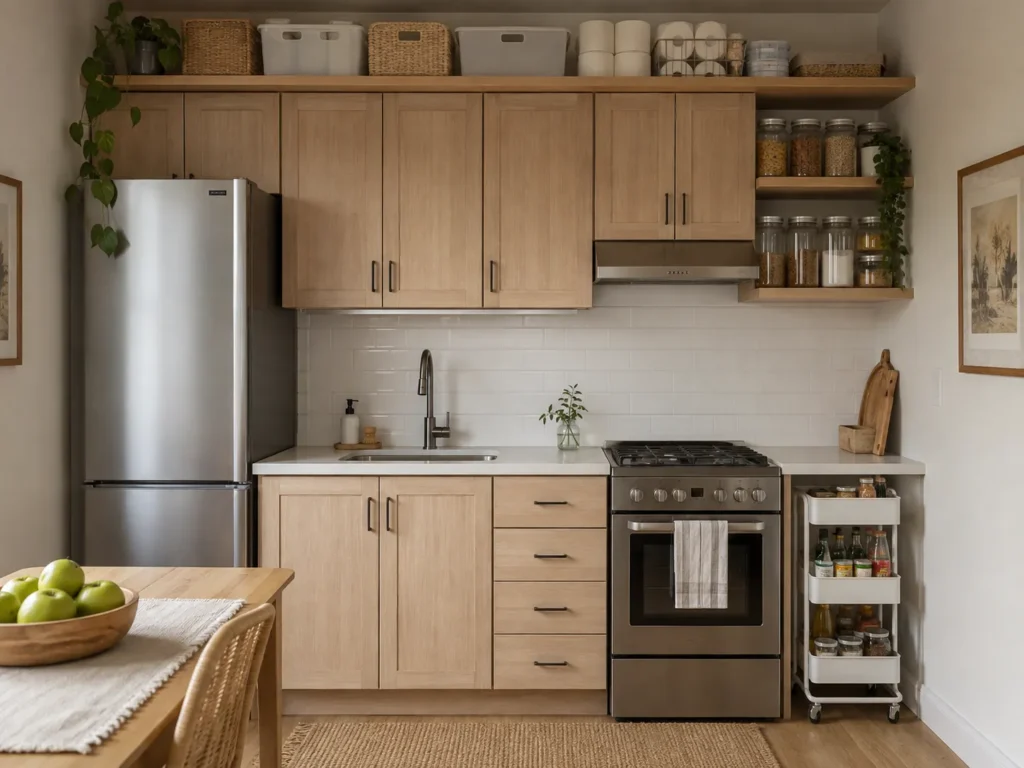
An effective pantry-free kitchen does not need to look like a store aisle. It needs a clear home for daily food, backup food, and the things that tend to get lost. Start with the cabinet or cart that can do the most work, then keep the system simple enough to restock without thinking.