Small Refrigerator Organization Ideas for a Tiny Kitchen
Affiliate Disclosure: Compact Living Digest contains affiliate links. As an Amazon Associate, I earn from qualifying purchases at no additional cost to you.
A small refrigerator becomes difficult to use long before it is actually full. Leftovers get pushed behind drinks, loose produce rolls around the drawers, and an open jar takes up more space than it should because nothing around it has a clear place. The result is usually more food on the counter and more time spent searching with the door open.
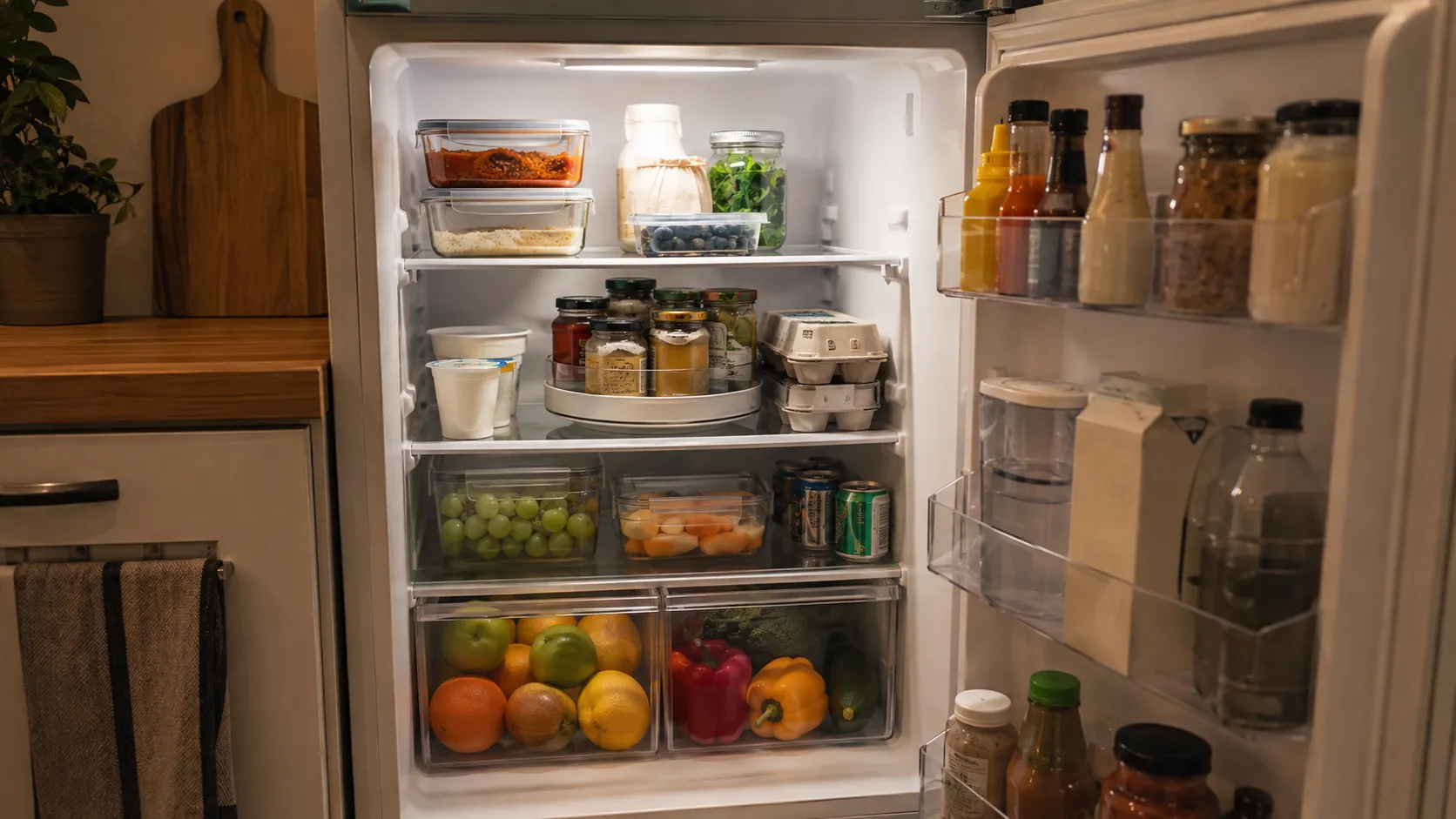
Small refrigerator organization is less about matching containers and more about keeping the food you use together, visible, and easy to put back. Start with the shelves and drawers you already have. Add organizers only where they solve a specific access problem.
Start by giving each shelf one job
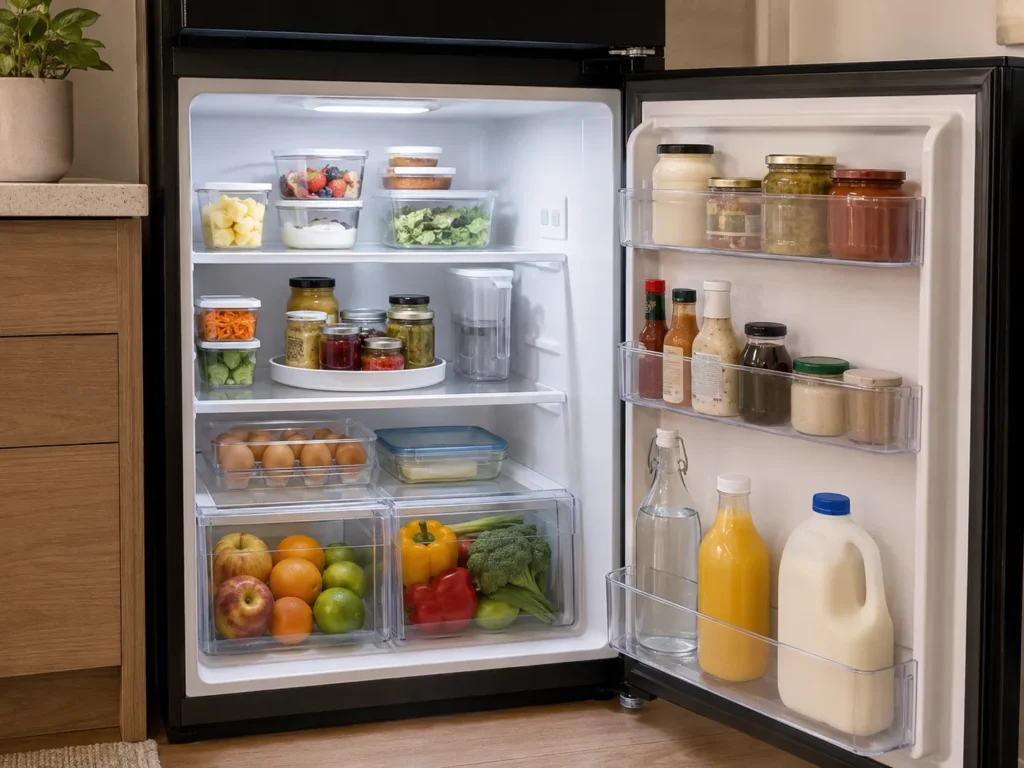
Do not organize a tiny refrigerator item by item. Give each shelf or drawer a broad purpose instead: prepared food, breakfast items, drinks, cooking ingredients, produce, or snacks. That makes it easier to see what is missing and easier to put groceries away without rearranging the entire fridge.
The exact layout depends on how you cook. A household that preps lunches needs a different shelf than one that cooks from fresh ingredients most evenings. Choose zones around your routine, not a refrigerator photo that does not match what you buy.
Keep everyday food in the easiest-to-see places
The middle shelves are usually the most useful space in a small refrigerator because you can see them without crouching or moving other items. Use them for leftovers, lunch ingredients, yogurt, prepared produce, or whatever you reach for most often.
Keep the back of the shelf for larger containers or as a backup. When the most-used food is hidden behind them, the refrigerator can be full of usable food and still feel empty at mealtime.
Use clear bins to group loose categories
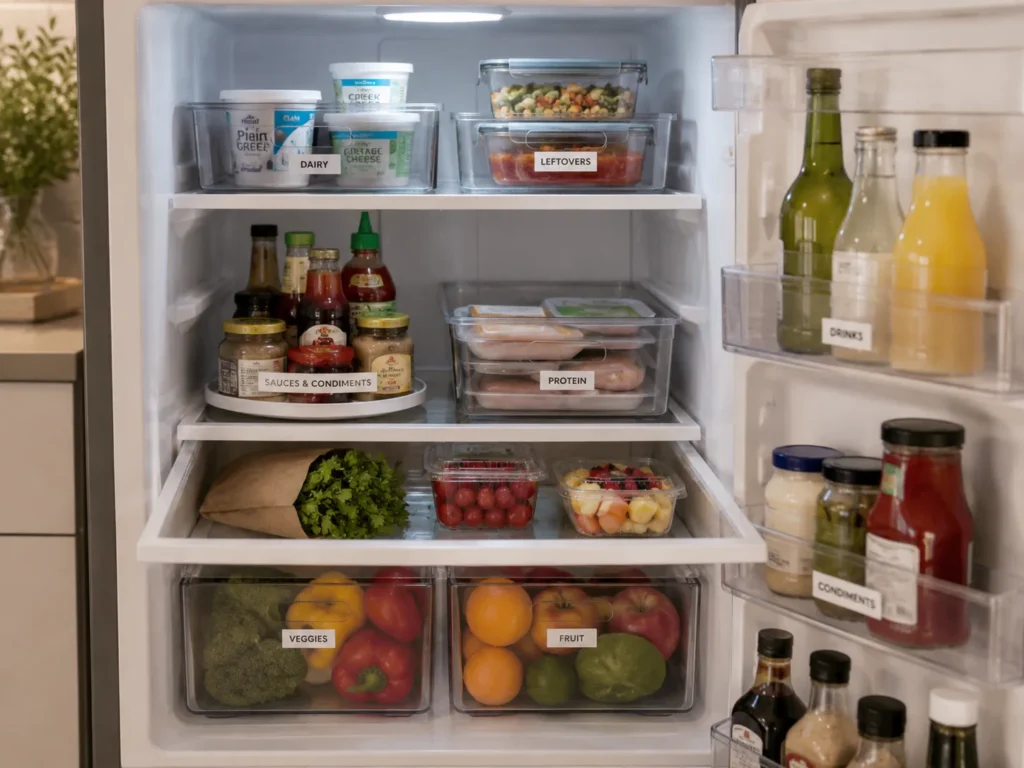
Clear refrigerator bins are useful for categories that otherwise scatter across a shelf, such as snack packs, cheese, small sauces, or lunch ingredients. They let you pull one group forward rather than moving several individual items. A shallow bin is often more practical than a deep one because you can see what is inside.
Measure the shelf depth and the space beneath the shelf above before choosing bins. A bin that fits front-to-back can still be too tall to remove easily. Leave enough room to lift it out without scraping the shelf above.
Put jars and small bottles on a turntable
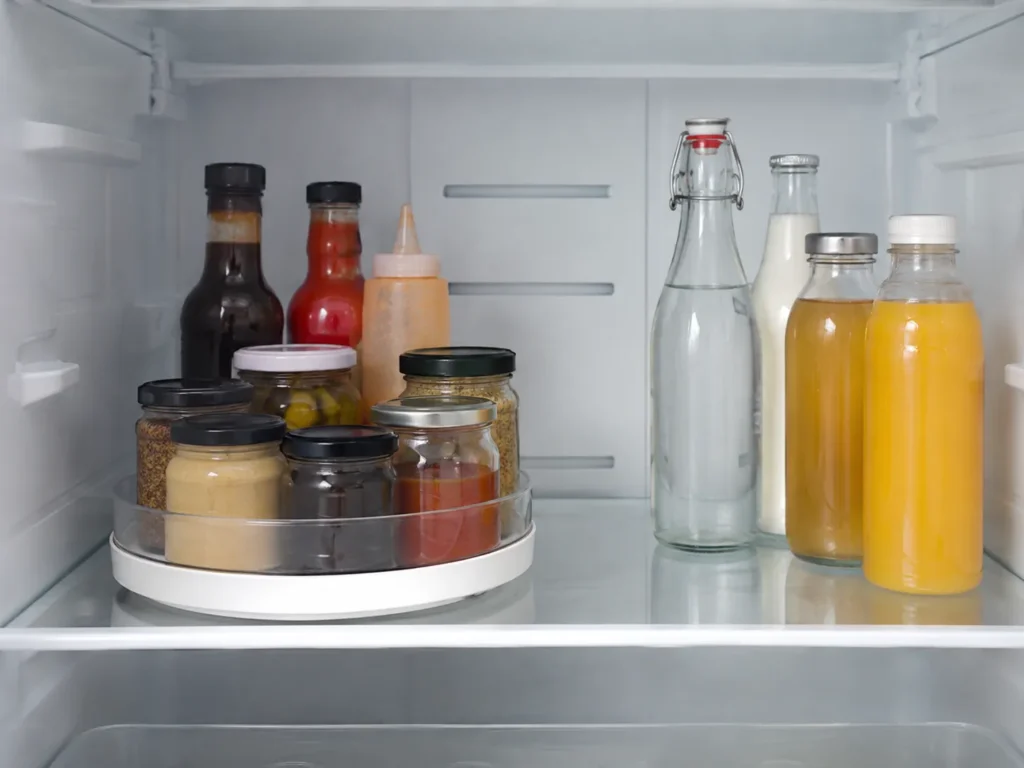
Small jars and bottles are easy to lose behind taller containers. A turntable can work well for condiments, sauces, or small cooking ingredients that are used together. It is especially helpful on a deep shelf or in a corner where reaching the back is awkward.
Keep the category narrow. A turntable packed with unrelated leftovers, drinks, and jars becomes harder to reset than a normal shelf. It also needs a stable, level surface so the items do not tip when it turns.
Use the door for small, frequently used items
The door is useful for smaller bottles, condiments, and drinks that fit securely in its shelves. It is not the best place to hide every open bottle you own. When the door shelves are packed too tightly, it is difficult to spot duplicates or get one item out without knocking another over.
Group similar items together and check the shelf height before moving tall bottles there. The door still needs to close without bumping the main shelves or the items stored inside.
Divide produce drawers by how you actually shop
Produce drawers are often treated as a single catch-all. A simple divider or two small bins can separate salad ingredients from fruit, or everyday produce from ingredients that are waiting for a specific meal. The point is not to force a perfect system. It is to keep one category from burying another.
Avoid overfilling the drawers. When produce is packed in too tightly, it is easy to forget what is underneath and harder to clean the drawer when something spills.
Use stackable containers only for food that already stores well that way
Square or rectangular containers can make leftovers and prepared ingredients easier to stack than mismatched round tubs. They are most useful when they have a consistent footprint and can be labeled clearly enough that you know which one to use first.
Do not decant every grocery item solely for the refrigerator’s appearance. Containers take up space too, and a tiny refrigerator needs flexibility for a large pot, a takeout box, or an unexpected grocery run.
Keep one shelf partly open for incoming groceries
A small refrigerator needs some breathing room. Reserve part of one shelf for new groceries, leftovers, or a meal you have not put away yet. Without that landing area, the counter becomes the temporary refrigerator shelf, and food stays there longer than it should.
This is one reason the kitchen counter often feels harder to organize than it should. The guide to small kitchen counter organization: what to keep out and what to put away can help you protect that prep space while the refrigerator handles more of the food-storage load.
Keep the freezer simple and easy to inventory
Freezer organization needs broad categories more than lots of small containers. Group frozen vegetables, proteins, quick meals, and treats in sections or shallow bins if the freezer allows it. Put the oldest items toward the front so they are easier to notice and use.
If the freezer is a top compartment, avoid stacking it so high that items fall out when you open the door. A small basket can help contain loose packages, but it should still let you see what is behind it.
Let the refrigerator support the rest of the kitchen
The refrigerator works best when it is part of the larger storage plan. If the food cabinets are crowded, unopened drinks and pantry items may spill into the fridge. If the refrigerator is packed with random overflow, the counter picks up the rest.
For the broader kitchen layout, small apartment kitchen storage ideas that add useful space can help you decide what should live in cabinets, on shelves, or in the refrigerator. The goal is to give each storage zone one clear job.
Reset the refrigerator before every grocery trip
Take a few minutes before shopping to combine partial containers, check leftovers, and move items that need to be used soon where you can see them. It prevents a small refrigerator from filling with duplicates and gives you room to unpack groceries right away.
If you are working without a pantry, this guide on organizing a kitchen without a pantry can help you divide food among the refrigerator, cabinets, and backup storage without letting one zone take over the others.
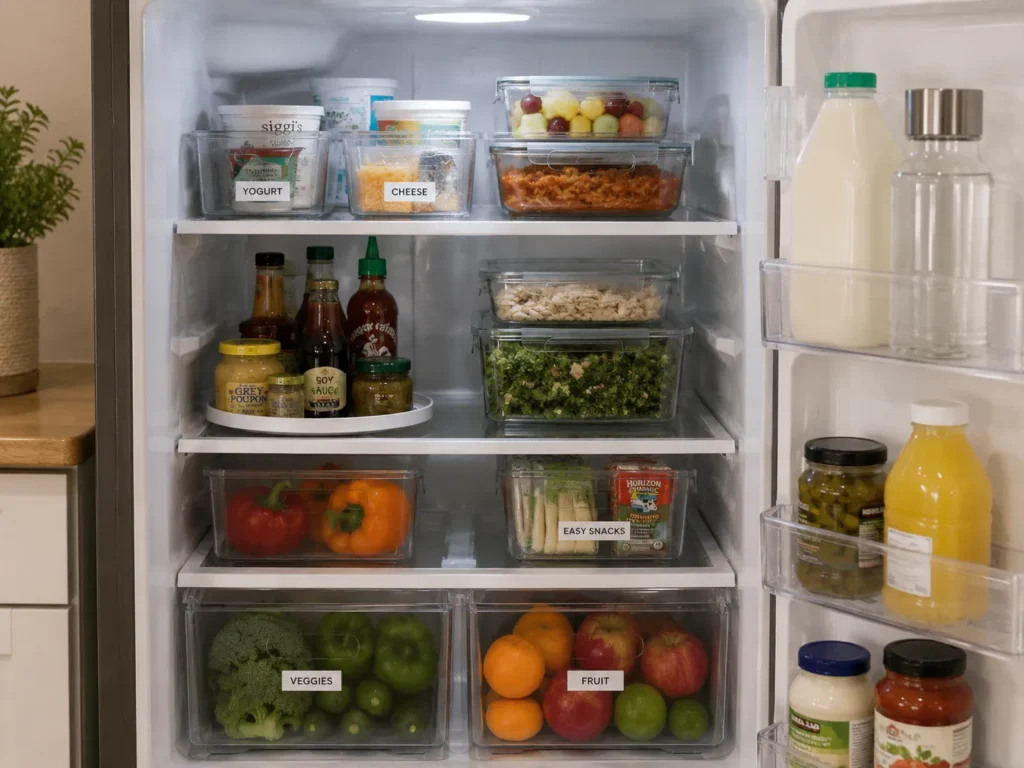
The most useful tiny refrigerator setup is not the one with the most organizers. It is the one that makes food easy to find, easy to return, and less likely to end up on the counter.