Small Kitchen Cabinet Organization Ideas That Use the Space Better
Affiliate Disclosure: Compact Living Digest contains affiliate links. As an Amazon Associate, I earn from qualifying purchases at no additional cost to you.
Small kitchen cabinets can hold more than they seem to, but only when the inside is set up for the items that actually live there. A deep cabinet packed from front to back may look full, yet still force you to move three things to reach one pan. A tall shelf can waste half its height while the counter fills up with overflow.
The goal is not to buy an organizer for every cabinet. Start by giving each cabinet one clear job, then add only the tools that make that job easier. The right system reduces the need to stack, search, and reach awkwardly after a busy meal.
Begin with cabinet measurements, not a cart full of organizers
Measure the inside width, depth, and height of the cabinet you want to fix. Include the hinges, center supports, and door swing if they reduce usable space. A pull-out drawer, riser, or door rack only helps when it fits the cabinet and still lets the door close.
Then look at what regularly gets stuck, stacked too high, or lost at the back. That is the problem worth solving first.
Give each cabinet one main job
It is easier to keep a small kitchen organized when cabinets are grouped by use: dishes near the dishwasher, food near prep space, cookware near the stove, and cleaning supplies under the sink. A cabinet containing snacks, baking pans, mugs, and paper towels rarely stays orderly because each item has its own routine.
If your cabinet roles are not clear yet, the broader ideas in small apartment kitchen storage ideas that add useful space can help you decide which zones should carry the most weight.
Use shelf risers to create a second level for shorter items
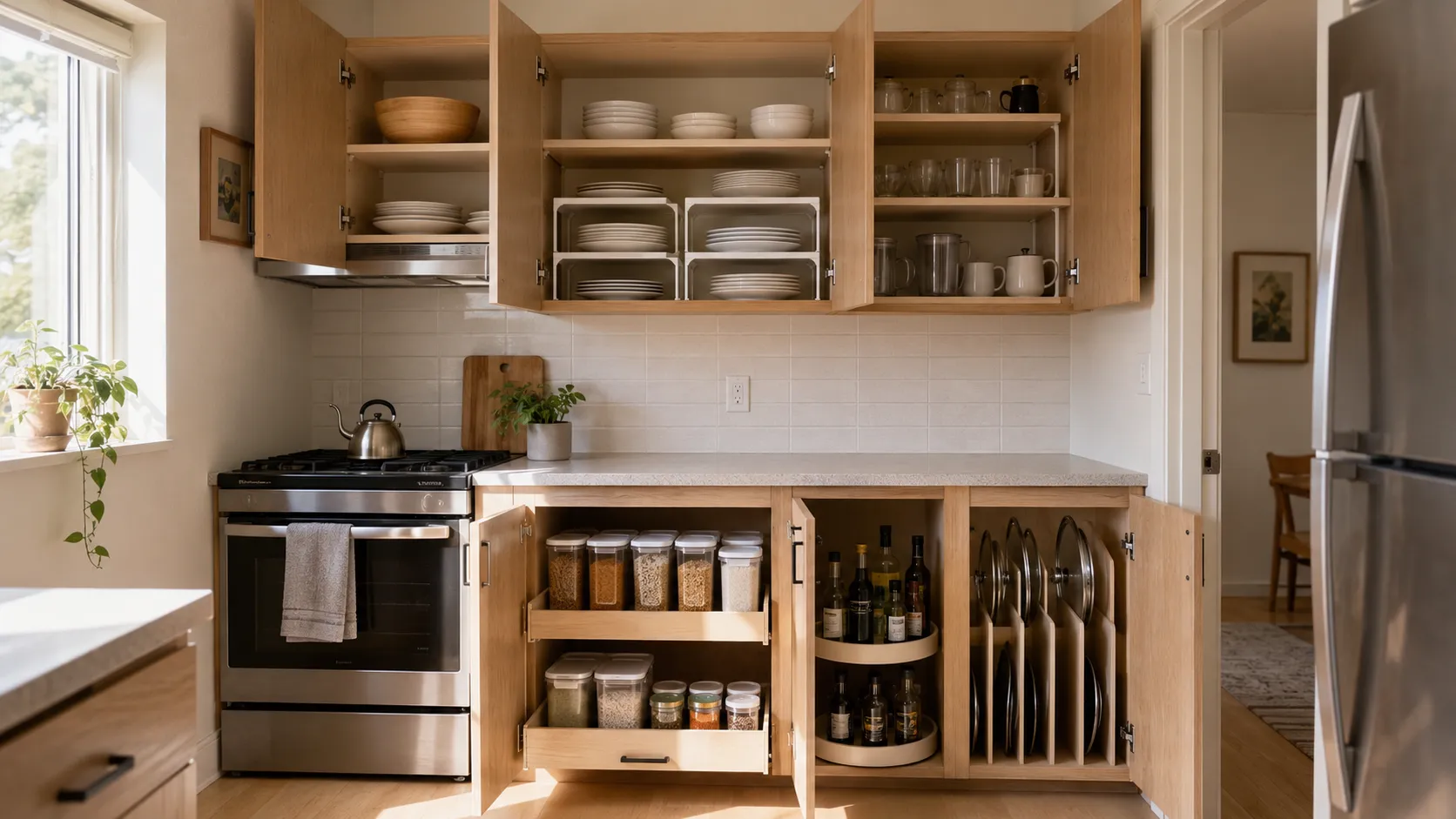
Shelf risers are especially helpful above plates, mugs, bowls, canned goods, and small food containers. They turn empty height into a usable layer without requiring permanent installation. The tradeoff is access: leave enough room to lift the lower items out, and do not stack a riser so high that it blocks the shelf above.
Use them in the cabinets that already have a clear category. A riser cannot solve a cabinet that is holding too many unrelated things.
Add pull-out drawers to deep lower cabinets
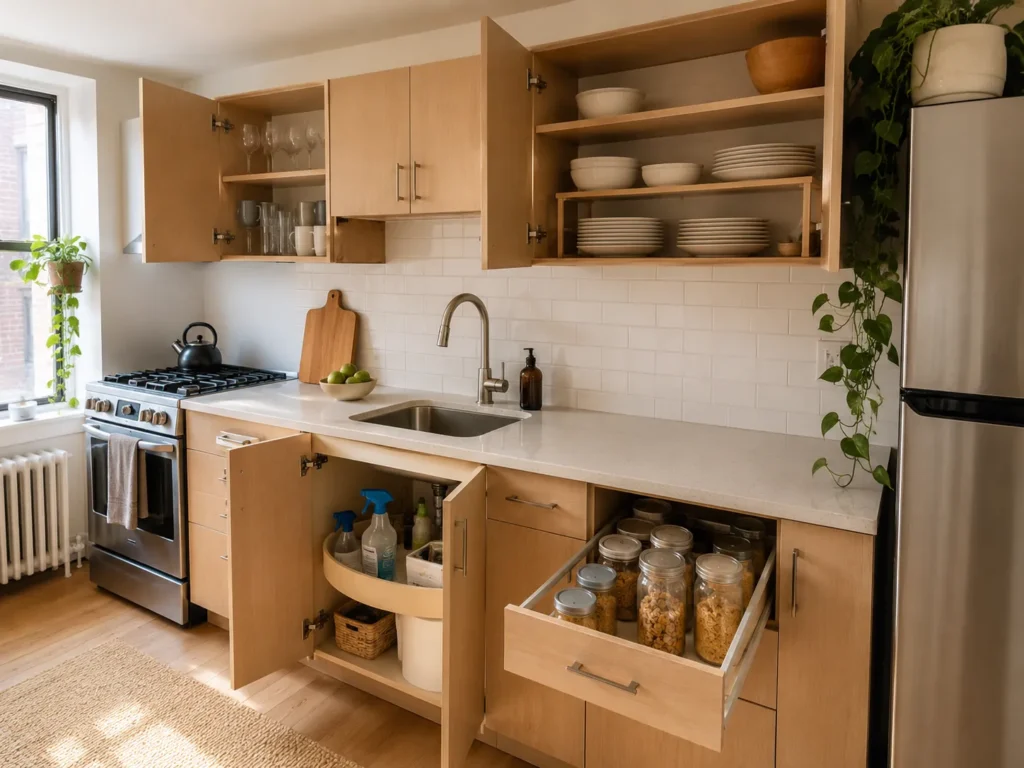
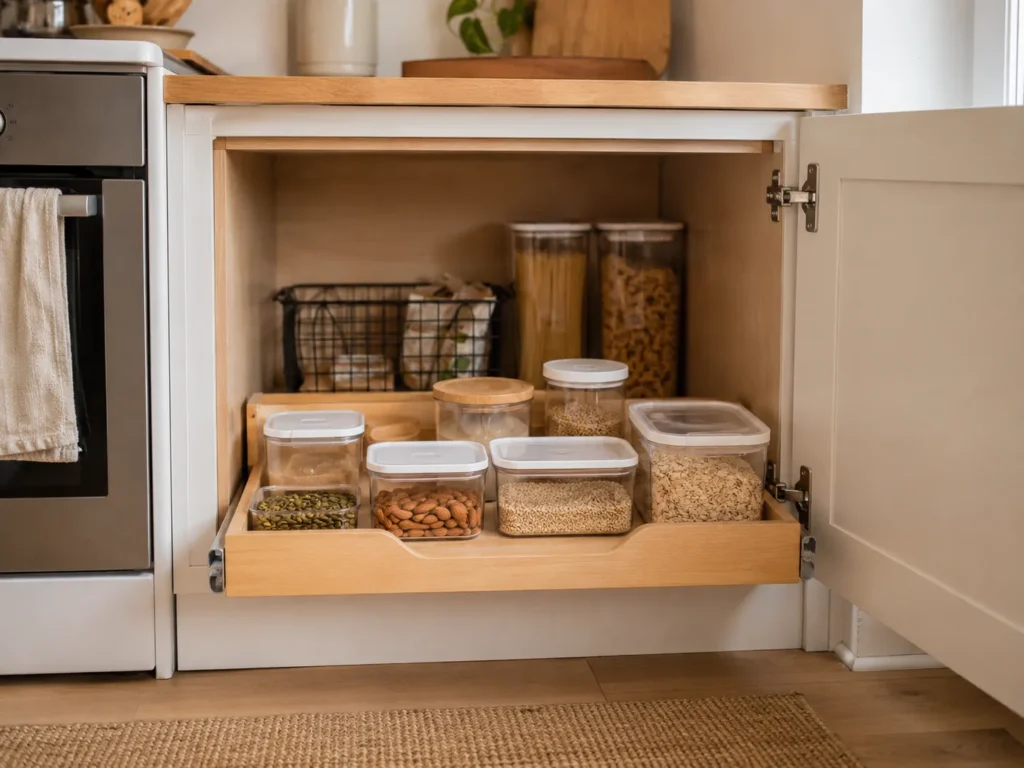
Deep lower cabinets are where small items disappear. A pull-out drawer or bin lets you bring the back of the cabinet forward instead of kneeling and reaching around larger cookware. This works well for dry goods, food-storage containers, or a few cooking supplies that would otherwise be stacked.
Check the inside depth and any obstruction at the back before choosing a pull-out. It should extend far enough to be useful without interfering with plumbing, cabinet framing, or the door.
Use a turntable for small bottles and jars, not every category
A turntable makes sense for cooking oils, vinegars, sauces, or small pantry jars that tend to hide behind one another. It is most useful in a corner cabinet or a shelf where you need to reach from the front. It is less useful for tall bottles that tip easily or for oversized packages that need a fixed shelf.
Keep the category narrow. One turntable for cooking condiments is easier to reset than a catchall spinning tray full of unrelated items.
Store cookware lids vertically instead of in a pile
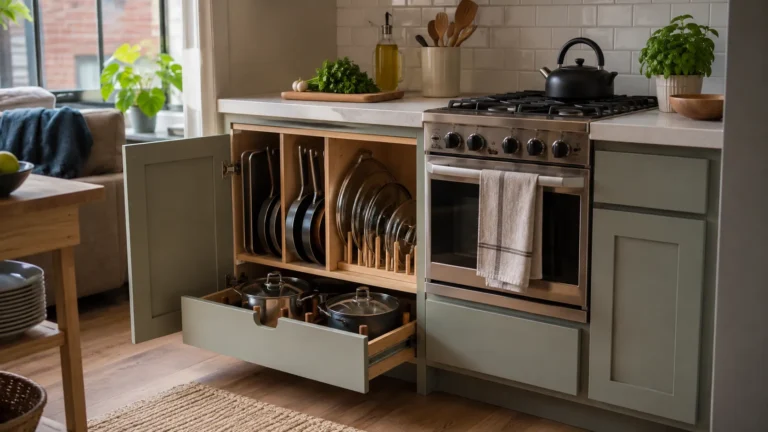
Pot and pan lids take up more cabinet space than they seem to because their handles catch on one another. A vertical divider or lid organizer keeps them upright and makes it easier to pull them out one at a time. Put the lids close to the pans you use most, rather than in a cabinet on the other side of the kitchen.
For more layout options, ways to store pots and pans in a small kitchen can help you choose a setup that fits the cookware you actually own.
Use cabinet doors for lightweight, low-profile storage
The inside of a cabinet door can hold a slim rack for wraps, measuring spoons, cleaning cloths, or small packets. Test the door before loading it: hinges, shelves, and the items behind the door all need enough clearance. A deep door organizer can make a cabinet harder to close than it was before.
Door storage works best as a small extension of the cabinet’s main job, not as a place to hide every leftover item.
Add an under-shelf basket where vertical space is truly unused
Under-shelf baskets add a shallow layer beneath a shelf for napkins, tea, bagged snacks, or food wraps. They are useful in taller upper cabinets where a full riser would be too bulky. Keep them for lightweight items and measure their drop below the shelf so they do not block what sits underneath.
This is a simple way to use air space without turning a cabinet into a crowded tower.
Keep everyday dishes together and easy to unload
The dishes used every day should be reachable without moving a stack of serving bowls or seasonal pieces. Put them close to the dishwasher or drying area if the layout allows. Store infrequently used platters, duplicate mugs, and entertaining dishes on the highest or farthest shelves.
That arrangement does more than save a few steps. It keeps the dishes from taking over the counter while you unload after meals.
Give food-storage containers one complete home
Container bases and lids become clutter when split across several drawers. Keep them in one low cabinet, bin, or drawer, nesting the bases and standing the lids vertically where possible. Edit the pieces that no longer have a matching partner.
A small, complete set is easier to use than a crowded shelf of plastic pieces that barely fit together.
Keep the counter from becoming the cabinet overflow zone
When cabinets are hard to use, the counter becomes the default parking place for appliances, snacks, and cooking supplies. Fixing the cabinet that holds those items is usually more effective than adding another countertop tray. Leave out the few things used almost daily and return the rest to a cabinet or another storage zone.
For help making that call, small kitchen counter organization: what to keep out and what to put away offers a practical way to decide what earns a visible spot.
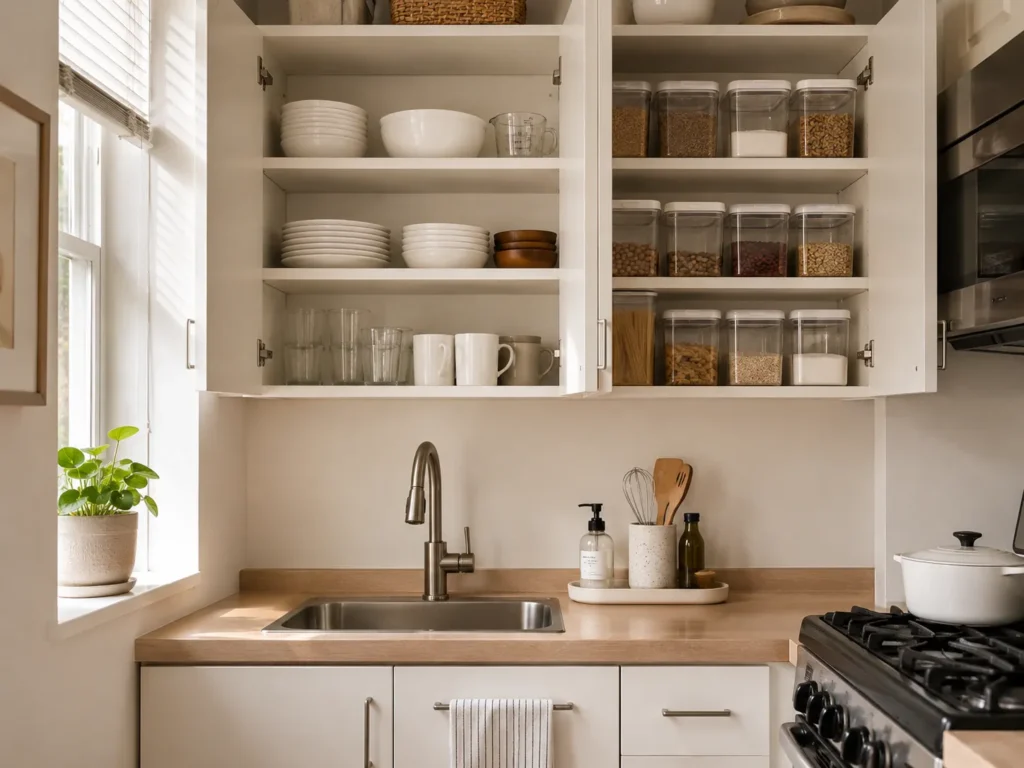
Use the highest shelves for backup stock and occasional items
The highest shelves are best for paper goods, extra cans, serving pieces, and appliances you use a few times a year. They are not the right home for the coffee, lunch containers, or cookware you reach for daily. Keep the top shelf organized in broad categories and use a stable step stool rather than climbing on a counter or chair.
If your kitchen has no dedicated pantry, a plan for organizing a kitchen without a pantry can help you set up a main food zone and a backup zone.
Reset one cabinet at a time after you make a change
You do not need to empty the entire kitchen to improve it. Choose the cabinet that slows you down most, give it one purpose, and live with the new arrangement for a week. If items still land on the counter or a shelf stays too full, adjust the category before buying another organizer.
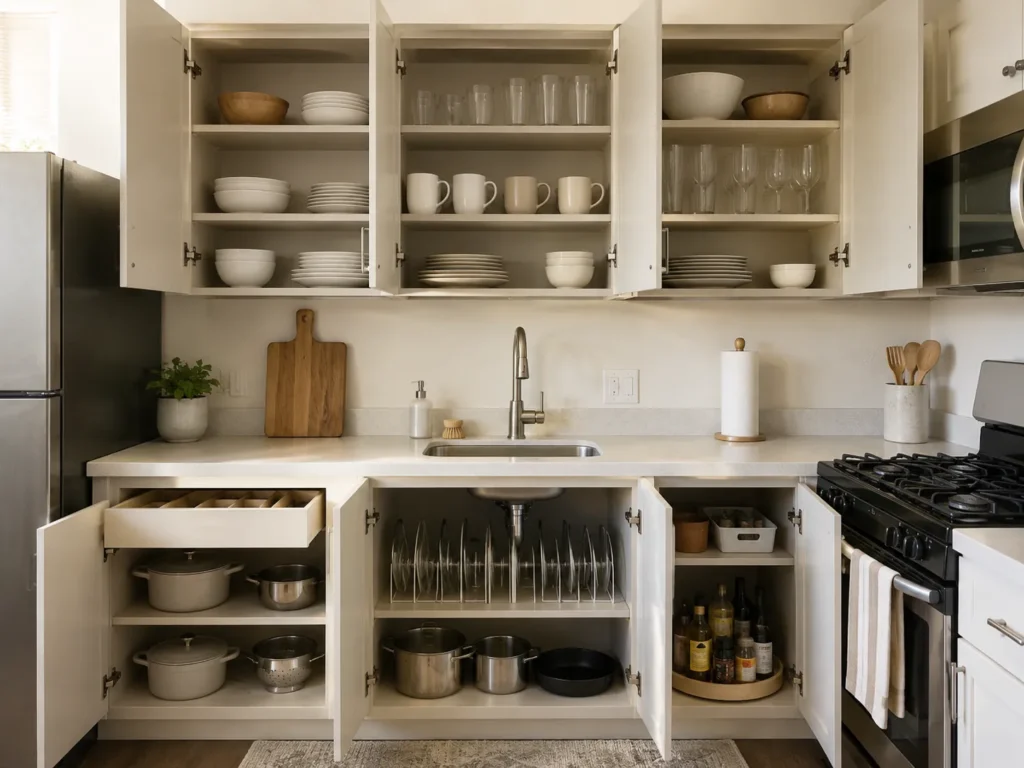
Small cabinets work better when each one is easy to understand and easy to put back in order. That matters more than matching bins or a picture-perfect shelf.