12 Ways to Store Pots and Pans in a Small Kitchen
Affiliate Disclosure: Compact Living Digest contains affiliate links. As an Amazon Associate, I earn from qualifying purchases at no additional cost to you.
Pots and pans create a storage problem even when you do not own very many. Their handles catch, lids slide around, and a deep lower cabinet can turn one skillet into an excavation project. Stacking is sometimes necessary, but it should not mean moving half the cabinet every time you cook.
The best small kitchen pot and pan storage depends on what you use most, how deep the cabinets are, and whether you have a safe wall or door that can carry some of the load. Start with the cookware you reach for weekly, then build the storage around access rather than trying to display every piece.
1. Store skillets upright instead of stacking them flat
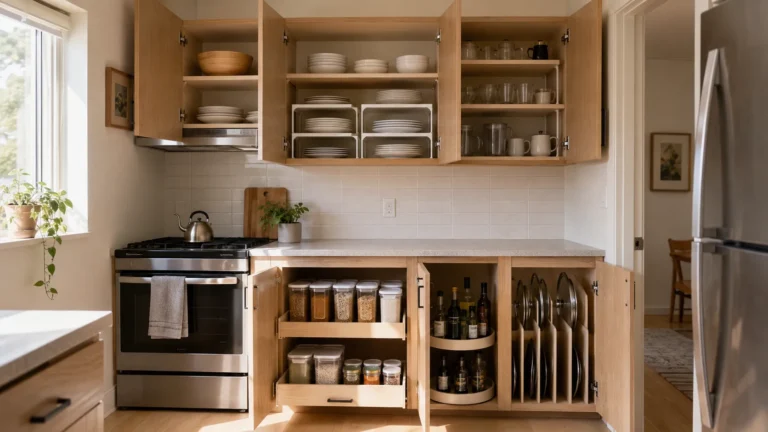
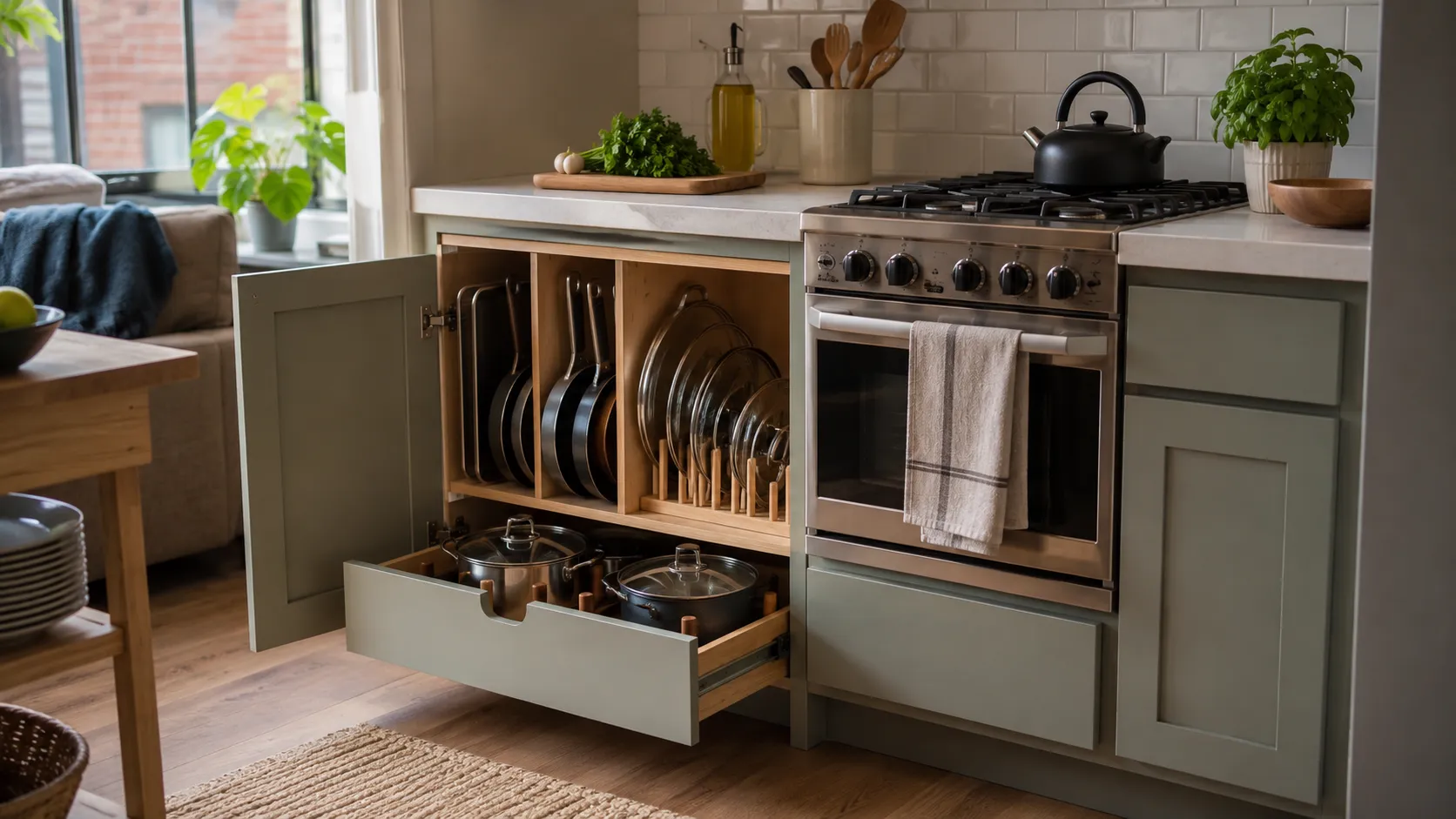
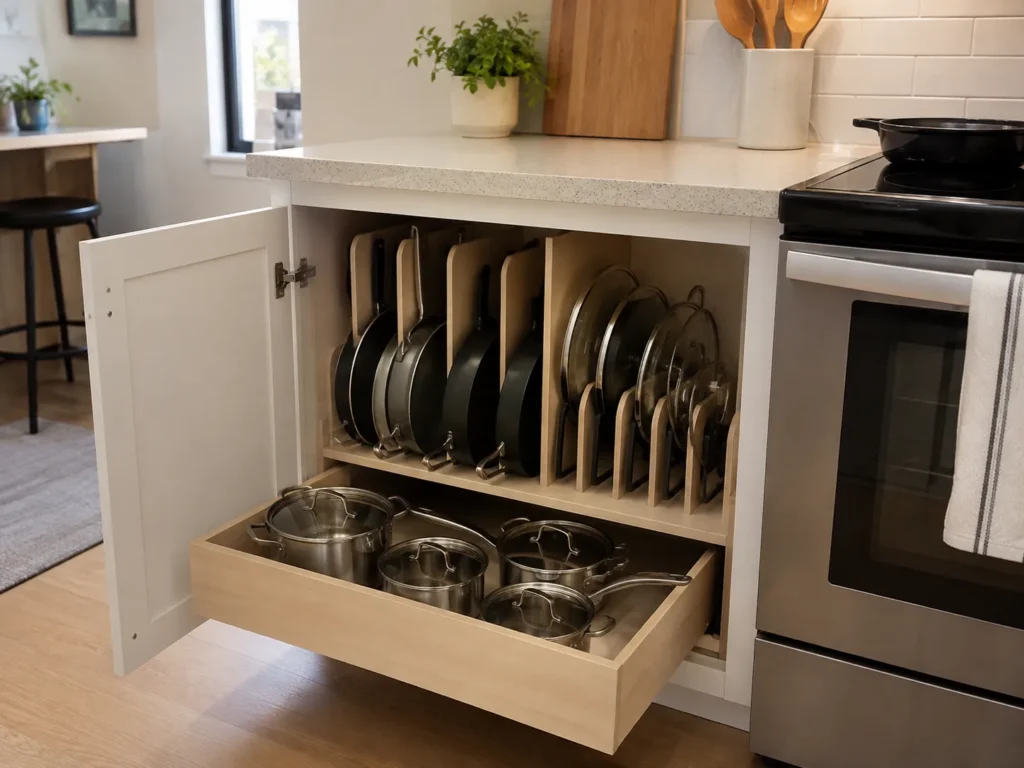
A vertical pan organizer gives skillets and shallow pans their own slots, so you can pull out the one you need without lifting the entire stack. It works well in a lower cabinet or deep drawer where pans are otherwise piled one inside another.
Measure the cabinet height and depth before choosing an organizer. Some handles need more room than the pan itself, and a rack that is too tall can make the shelf above unusable. Reserve this setup for the pans you use often; rarely used pieces can still stack in the back.
2. Keep lids in a separate upright organizer
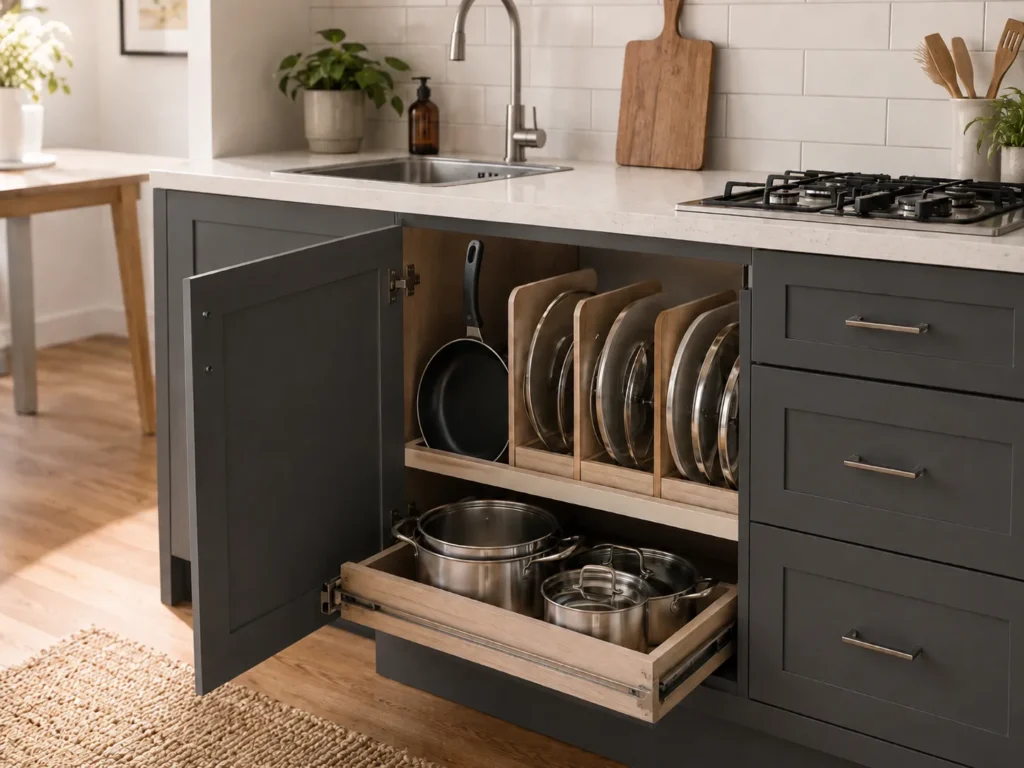
Lids are usually the part that turns cookware storage into a mess. Their handles catch on pot handles, and a loose pile slides apart each time you pull out a pan. A vertical lid holder or divider keeps them visible and lets you remove one at a time.
Place it near the cookware it belongs to. A lid organizer in a distant cabinet may technically save space, but it adds an extra step during cooking and makes the system harder to keep up.
3. Add a pull-out shelf to a deep lower cabinet
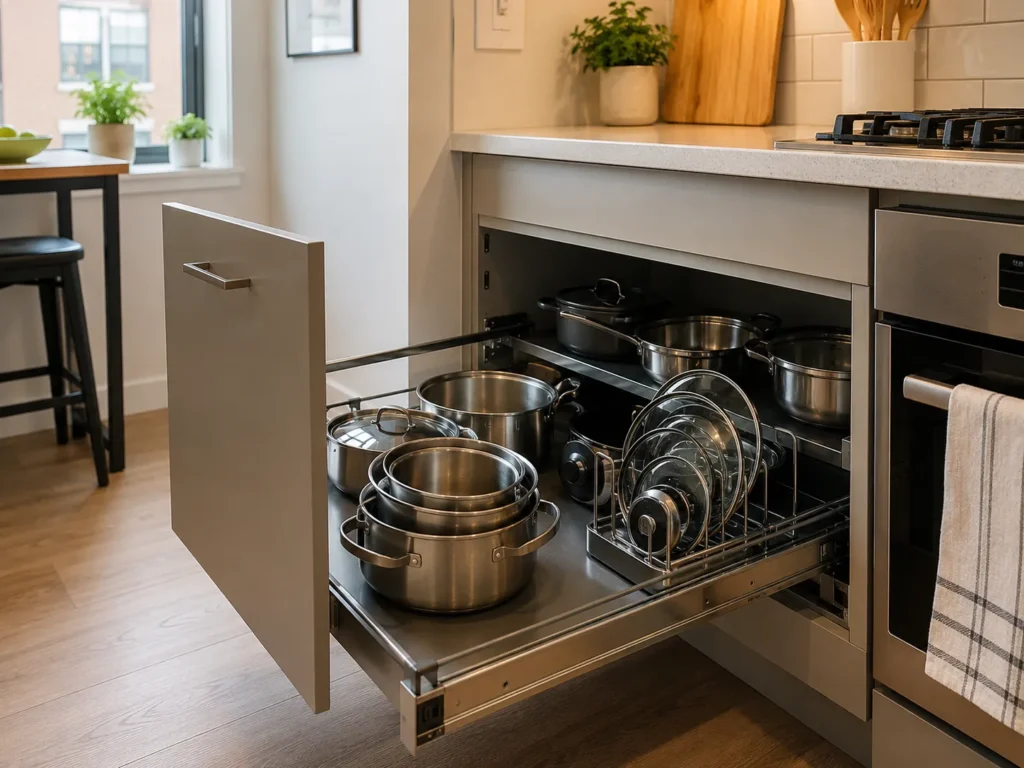
Deep cabinets can hold a lot of cookware, but the back half is difficult to use when everything must be reached from the front. A pull-out shelf or cabinet bin brings the contents forward, which makes nested pots, stockpots, and food-storage containers easier to see.
Check the cabinet opening, side clearance, and any plumbing or framing before choosing one. Pull-outs add access, but they also take up some interior width. They are most useful when the cabinet is deep enough that the back would otherwise be wasted.
4. Use a freestanding pan rack only when it stays stable
A freestanding rack can separate pans inside a cabinet, pantry shelf, or deep drawer without drilling. It is a practical choice for renters or anyone who wants to test a new setup before installing hardware.
Its drawback is the footprint. In a shallow cabinet, the rack can take up enough room to hold fewer pans than a simple stack. Use it where the cabinet has enough depth to keep the rack and pan handles from blocking the door.
5. Hang a few daily-use pans from a properly mounted rail
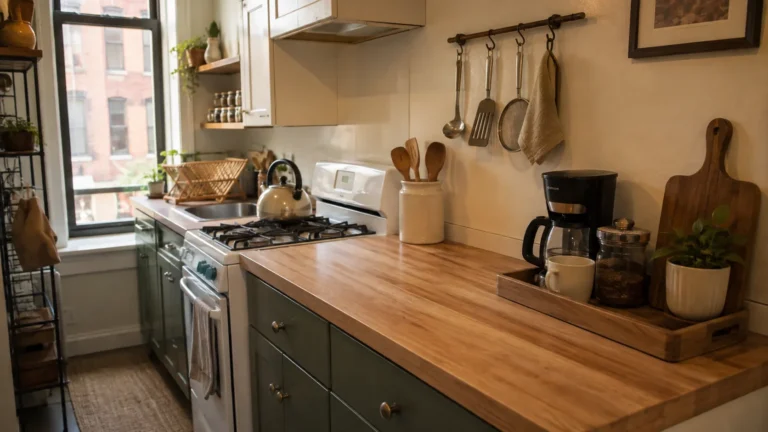
A wall rail can move a small group of cookware off a crowded cabinet shelf. It makes sense near the stove when there is unused wall space, and the pans are used often enough to justify staying visible.
This is not a place for every pan you own. Open cookware collects grease and dust, and a full rail can make a small kitchen feel busy. Follow the mounting and weight guidance for the specific rail and hardware, especially if the wall construction or rental rules are unclear.
6. Use wall hooks for individual pieces, not a heavy collection
One securely mounted hook can be useful for a favorite skillet, a grill pan, or a lightweight colander. It frees a cabinet slot and keeps the item within reach. It is not a substitute for a properly designed storage system when you have several heavy pieces.
Before using a hook, confirm what it is mounted into and whether the item can hang without interfering with a walkway, cabinet door, or backsplash. A pan that technically fits on the wall can still be a poor choice if its handle projects into the cooking zone.
7. Nest pots by size, but separate the surfaces
Nesting is still one of the most efficient ways to store saucepans and mixing bowls. Keep similar shapes together to keep the stack stable, and place a soft pan protector, towel, or liner between finished surfaces if scratches are a concern.
The tradeoff is access. Keep the largest pot at the bottom and the most-used smaller pot near the top. If you regularly need the pot at the bottom, a vertical or pull-out solution may work better than a deep nested stack.
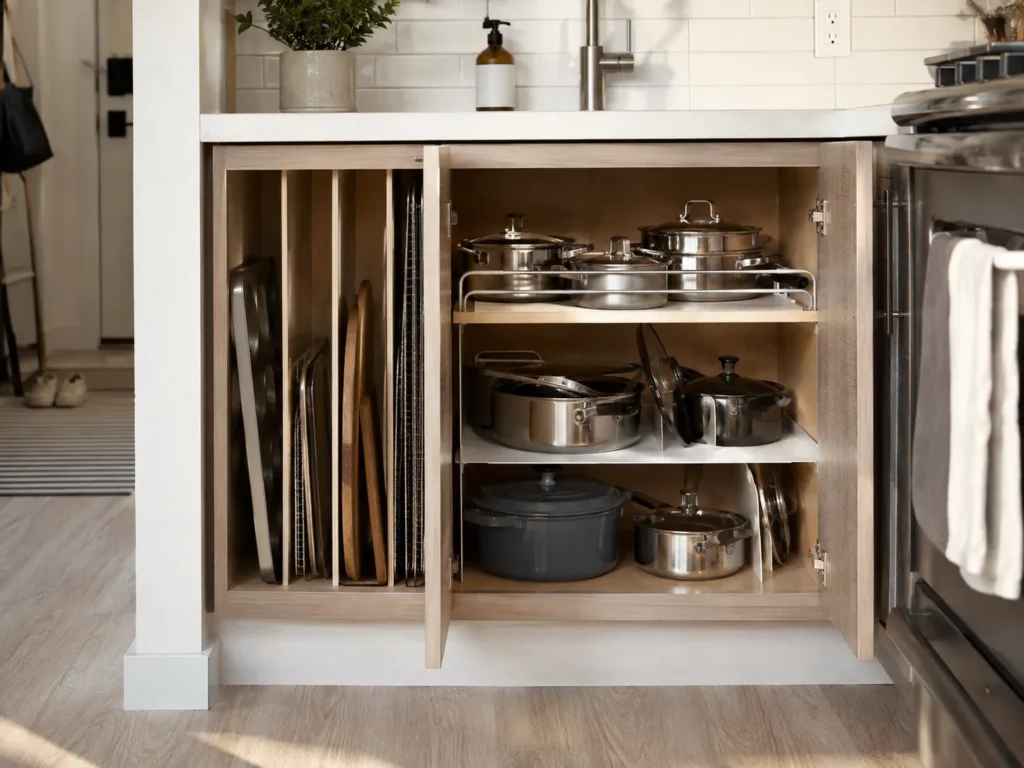
8. Give bakeware its own vertical slot
Sheet pans, cutting boards, muffin tins, and cooling racks become much easier to use when stored on their edges. A vertical divider in a lower cabinet, a deep drawer, or the narrow space beside an oven can prevent a heavy flat pile from forming.
Do not put this divider in the most convenient cabinet if it makes everyday pans harder to reach. Bakeware is often used less frequently, so it can take a slightly less accessible spot while the skillet and saucepan stay closer to the stove.
For more ways to make those cabinet zones work, small kitchen cabinet organization ideas that use the space better cover the shelf risers, pull-outs, and dividers that can solve the problem before you add another piece of furniture.
9. Use the oven for temporary overflow, not permanent storage
The oven can hold a roasting pan or baking sheet between uses, but it is easy to forget what is inside. That makes it a poor long-term home for everyday cookware. If you use it temporarily, make checking the oven part of your preheating routine.
It is better to free cabinet space by moving rarely used specialty pieces higher up or by reducing duplicates than to make the oven your primary storage area.
10. Move specialty cookware to the highest or farthest cabinet
A large stockpot, holiday roasting pan, or oversized wok does not need the same access as the skillet you use every night. Store these occasional pieces on a higher shelf or toward the back of a cabinet, as long as they can be removed safely.
This simple shift protects the best cabinet space for daily cooking. Keep the high shelf organized broadly, not packed tightly enough that you have to pull everything out to find one piece.
11. Let your kitchen storage plan decide what stays nearby
Cookware storage works better when it is part of a larger kitchen plan. If dry goods, small appliances, and food-storage containers are already taking over the lower cabinets, pans will continue to end up wherever they fit.
The broader guide to small apartment kitchen storage ideas that add useful space can help you decide which items belong in cabinets, on a cart, or in another storage zone. Once the cabinet roles are clear, it is easier to reserve one close-to-the-stove area for cookware.
12. Reduce duplicates before buying more organizers
Before adding racks or rails, pull out the cookware you own and look for duplicate sizes, damaged nonstick pans, lids with no matching pot, and specialty pieces that have not been used in a year. A smaller working set is often easier to store than a larger collection with a complicated organizer.
If the kitchen has no pantry, cookware may be competing with food for the same cabinets. Organizing a kitchen without a pantry can help you create separate zones for food and cookware, making each easier to use.
Small kitchen pot and pan storage need not look elaborate. The useful setup is the one that lets you grab the everyday pan, replace it easily, and keep the cabinet from collapsing into a pile again.