25 Small Apartment Storage Ideas That Actually Save Space
Affiliate Disclosure: Compact Living Digest contains affiliate links. As an Amazon Associate, I earn from qualifying purchases at no additional cost to you.
Buying more storage can make a small apartment harder to use if it takes up the walkway, blocks a door, or becomes another surface for piling things on. These small apartment storage ideas work when you use the space you already have, use height instead of floor area, or replace furniture you would need to anyway. Start with the room that creates the most daily friction, and make sure to measure before you order.
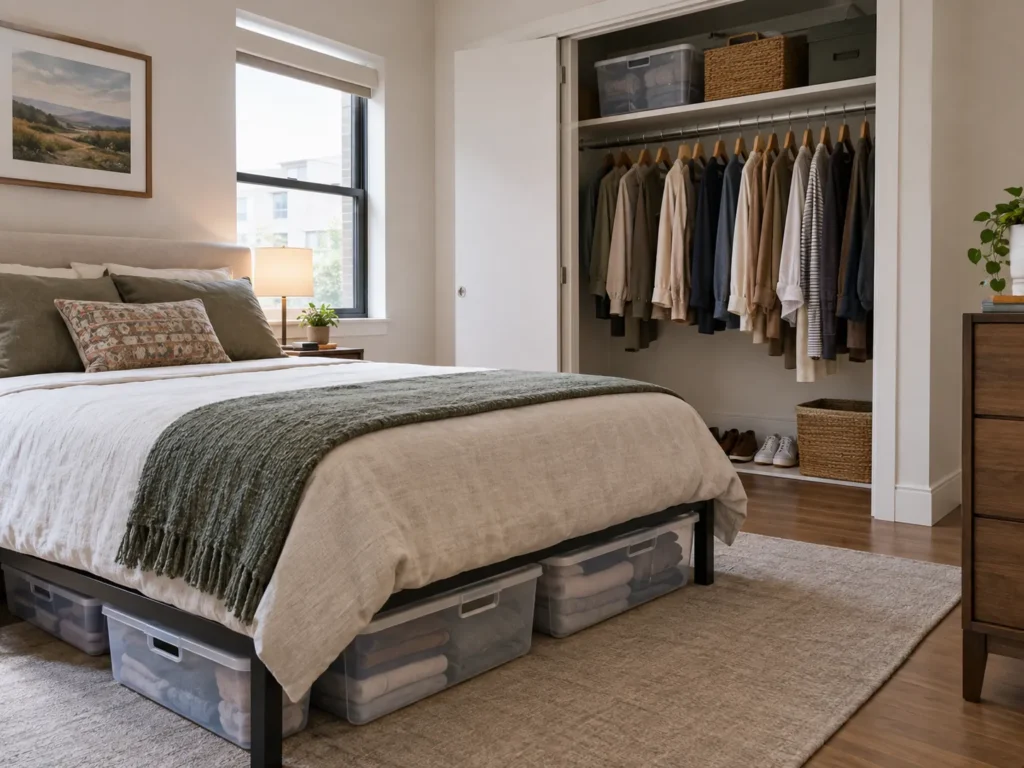
Start with storage that is already part of the room
- Use the top shelf in the closet properly. Store seasonal clothing, spare bedding, bags, and things you do not reach for every morning. Shelf dividers or matching bins keep stacks usable. Leave everyday items lower down.
- Add a second hanging rod where the clothes are short. Shirts, folded trousers, and kids’ clothes can use the gap between the two rods. Don’t use it beneath dresses or coats.
- Move off-season clothes out of prime closet space. One lidded bin for winter accessories or summer swimwear is easier to manage than several shelves. Label it by season, not “miscellaneous.”
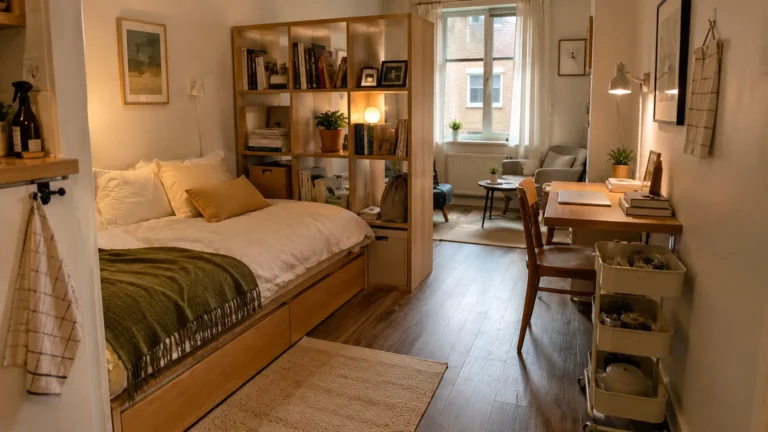
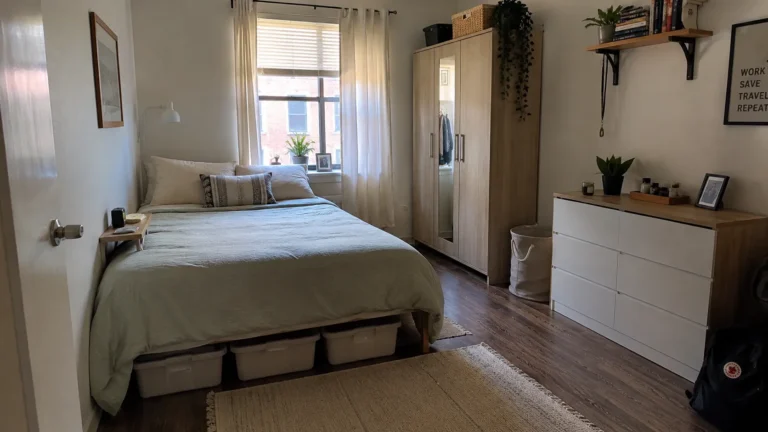
- Use under-bed storage for low-turnover items. Bedding, extra towels, seasonal clothes, and shoes are better candidates than daily-use items. Measure the clearance under the frame, including any center support, before choosing bins or drawers.
- Use the space under a sofa only if you can still clean underneath it. Low containers can hold games, throws, or cords, but loose items collect dust quickly. Choose lidded containers with a pull handle, and do not block vents.
- Give one cabinet a job. A kitchen cabinet that holds food, cleaning supplies, and appliances rarely works. Assign it one category, then add a riser or bin only if it makes the back easier to reach.
If the apartment has almost no built-in storage, the bigger problem may be that there is nowhere to put items that normally live in a hall closet or linen closet. Check out our solution that solves that problem room by room.
Use doors and walls without crowding the room
- Put an over-door organizer on a door that stays open most of the time. It can hold cleaning supplies, toiletries, pantry packets, or shoes without using floor space. Check the swing and hinge clearance first. A full organizer can stop a door from closing cleanly if it is too thick.
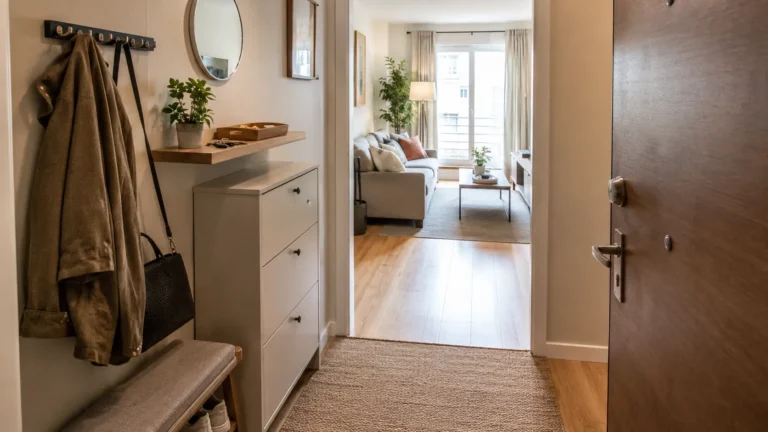
- Add hooks where items are already being dropped. A short rail beside the entry can catch bags, coats, and dog leashes before they land on a chair. Hooks are for daily-use items, not a full seasonal wardrobe.
- Use the wall above a desk or dresser for a shallow shelf. A shelf around 8 inches deep can hold books, paper supplies, or baskets without adding furniture. Keep it clear of the surface below, and use hardware suited to the wall and load.
- Use a narrow picture ledge for small, light items. It can fit better than a deep shelf in a narrow hall or near a bed. It works for glasses, a charging cable, a paperback, or a few small containers, not heavy equipment.
- Install a wall-mounted cabinet when closed storage matters. A cabinet above a toilet, desk, or laundry machine hides visual clutter better than open shelves. It needs secure mounting and door clearance.
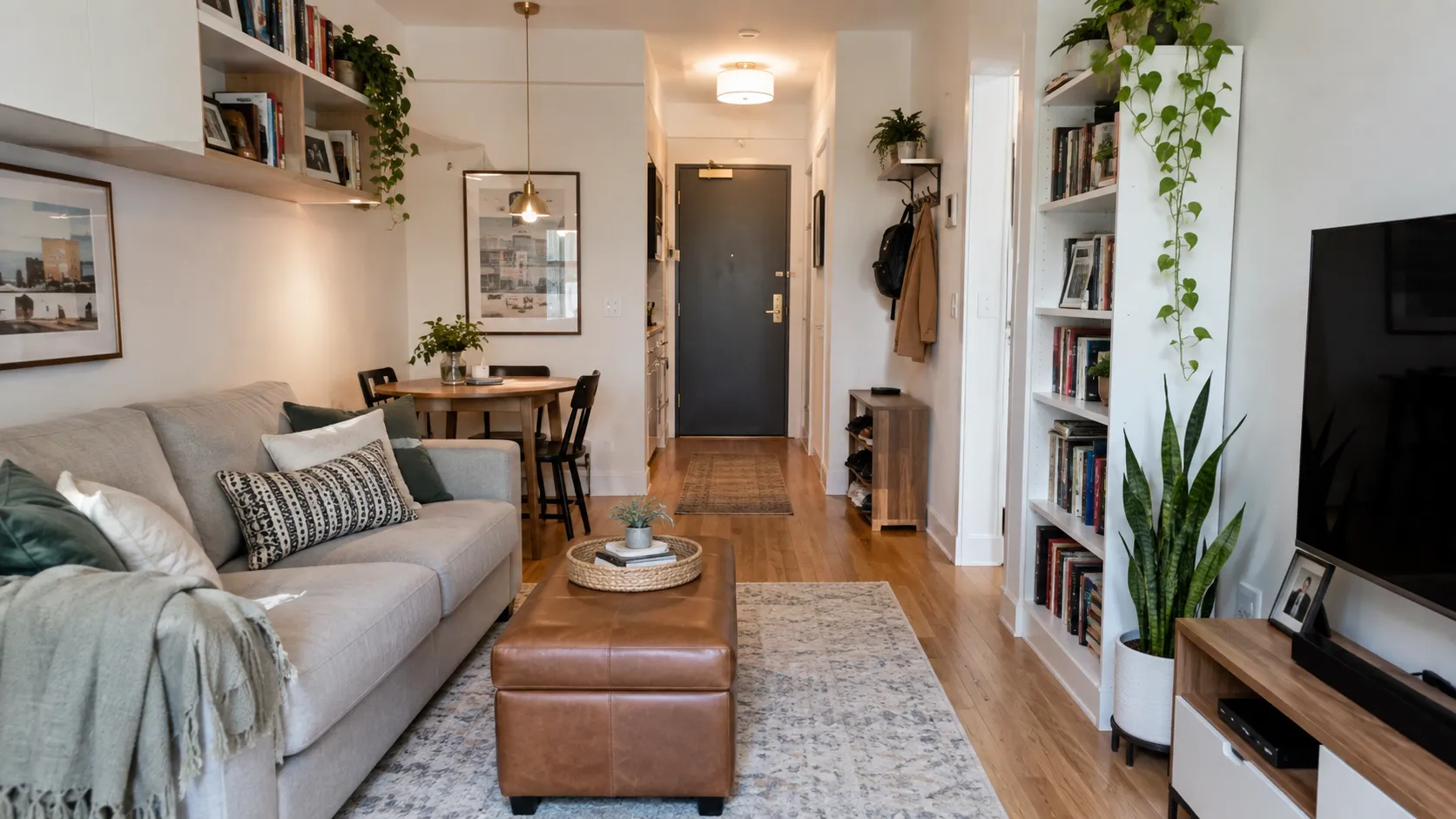
- Choose a tall bookcase instead of a low, wide one when the wall can support it. You gain shelf height without using more floor area, but upper shelves should hold rarely used items. Anchor tall furniture according to the manufacturer’s instructions, especially in homes with children or pets.
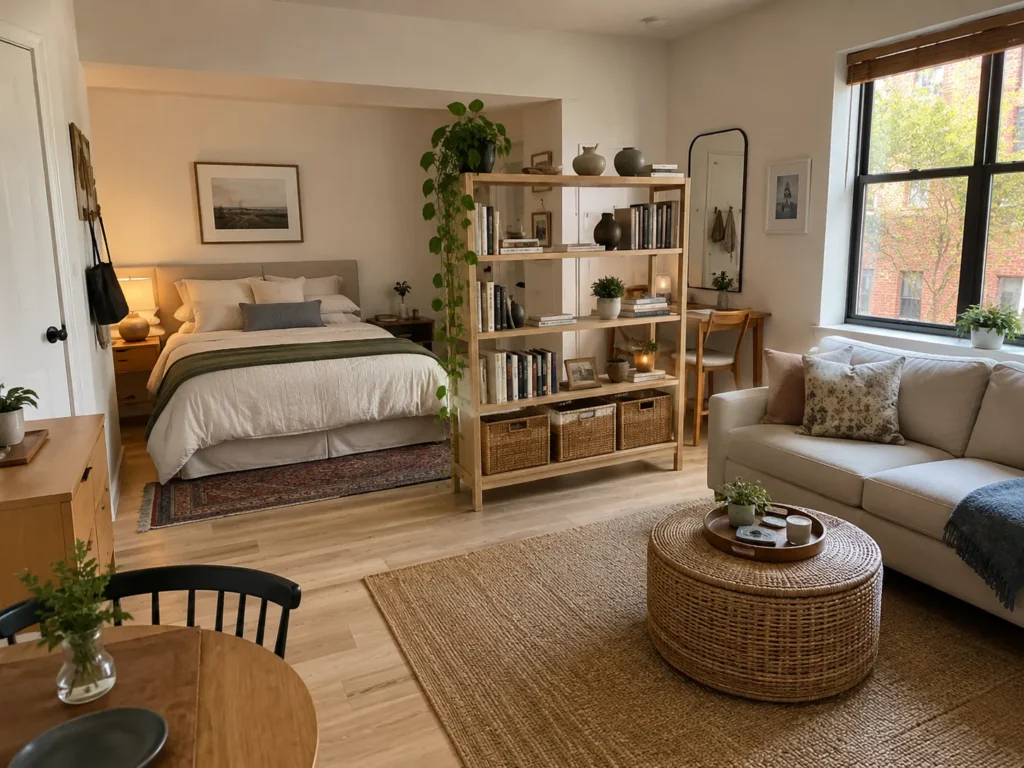
- Use a bookcase as a room divider only when both sides can stay tidy. In a studio, an open-backed unit can separate a bed from a living area while holding baskets and books. Skip it if it makes a dark barrier or narrow passage. For one-room options, see 17 Small Studio Apartment Storage Ideas That Use Space Better.
Make the entry do its own job
- Use a shallow shoe cabinet rather than a deep bench when the hall is narrow. Some shoe cabinets are roughly 7 to 11 inches deep, leaving more walking room than a standard bench. You can find this two-compartment slim rattan shoe rack on Amazon that is only 9.8″ deep. Measure the cabinet footprint on the floor first before you order.
- Choose a storage bench when you need a place to sit. It can hold scarves, bags, or off-season shoes while giving you a place to sit and put on your boots. If nobody sits there, then a shallow cabinet or hooks may be more useful.
- Put a tray or small bin at the entry for the things that migrate. You don’t need to add a full piece of entryway furniture to hold keys, sunglasses, mail, and earbuds. A tray or small bin can create a simple drop zone instead.
- Store only the current season by the door. Keeping every pair of shoes and every coat in the entry makes a small hall look full immediately. Rotate the rest into a closet, under-bed bin, or a higher shelf.
For a tighter layout, see our small entryway storage ideas for homes without a foyer. This article covers the pieces worth giving floor space to and the ones to skip.
Use small gaps and hard-to-reach spots deliberately
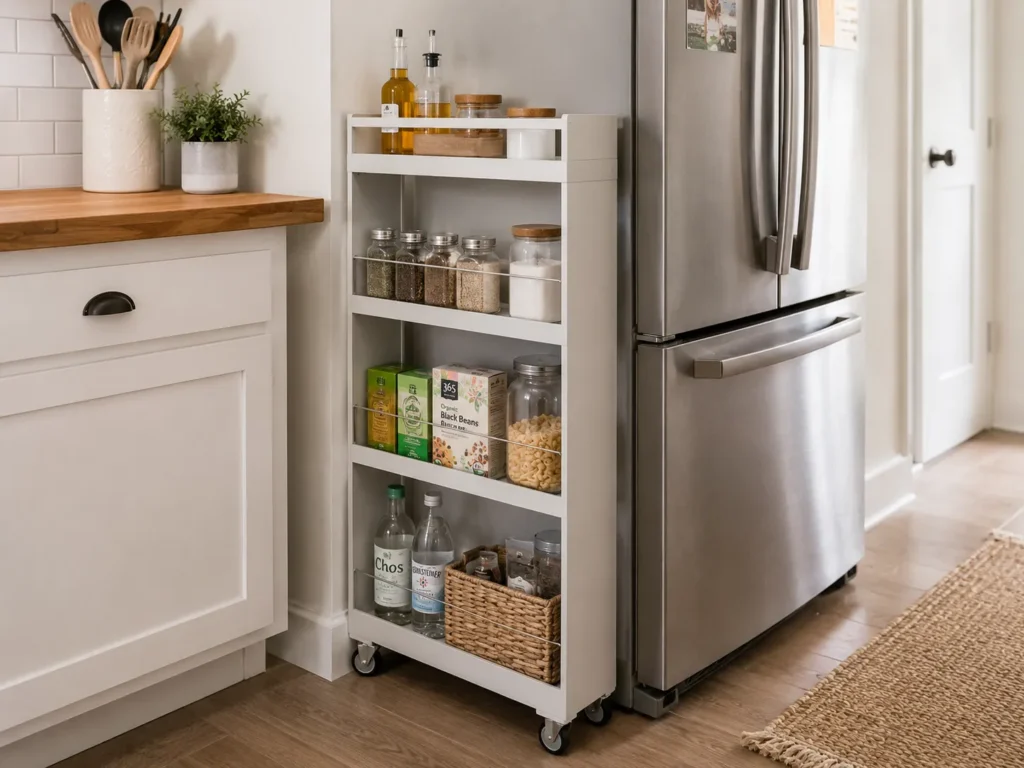
- Slide a slim rolling cart into a real gap. The space beside a refrigerator, toilet, washer, or desk can work if it does not interfere with a door, outlet, hose, or ventilation. Use it for supplies you pull out and use, not heavy items.
- Use vertical dividers for pans, boards, and trays. Storing them on edge means you do not have to lift a stack to reach the bottom. Use dividers that fit the cabinet depth and leave room for the door to close.
- Add a narrow pull-out or open bin under the bathroom sink. Plumbing wastes the middle, so two small containers on either side are often better than one large box. Keep bottles upright and the shutoff valve accessible.
- Use a tension rod for spray bottles or small hanging baskets. It is a renter-friendly way to use the upper part of an under-sink cabinet. Keep in mind that it will not hold heavy tools, so check capacity and leave space around pipes.
- Use the back of a cabinet door for light, narrow items. A mounted rack can hold wraps, foil, cleaning cloths, or styling tools. Test the door before filling it; deep racks can collide with shelves inside.
Let furniture replace another storage problem
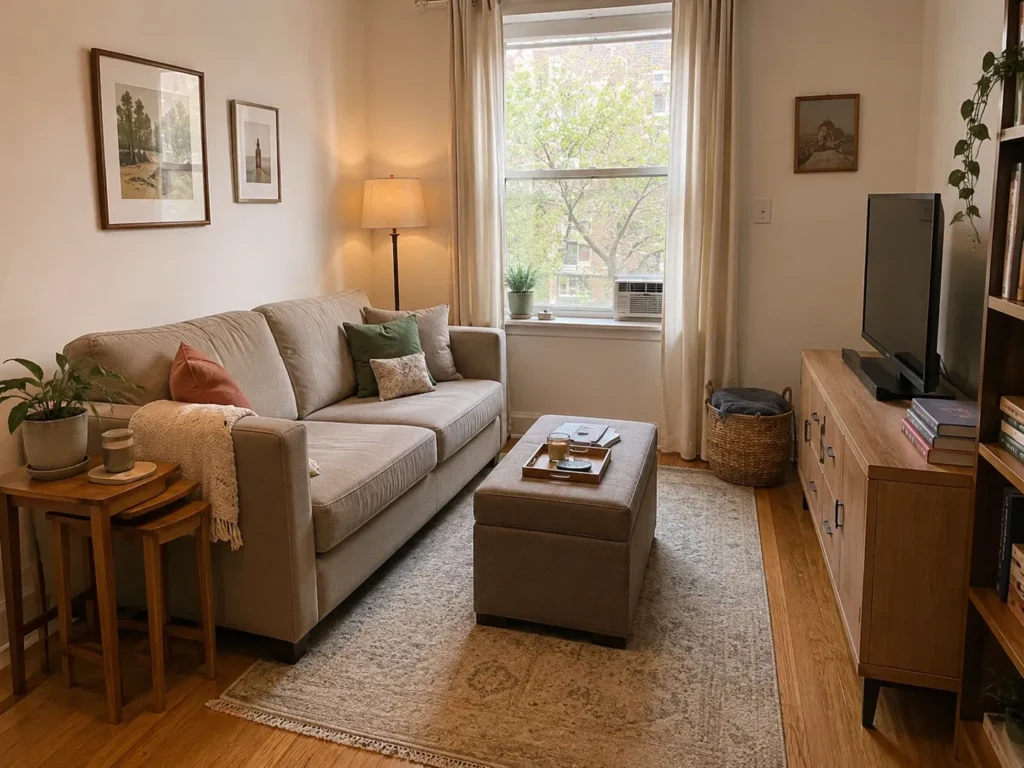
- Use a storage ottoman instead of a coffee table and blanket basket. It works in a living room that needs extra seating and a place for throws or games. The inside is usually smaller than a cabinet, and a soft top needs a tray for drinks.
- Choose nesting tables when an occasional second surface is more useful than a large coffee table. The smaller table comes out for guests, then tucks away. This reduces the everyday footprint, but does not add enclosed storage.
- Replace a floor nightstand with a wall shelf when the bed has no clearance beside it. A shelf can hold essentials without squeezing the path around the bed. It must be secure, and it is a poor choice if you need bedside drawers.
Living room storage works best when it keeps everyday clutter contained without making every visible surface feel crowded. Closed storage can help, but too much of it can make a small room feel heavier. If you are trying to solve similar storage problems in another room, these small bedroom storage ideas cover useful options for walls, closets, and the space under the bed.
Measure this first: Check the depth, door and drawer clearance, and the walkway that will remain after the piece is in place. Just because something fits does not mean it will make the room work better.